
Just a couple of years ago, creating images was the domain of artists and designers. Today anyone can create an image using a neural network, simply by describing their idea in words. This has opened new horizons for creators, marketers, and businesses, letting them get visual content for any task quickly.
Image-generation neural networks help create unique illustrations for books, character concept art, music track covers, and ad creatives. The key is understanding which model handles a specific task best.
How image-generation neural networks work
These neural networks are built around converting text into an image:
- You formulate a text request, known as a prompt, and the neural network analyzes it and creates a matching image.
- Generating images from a description is often based on diffusion models, which build the image through several iterations, clearing away "noise" (random pixels in the image).
- The result is a coherent image.
The key success factor is the quality of the training data and the complexity of the model itself. Leading neural networks like Midjourney or GPT-Image 1 are trained on billions of text-image pairs, which lets them understand not just individual objects but also styles, emotions, and complex relationships. That's why it's so important to write precise, detailed prompts to get the result you want.
Top 6 neural networks for drawing and image generation
We tested every image-generation neural network available on our platform in Creative Lab, evaluating their strengths, specialization, and ability to handle different creative tasks. Here's our list of 6 neural networks for image generation.
Midjourney v6
Midjourney v6 shows an incredible understanding of light, texture, and composition, making it an ideal choice for neural networks aimed at artists. You can upload a reference image, set the level of artistic style, and enable a seamless pattern if you want a repeating tile — it's great for generating portraits from a description and detailed scenes.
That said, the neural network may not be the best fit for beginners. For quality results, you should write very detailed prompts (or generate them with the GPTunneL assistant for creating Midjourney prompts). Still, the settings wizard in Creative Lab makes it easier to use, offering style, size, and other parameter settings.
Midjourney generation example (a collage of 4 images):
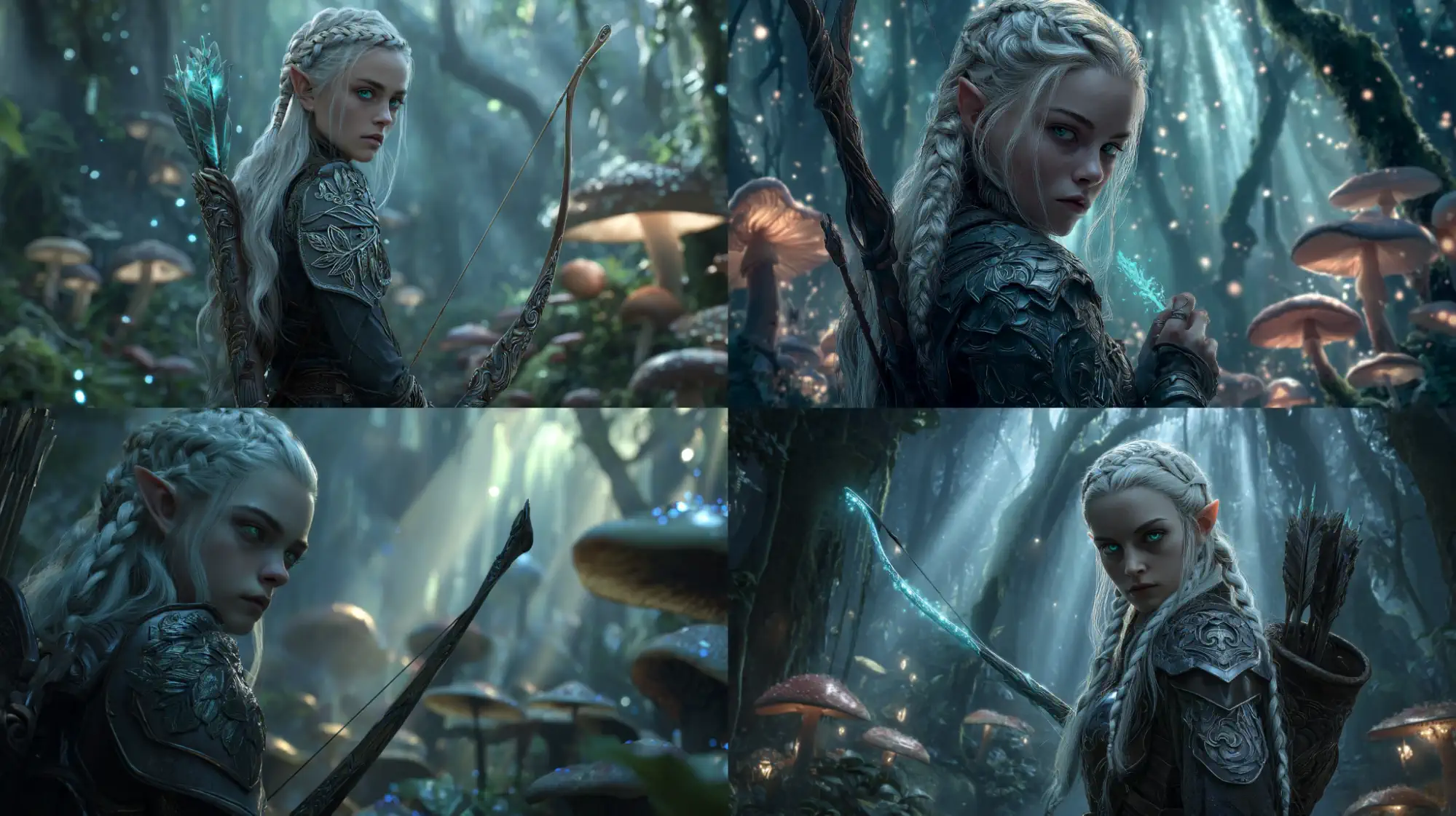
Prompt: "A hyper-detailed digital painting of a female elven ranger with long, braided platinum-blonde hair and piercing emerald green eyes. She wears dark leather armor intricately embossed with silver leaf patterns. She holds a masterfully crafted wooden longbow that emits a soft, ethereal blue light. She stands in a mystical forest at dusk, with god rays filtering through the dense canopy and giant, softly glowing mushrooms on the forest floor. Dramatic cinematic lighting, style of Magali Villeneuve and WLOP, sharp focus"
The model can generate images in minimalist, realistic, anime, fantasy, and other styles. There's one nuance, though — Midjourney often prioritizes aesthetics over literally following the prompt. Version v6.1 is available in GPTunneL with no VPN and no restrictions — you pay for each generation and get 4 different image variants for your prompt.
GPT-Image 1
A model from OpenAI, known for its integration with ChatGPT. Its main advantage is the ability to understand natural language and dialogue context. You don't need to be a prompt-engineering expert; just describe your idea. It's the best image generator from a description for beginners.
Here's a generation example and prompt for GPT Image 1:
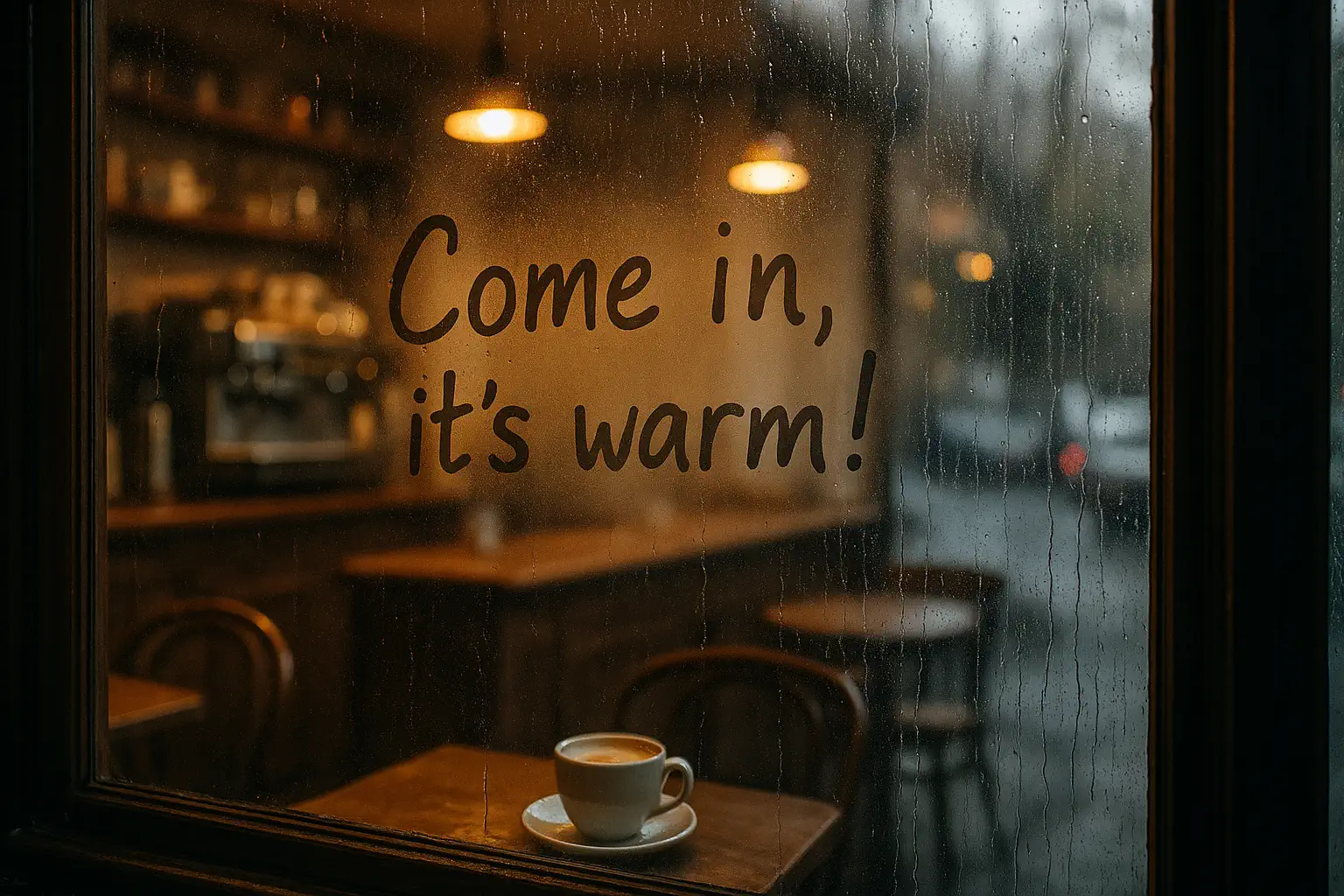
Prompt: "a realistic photo of a cozy coffee shop window on a rainy day. On the steamy glass, someone has written 'Come in, it's warm!' with their finger"
GPT-Image 1 handles complex scenes well, where you need to account for the interaction of multiple objects. It's also one of the few models capable of generating readable text within images! However, it has strict content filters and may refuse to generate images based on protected intellectual property or sensitive topics.
- Pros: easy to use, excellent understanding of requests.
- Cons: strong content restrictions, less flexibility in styles.
Stable Diffusion 3.5
An open-source model offering flexibility and control over prompting. Stable Diffusion 3.5 can be used through GPTunneL as usual, or run locally on your own device if you know how. The latest version improves image quality, especially for portraits, landscapes, and scenes.
This image-generation neural network gives users full freedom to experiment, but requires certain skills to achieve the best results. Prompting for Stable Diffusion 3.5 is similar to Midjourney, but with less flexibility. For example, you can't upload a reference image.
- Pros: flexibility, open source, a large community.
- Cons: takes time to learn, quality depends on settings.
Generation example:
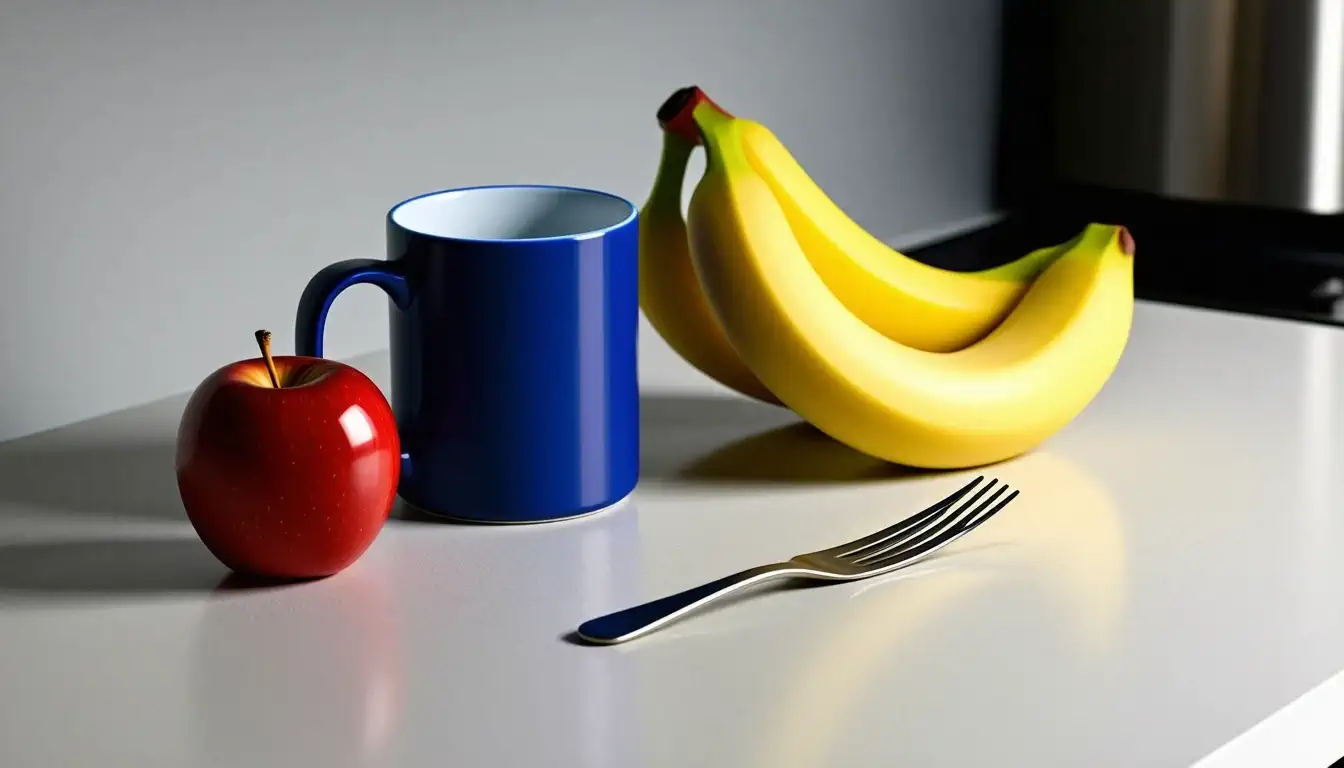
Prompt: "a photograph of a kitchen counter. A red apple sits to the left of a blue ceramic mug, and a yellow banana is placed directly behind the mug. A single silver fork is in front of the apple".
YandexART
A neural network integrated into GPTunneL. Its key advantage is a deep understanding of local language nuances and cultural context. YandexART is great at generating images tied to folklore characters and well-known figures, which makes it a distinctive tool for regional projects.
The model keeps improving, with better photorealism and detail. It lets a wide range of users bring their creative ideas to life while costing less than its competitors.
- Pros: strong grasp of regional and cultural context, lower price.
- Cons: can fall short of Midjourney and GPT Image 1, especially in aesthetics for complex scenes.
Generation example + prompt:
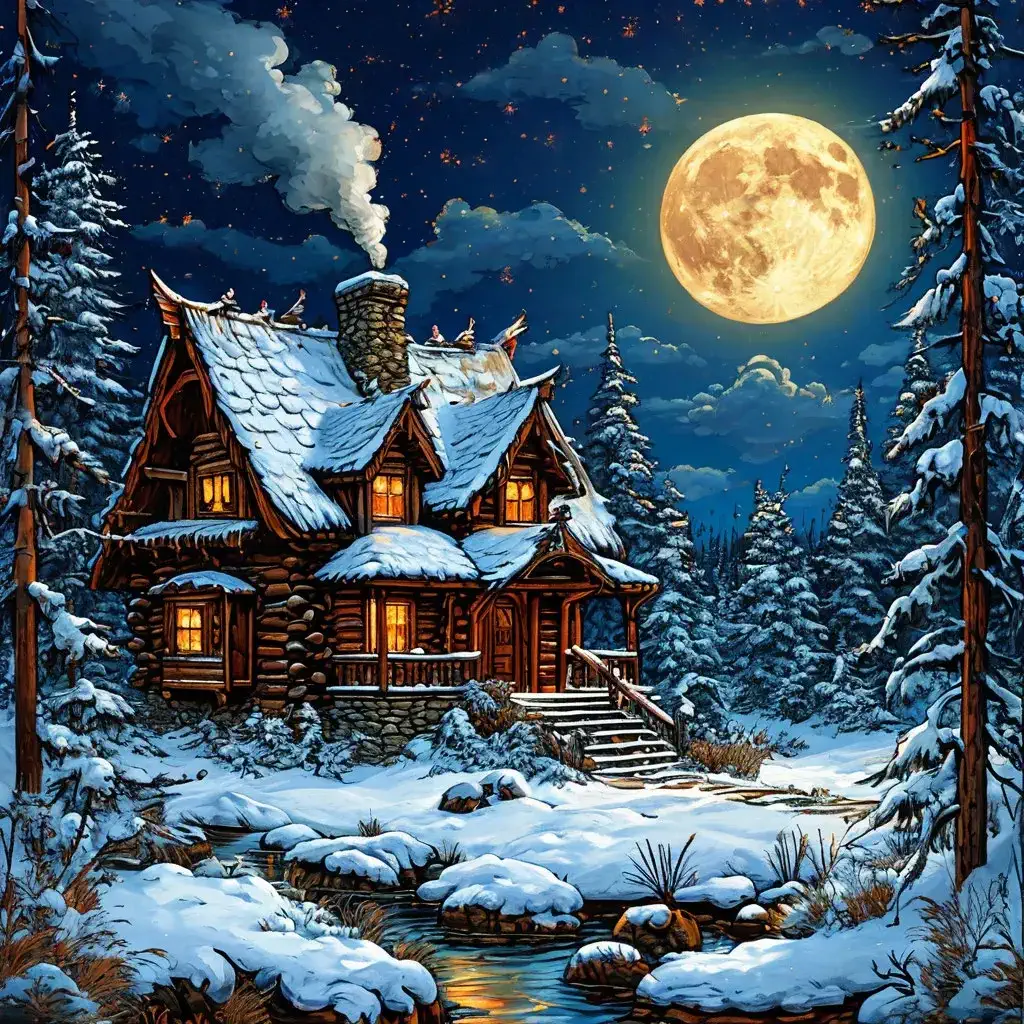
Prompt: "A hut on chicken legs deep in a snow-covered forest, smoke rising from the chimney, night, a full moon in the sky. In the style of Ivan Bilibin"
Flux Kontext Max
This model from Black Forest Labs was built to solve one of the hardest problems in image generation — precisely understanding and reproducing complex, detailed prompts. Flux Kontext Max handles composition well, correctly placing multiple objects in a scene and accurately assigning them colors, actions, and attributes.
- Pros: top-tier prompt adherence and compositional accuracy, generation quality on par with market leaders.
- Cons: needs detailed prompts to unlock its potential.
The model generates at a level comparable to Midjourney, though its settings are less flexible. It's especially strong at creating scenes with complex interactions between objects. If you need an image where "a red ball lies under a blue cube next to a green tree," Flux Kontext Max is highly likely to render that request correctly.
Generation example:
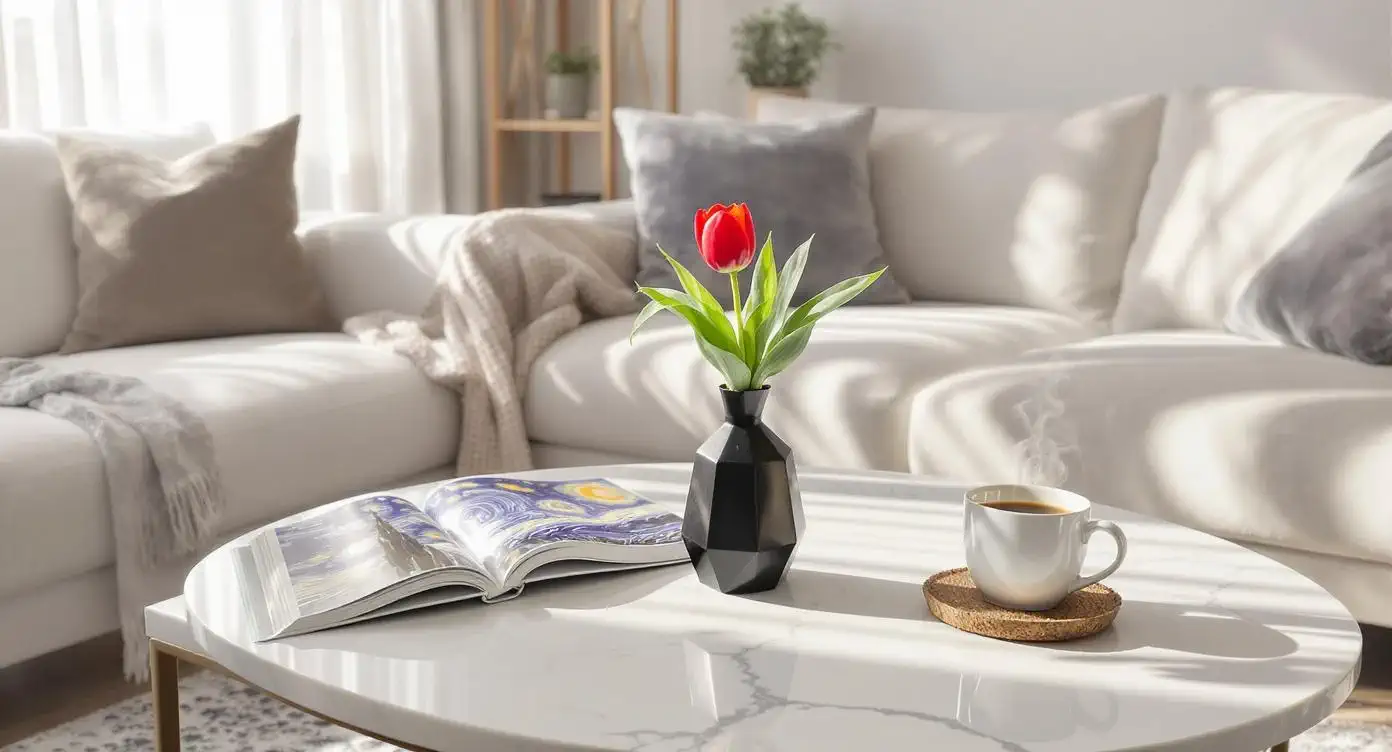
Prompt: "a photograph of a modern, minimalist living room. In the center of the room, on a white marble coffee table, there is a small, geometric black vase holding a single red tulip. To the left of the vase, there is an open art book with a picture of Van Gogh's 'Starry Night.' To the right of the vase, a steaming white ceramic cup of coffee sits on a cork coaster. The morning sun streams in from a large window on the left, casting a long shadow from the vase across the table"
Recraft v3
Unlike GPT Image 1, Midjourney, and others, Recraft V3 can create not only raster images but vector graphics (SVG) as well. This makes it possible to create icons, logos, and illustrations that can be scaled up to any size without losing quality.
The "Image Vectorization" tool available in GPTunneL is built on exactly this feature of Recraft v3. You can upload any image and turn it into a vector.
Besides generating vector images, the model stands out for its high-quality output — vivid, rich colors, accurate geometric and anatomical shapes, strong responsiveness to your prompts, a wide range of available styles, and even the ability to write text within images.
Generation example:
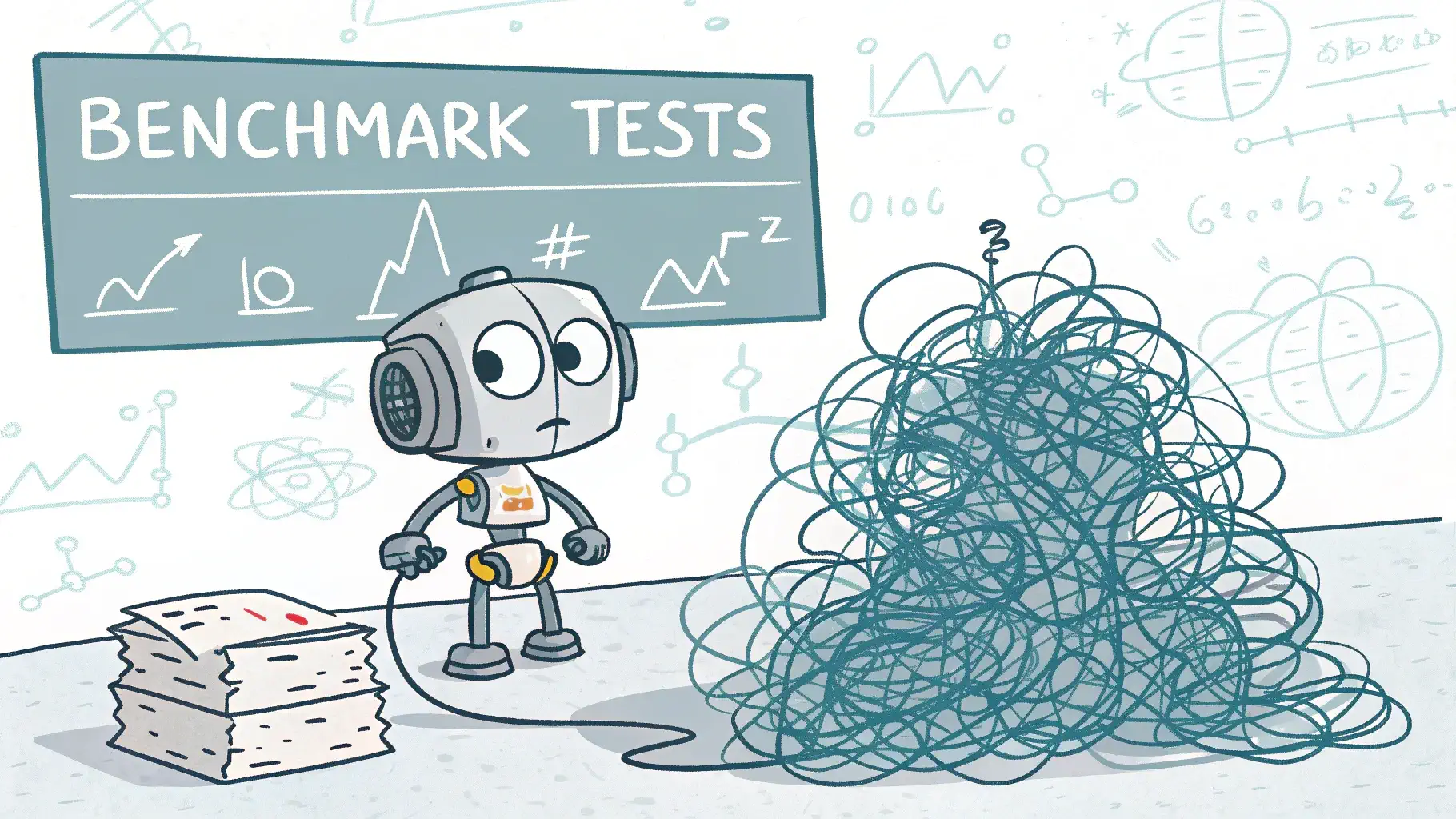
Prompt: "A cartoon illustration depicting a small, struggling AI model (like a minimalist robot head or a glowing brain icon) tangled in a massive, chaotic pile of excessive text tokens or wires. In the background, sharp, clean mathematical formulas or code snippets represent the benchmark tests, visually contrasting with the messy reality. Style: Digital cartoon art, slightly abstract, conveys frustration/overwhelm".
How to choose the right neural network for the job
Choosing the best model depends on your goals. There's no one-size-fits-all solution, so it's important to lean on each tool's strengths. Picking the right neural network for art or commercial illustration is the key to a fast, high-quality result.
Here are a few tips to help you decide:
- For photorealism and artistic work — use Midjourney v6 and Flux Kontext Max. Their handling of light and detail is unmatched.
- For branding, digital illustrations, and vector images — we recommend Recraft v3 and the Image Vectorization tool.
- For a quick start — GPT Image 1 is the best choice thanks to its simplicity and understanding of dialogue context.
- For graphics with text — GPT Image 1, hands down. It will save you time on post-editing in graphic editors.
- For projects aimed at a specific regional audience — try YandexART.
To create an image for a complex project, like a product card, you can combine several tools in GPTunneL, not just image generators:
- Send a photo of you holding your product to GPT Image 1, and ask it to redraw it on a new background and add badges highlighting the product's selling points.
- Then head to the "Photo Animation" tool, attach your image, and add a prompt.
- Voilà — your product image has turned into a video for a marketplace listing.
This kind of synergy often delivers the best results and lets you unlock the full potential of AI. Read more about how to create a product card from a photo using neural networks for image and video generation!
In summary
It used to take a designer and several days of work to get a beautiful visual — now all it takes is formulating the task correctly, and you get a finished result in a couple of minutes.
The more precisely you describe what you want to see, the better the image will be. It's like explaining a task to a smart assistant — you need to be specific without overcomplicating it. Try different approaches, save the prompts that work, and learn from examples. These tools are built to help you work more efficiently and enjoy the process.
FAQ
Which neural networks can draw from a description?
Nearly all modern AI image generators work this way. The best known are Midjourney v6, GPT Image 1, Stable Diffusion 3, YandexART, Flux Kontext Max, and Recraft v3. You give them a text prompt, and they create an image based on it.
Can I use images from neural networks commercially?
Under the GPTunneL terms of service, all the materials you generate belong to you. You can use them in your own projects.