

Sellers on online marketplaces spend hours manually analyzing competitor listings. They copy descriptions, save photos, and log prices into spreadsheets. Neural networks and tools in GPTunneL automate this process and produce ready-made reports in minutes.
AI tools can compare texts, analyze visual content, and find patterns in product positioning. This article shows how to use neural networks for competitor analysis and how to choose the right tool.
Why do competitor analysis on marketplaces?
Marketplaces show shoppers dozens of similar products on a single page. A seller competes not only on price but also on listing quality. Successful sellers regularly study top positions in their category and adapt their strategy.
Competitor analysis on a marketplace helps you understand what works in your niche. You can see which headlines grab attention, which photos convert into purchases, and which descriptions answer buyers' questions. This data becomes the foundation for improving your own listings.
What data matters to compare: text, visuals, price, rating, reviews

A product listing consists of many elements, each of which influences the buyer's decision. Text elements include the title, description, specifications, and answers to questions. Here are the key parameters for analyzing competitor listings:
- Structure and length of the product description
- Use of keywords in the title
- Quality and number of photos
- Presence of infographics highlighting benefits
- Price positioning relative to similar products
- Average rating and review sentiment
Neural networks can extract and compare all this data automatically. They determine the emotional tone of texts, evaluate photo composition, and identify correlations between listing elements and product success.
What can a neural network do in competitor analysis?
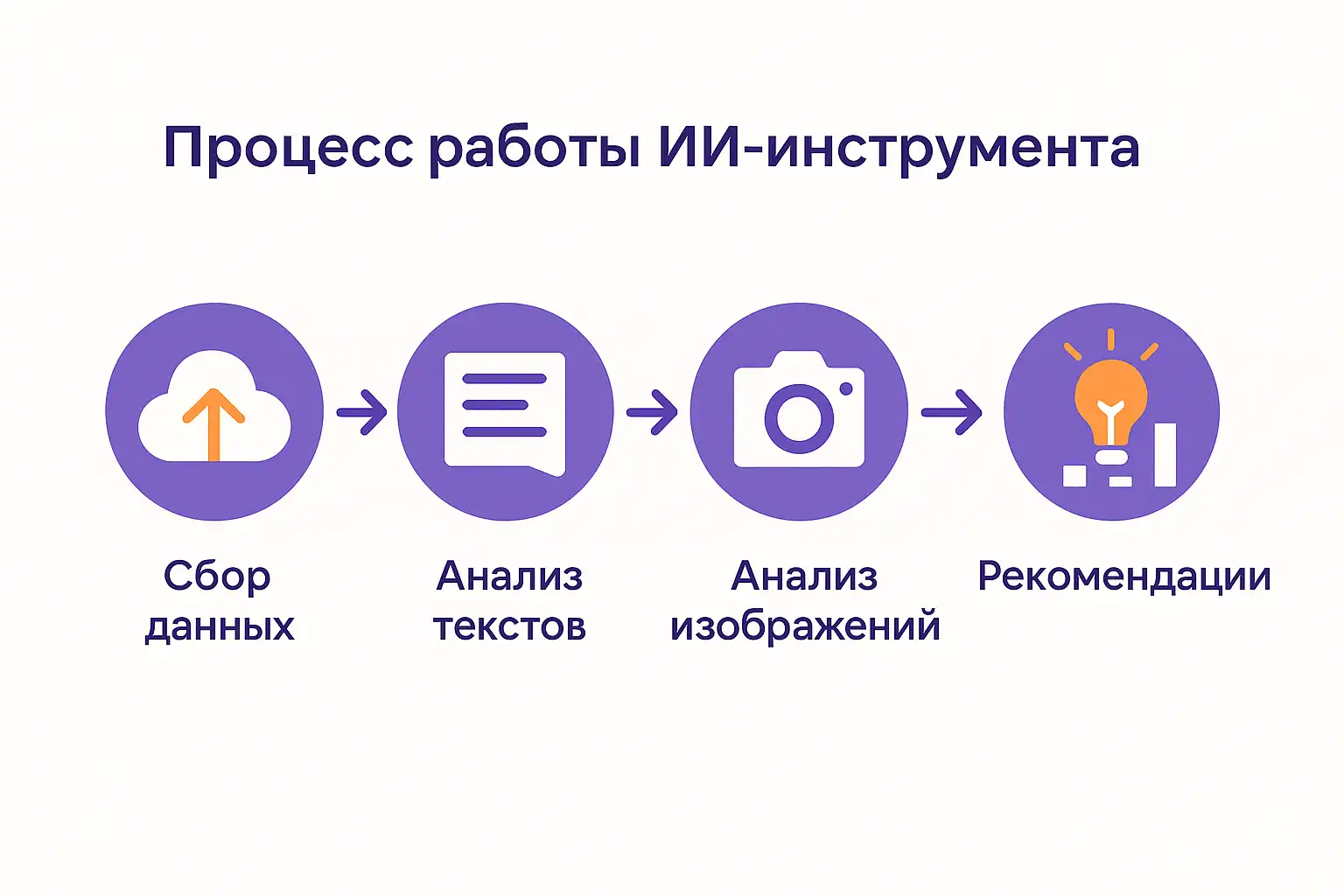
AI tools for comparing products perform a comprehensive analysis across many parameters. They don't just collect data — they interpret it and give recommendations. Let's look at the main capabilities of neural networks in the context of marketplaces.
Comparing listing text: tone, structure, presence of triggers
Here are a few examples of using neural networks to compare listings:
- Studying the tone and style of texts
A neural network for competitor analysis, such as ChatGPT 4o, uses natural language processing to deeply study texts. It determines the emotional tone of a description — positive, neutral, or aggressively sales-driven. Algorithms identify the structural features of successful texts.
- Analyzing the unique selling proposition
Claude 4 Opus, one of the best neural networks for working with text according to GPTunneL experts, finds sales triggers in the descriptions of market leaders. These can be indications of limited availability, social proof, or appeals to buyer fears. The system shows how often such techniques are used and how effective they are.
- Keyword and SEO analysis
The analysis includes checking text uniqueness and SEO optimization. Claude 4 Opus determines keyword density, readability, and how well the text matches buyers' search queries on a specific marketplace. The model performs this task according to instructions from an SEO specialist, who has specified keywords, LSI phrases, user intents, and competing pages.
Image and infographic analysis
Here is an example of how neural networks simplify image and infographic analysis:
Visual analysis of infographics and photos is a strong point of neural networks. For example, the Gemini 2.5 Pro model, known for its high-quality context handling and a large input window of 1 million tokens (roughly 750,000 words), evaluates the composition, lighting, color scheme, and overall quality of hundreds of images. It detects the presence of people, product-in-use demonstrations, and other important elements.
Special attention is paid to infographics highlighting product benefits. The neural network analyzes:
- Number of highlighted benefits
- Use of icons and graphic elements
- Readability of text in images
- Consistency with brand style
Collecting data on key parameters: price, rating, review frequency
Automatically collecting quantitative metrics is a basic function of AI tools thanks to their ability to use data from the internet. For example, GPT-4o Search tracks price dynamics, rating changes, and the appearance of new reviews. These metrics are collected for all competitors in the selected category according to instructions provided by the seller.
The analysis goes beyond simple number comparisons. The neural network identifies correlations between price and sales volume, and between review frequency and search ranking position. Guided by the examples you provide, the neural network predicts an optimal pricing strategy based on market behavior.
Top neural networks and AI services for competitor analysis
The market offers many tools for competitor analysis using neural networks. Each service has its own specialization and set of features. Let's look at the most effective solutions for working with marketplaces.
For effective competitor analysis on marketplaces, sellers can use both general-purpose neural networks with broad capabilities and specialized AI tools available through GPTunneL. Key models that help you deeply study competitors' actions:
- ChatGPT:
Strengths:
- Models in the GPT family, especially GPT-4.5 and GPT 4o, understand and generate text excellently, analyze tone and structure, and identify keywords.
- GPT-4.1 has a 1-million-token context window and an affordable price, making it one of the best models for summarizing large volumes of information and drawing conclusions.
- There is also a model with the ability to search data on the internet — GPT-4o Search. This allows you to work with up-to-date data with the right setup.
- Claude:
Strengths:
- Claude 4 models, especially Opus and Sonnet, have always been known for their ability to generate high-quality text.
- They also demonstrate a deep understanding of information and language nuances, can analyze large volumes of data from an ethical standpoint, and closely follow your prompts.
- The difference between Sonnet and Opus lies in their approach: the former is better suited for data analysis and competitor research, while the latter excels at text generation.
- Gemini:
Strengths:
- Advanced multimodal capabilities that let it analyze text, images, files, tables, and other data simultaneously.
- The large 1-million-token context window of Gemini 2.5 Pro and Flash makes it possible to process massive volumes of data in a single request, for example, hundreds of full product listings at once.
- At the same time, the Flash models are among the fastest of all neural networks. Their generation speed is roughly 180 tokens per second. For comparison, GPT-4o runs at about 80 tokens per second.
Example tasks and prompts for analysis
The effectiveness of a neural network for eCommerce analytics depends on how well you frame the task. Specific prompts help you get actionable results. Let's look at practical example queries for different aspects of competitor analysis.
Comparing product listings
- Prompt for a comprehensive comparison: "Compare my product listing with three leaders in the niche in terms of description, title, and information structure. Highlight the key differences and give recommendations for improvement. Pay special attention to the use of sales triggers and emotional hooks."
Analyzing triggers and benefits
- Prompt for identifying triggers: "Analyze which triggers competitors use — discounts, scarcity, social proof, guarantees. Build a table with the frequency of use of each trigger type and example wording."
- Query for USP analysis: "Highlight the unique selling propositions of the five category leaders. [provide the listing content of the five leaders in your category] How do they differentiate from one another? What position could I take to stand out among them?"
Identifying weaknesses and opportunities
- Prompt for finding shortcomings: "Point out what's missing in my text compared to competitors. What topics important to buyers am I not covering? What questions remain unanswered?"
Optimizing for search queries
- Prompt for SEO analysis: "Analyze the use of keywords [add a list of keywords] in the titles and descriptions of the top 10 products in the category [list the 10 most popular products in your category]. Which queries appear most often? How can I naturally work them into my text?"
How to choose the right tool for the task?
Choosing an AI tool depends on the specifics of your business and analysis goals. There is no one-size-fits-all solution — every service has its own specialization. Let's look at the key selection criteria.
Depth of analysis
Determine your priorities: text optimization, visual content analysis, or something else. Some tasks require surface-level monitoring, others detailed study. For simple price tracking, AI isn't strictly necessary — basic trackers, like the ones built into the marketplaces themselves, are enough. If you need to analyze descriptions and photos, use a model with computer vision and a large context window, such as Gemini 2.5 Pro.
Support for the marketplace you need
Not all tools work equally well with different platforms. Check whether the service can correctly parse data from your target marketplace. Some platforms have protections against automated data collection.
GPTunneL doesn't yet have direct integration with third-party apps. However, tools like ChatGPT work with any tables, files, and texts, but require manual uploading. Specialized marketplace services automate data collection but may be limited to specific platforms.
Ability to customize the report
Pay attention to data export options. Integration with Google Sheets and the ability to export to PDF for sharing with other systems extend a tool's usefulness.
In GPTunneL, you can create an AI assistant for your task in 5 minutes. Choose a model, write instructions, and give it access to any table with the data you need. If needed, connect an API from another service, for example, to pull data from your CRM system.

In summary
The path to success lies in choosing the right tools and using them skillfully. Start by defining your priority tasks, test a few services, and build a system of regular monitoring. Remember that even the most advanced neural network is just a tool — its effectiveness depends on your understanding of your business and market.
Frequently asked questions
Can competitor analysis be fully automated?
Full automation is possible for collecting and initial processing of data. AI effectively tracks changes, collects metrics, and identifies patterns. However, strategic decisions, such as managing strategy and using the data, require human involvement.
What parameters do neural networks analyze?
Modern neural networks analyze nearly every aspect of a product listing:
- Text analysis — titles, descriptions, specifications, reviews.
- Visual analysis — photos, videos, infographics.
- Quantitative analysis — prices, ratings, sales volumes.
Can you analyze competitor listings with photos and text together?
Yes, modern AI tools support multimodal analysis. They process text and visual information simultaneously, identifying connections between them. For example, whether the description matches the images or how effective the text in an infographic is.
Is ChatGPT suitable for competitor analysis on marketplaces?
ChatGPT and similar language models handle text-content analysis of marketplace listings very well. They compare descriptions, identify strengths, and generate recommendations. The main limitation in standard use is the need for manual data upload. In GPTunneL, you can create an AI assistant connected to any database in 5 minutes, so the neural network automatically pulls the data it needs based on your queries.