
Researchers at the University of Helsinki employed Anthropic's Claude to analyze the archival papers of Kurt Gödel, one of the foremost mathematical logicians of the twentieth century. The AI model helped synthesize 1,009 pages of dense manuscripts and isolate 663 distinct mathematical assertions, many of which had remained unstudied by historians. However, rigorous formal verification subsequently revealed that not all of the extracted propositions were mathematically sound.
On November 13, 2026, The Guardian detailed the findings of a research initiative led by Finnish logician Jan von Plato, who has investigated Gödel's unpublished papers since 2017.
Why the Manuscripts Remained Unread for Decades
Kurt Gödel reshaped modern science in 1931 with his groundbreaking incompleteness theorems, which demonstrated the inherent limitations of formal axiomatic systems and laid foundational concepts for theoretical computer science.
Yet a vast portion of Gödel's lifelong research remained confined to personal notebooks.
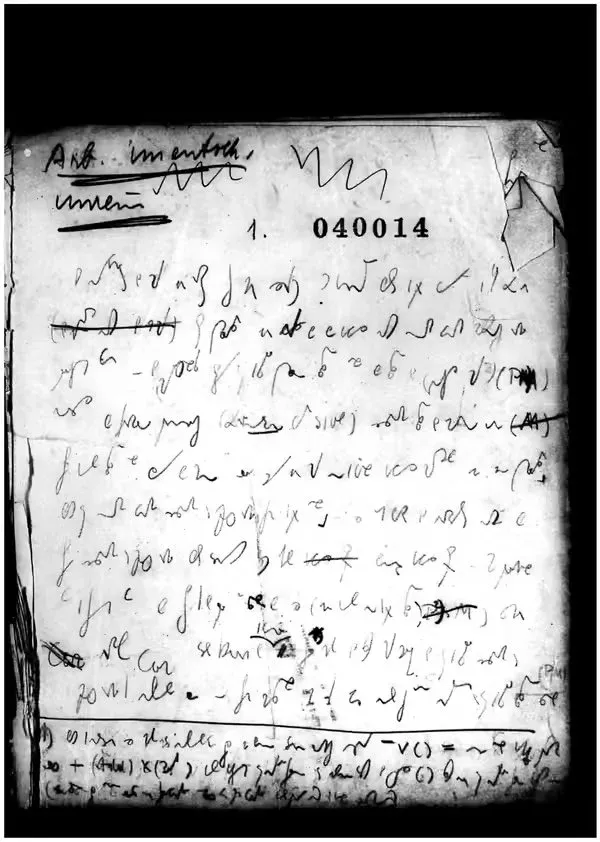
Of particular importance are 16 working notebooks composed in the early 1940s. They span 1,009 pages of intricate mathematical argumentation, largely written in the Gabelsberger shorthand script—an archaic German stenographic system that only a handful of living scholars can decipher.
Von Plato secured a €2.5 million European Research Council grant and assembled a team of specialists to transcribe the archive. Progress was painstakingly slow: the team managed to transcribe and analyze roughly one manuscript page per week.
The Turning Point: Integrating Claude
In September 2026, von Plato introduced Claude into the research workflow, providing the model with raw transcriptions, his own published monographs, and reference materials in formal mathematical logic.
Within days, the AI generated an exhaustive, 650-page systematic overview detailing the mathematical progression of the notebooks.
The primary breakthrough lay in the model's ability to hold the entire corpus in context: cross-referencing definitions, reconciling recurring lemma sketches, and linking ideas scattered across separate volumes.
The researchers prompted the model to isolate every substantive mathematical proposition for which Gödel provided a complete proof, an outline, or a structural insight.
Claude cataloged 663 candidate results. To establish mathematical truth, the team turned to the Coq interactive proof assistant for formal computer verification.
According to von Plato's reported audit:
- Approximately 400 assertions were verified as correct in their original formulation.
- Roughly 200 required refining boundary conditions or correcting intermediate definitions.
- About 50 proved to be flawed or mathematically invalid.
These figures illustrate the dual nature of generative models in high-level research: Claude served as an extraordinary indexing and discovery engine, while formal verification proved essential to separate valid theorems from false starts.
Did Gödel Anticipate a Twentieth-Century Breakthrough?
The most provocative discovery concerns Gödel's work on the independence of the axiom of choice and the continuum hypothesis.
In the 1960s, American mathematician Paul Cohen developed the method of forcing, solving the continuum problem and earning the Fields Medal. During his lifetime, Gödel maintained that he had arrived at a similar independence result years earlier, though he was unable to reconstruct his missing proof.
Claude's synthesis located an argument within the notebooks closely mirroring the sought-after proof structure. According to von Plato, the text contained a single flawed definition, even though Gödel had correctly formulated the same definition in earlier notes.
Using Coq, von Plato was able to formally verify the reconstructed argument.
Nevertheless, historical priority is far from settled. The manuscripts reveal Gödel's line of thought, but the extent to which his work anticipated Cohen's full breakthrough remains an open question for mathematical historians.
Perspectives from the Mathematical Community
Joel David Hamkins, professor of logic and mathematics at the University of Notre Dame, characterized the archival discovery as historically fascinating while urging academic caution.
Hamkins noted that he had not examined the specific reconstructed proofs himself. In his assessment, philosophical or thematic resemblances to Cohen's forcing do not mean Gödel possessed a fully realized equivalent proof. Historians must determine where Gödel's historical notes end and where modern algorithmic reconstruction begins.
Von Plato estimates that the 16 notebooks encompass at least 14 distinct avenues of mathematical logic that have languished unstudied for more than eight decades.
A Broader Trend Across Computational Science
Artificial intelligence is increasingly integrated into pure mathematics and archival scholarship. Research initiatives at Google DeepMind, including AlphaProof, are similarly focused on formalizing mathematical proofs and verifying software correctness.
The significance of the Gödel project lies in uniting philological analysis, domain-specific mathematical logic, and machine-checked verification.
This interdisciplinary methodology offers a scalable blueprint for exploring sprawling scientific archives, handwritten treatises, and unindexed legacy research.
Conclusion: Claude compressed years of manual archival indexing into days of targeted exploration. Yet the project equally underscores the boundaries of neural networks: when processing hundreds of candidate propositions, human oversight and computer-assisted formal verification remain crucial to guarantee scientific rigor.
Sources: