
In early October, a few days after news of actress Mia Goth's divorce, an AI-generated picture spread on Instagram: it showed her in a T-shirt reading "My ex is my biggest fan". A verified fan account posted the fake. On October 13 the actress's representatives told The Verge they had filed several complaints and that the account kept posting "counterfeit, AI images"; it was later removed. The story is ordinary, but it shows the problem: in a University of Florida study, people told generated faces from real ones at the level of random guessing, about 50% of the time. Here is what has changed in laws and technology in recent months, and how to protect yourself.
What a deepfake is, in plain words
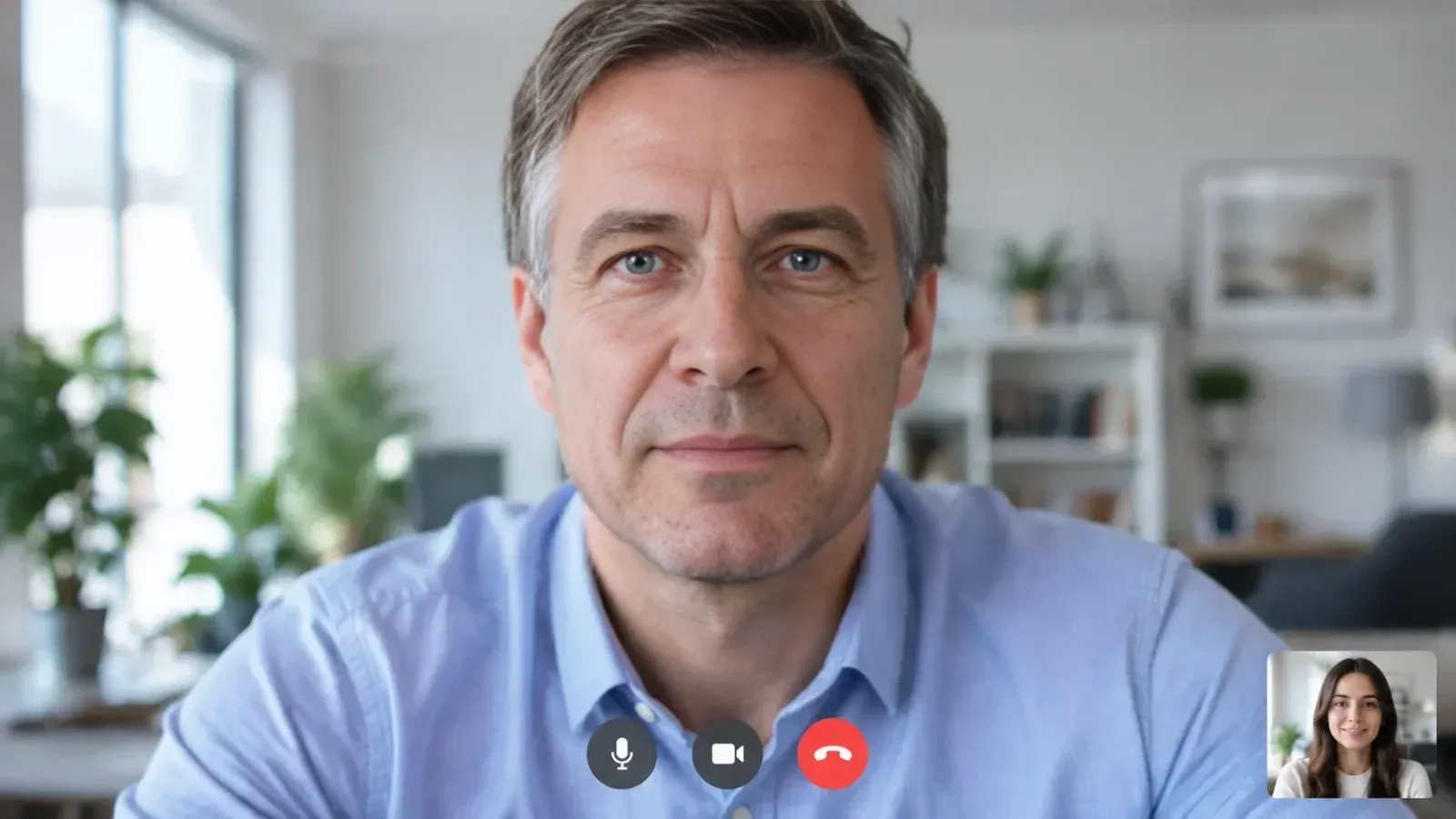
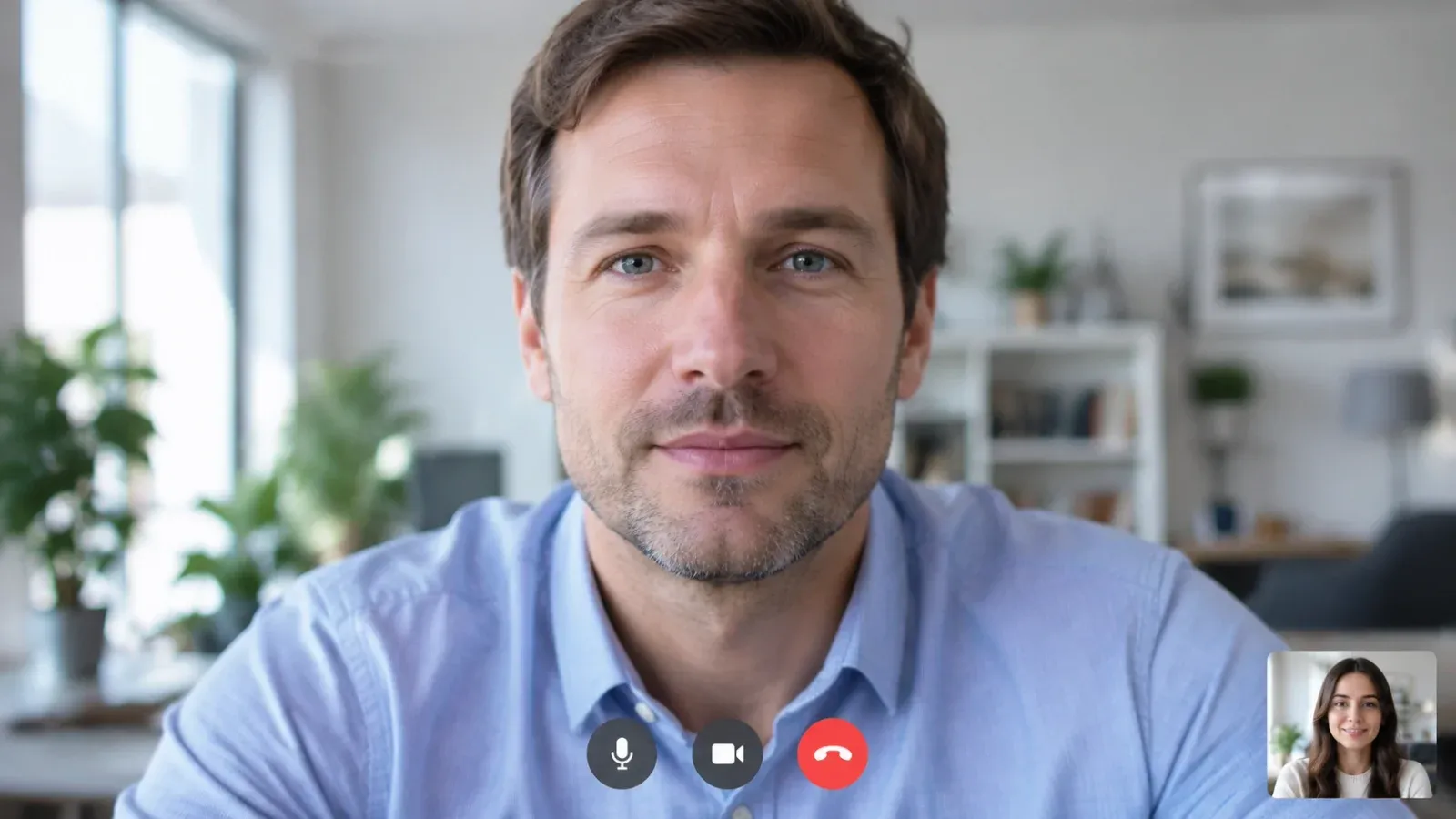 BeforeAfter
A deepfake (from "deep learning" and "fake") is a photo, video or voice recording that a neural network created or altered so that it looks real. Most often it is one of three things: a person's face is swapped in a video or photo, a neural network invents a whole clip with a real person, or it "clones" a voice from a short recording and the voice says what the person never said.
Not every picture from a neural network is a deepfake. A drawing of an astronaut on a horse is simply generated. Material becomes a deepfake when it is passed off as real: as the words, looks or events of a real person. How face swapping works and where it is useful, we covered in detail in Face Swap and Deepfakes.
New research: you cannot trust your eyes
The study came out in January 2026 in the journal Cognitive Research: Principles and Implications. About 2,200 participants rated 200 faces, and the result was at the level of guessing. With video people did better: about 1,900 participants answered correctly 63% of the time on average, which was better than the algorithms, which guessed roughly at random (Science News). So you cannot rely on a "feeling for a fake", especially with photos.
The scale of the problem
- Surfshark counted $3.7 billion in documented losses from deepfake fraud from 2020 to June 2026, of which $2.5 billion fell in 2025. Scams that started on social networks account for 47% of the losses, about $1.73 billion.
- On September 14 the Manhattan district attorney shut down 12 sites that sold pornographic deepfakes of celebrities. According to Alvin Bragg, the faces and bodies of about 1,200 people were "stolen and turned into illegal pornography".
Voice: the cheapest deepfake
Cloning a voice is easier than faking video: different services name a minimum of 3 to 30 seconds of clean recording, and about a minute is usually needed for a good result. The source of the recording is not a problem: a voice message or a clip on social media is enough.
- Pindrop, a call-center security company, reported a rise of more than 1,300% in deepfake fraud attempts in 2024, from one attempt a month to seven a day. This is the company's own data from analyzing more than 1.2 billion calls.
- In July 2025 someone used an AI-generated voice to impersonate US Secretary of State Marco Rubio and contacted foreign ministers (Reuters). Shortly before, the FBI had warned about such a scheme.
- In July 2025 Sam Altman said it scares him that banks still accept a voiceprint as proof of identity: AI, in his words, has "fully defeated most of the ways that people authenticate currently, other than passwords".
The schemes are the same everywhere: a voice message from a "relative" or a "boss" asking for an urgent money transfer.
How countries fight them
| Country | What has been done | When |
|---|---|---|
| USA | the TAKE IT DOWN Act: platforms must remove intimate deepfakes within 48 hours of a complaint, overseen by the FTC | signed 19.05.2025, enforced from 19.05.2026 |
| EU | AI Act, Article 50: a deepfake must be clearly labeled for people, and system providers mark content in a machine-readable way | from 02.08.2026, with a grace period for already released systems until 02.12.2026 |
| China | mandatory labeling of AI content: visible and hidden labels, removing them is forbidden | from 01.09.2025 |
The American removal law covers only intimate images, while the European one requires labels from everyone who publishes deepfakes.
What detects deepfakes
| Solution | What it does | Limitation |
|---|---|---|
| Google SynthID Detector | open to everyone since 07.10.2026: checks images, video and audio for an invisible watermark from Google and partners (OpenAI, NVIDIA, Kakao) | finds only labeled content |
| Content Credentials (C2PA), Microsoft and others | a file's "passport": who created it and who changed it | metadata disappears with a screenshot or re-saving |
| Reality Defender | detector for companies: audio, video, images, including live calls; in 2026 it gained partners such as KPMG and Samsung | no public accuracy figure |
| Hive Detect | free: upload a file or a link, there is a Chrome extension and a bot on X; checks images, video and audio, shows a probability and, if possible, the source model | the estimate is probabilistic, not a verdict; its error rate on your files is unknown |
| Intel FakeCatcher | by blood flow in the pixels of the face | Intel claims 96% accuracy, a research project |
What Content Credentials are. It is a file "passport" under the C2PA standard: an image, video or audio file records what it was created with and when, what edits were made, and optionally the author. Everything is cryptographically signed, so a file cannot be changed, or the passport forged, unnoticed. The standard's committee includes Adobe, Google, Microsoft, OpenAI, Amazon, Meta, BBC, Sony and TikTok. The difference from the SynthID watermark is simple: the watermark is built into the content itself and is invisible, while the passport is stored alongside in metadata. It does not pass a verdict of "real or not", it only shows origin and history. The main limitation is that far from every file has a passport: only some cameras and phones add one at capture. According to a Lumethic review, among smartphones only the Google Pixel 10 signs photos by default, on the Samsung Galaxy S25 a label appears only on images edited with AI, and the iPhone does not support the standard. Among cameras the first was the Leica M11-P (2023), and the Leica SL3-S got signing later. Sony added C2PA support through firmware for some Alpha models, Canon enabled it on the EOS R1 and EOS R5 Mark II, but at first only for registered news agencies. On the Nikon Z6 III the signature proved vulnerable: in September 2025 the company suspended the service because the camera signed a picture it had not taken (this was done through the multiple exposure mode). Social networks and messengers usually strip metadata on upload, as do re-saving and screenshots. So a missing passport proves nothing: the photo may be real, just taken on a camera without support for the standard or re-saved. If there is a passport and the signature matches, that is a strong argument for the file's origin. You can check a file at contentcredentials.org/verify.
Google's built-in checks in Search, Gemini and Chrome handle more than a million requests a day. But the main limitation is common to all detectors: they catch only what someone has labeled, and they do not guarantee that an unlabeled file is real.
Which signs of a fake still work
It used to be possible to spot a deepfake by the "oddities" of the picture. Such tips still underlie all the guides, but their authors warn about the limits themselves. MIT Media Lab writes that "there's no single tell-tale sign of how to spot a fake", and Reality Defender says its tips are not foolproof and "may quickly become outdated". There is no exact list of what generators have already fixed, so what follows is an assessment based on these recommendations.

| Sign | What to look at | Reliability |
|---|---|---|
| Hands, fingers, teeth | extra or merged fingers, a "single" row of teeth | per Reality Defender, algorithms struggle to draw individual teeth and fingers, but newer generators do it less often: if you find an oddity, be wary, if you do not, it proves nothing |
| Blinking | no blinking or too much | an old sign: early fakes almost did not blink, and new ones blink normally, so on its own it now says little |
| Light, shadows, glare | does the glare on glasses change when the head turns, do shadows fall the same on the face and the background | MIT Media Lab advises starting with the physics of the scene: a fake may render light and shadow wrongly, and a single frame hides this worst |
| Skin and hair | overly smooth skin, hair without flyaway strands, unnatural gloss | the sign still occurs, but is barely visible in high-quality generations |
| Face edges | blur on the forehead, temples, jawline | typical of a face swap; fully generated images have no such seam |
| Motion and cuts | abrupt transitions, illogical movements, objects that vanish | helps with video: Reality Defender advises looking for abrupt transitions and continuity errors, which are harder to hide than a single beautiful picture |
| Lip sync | a slight delay of speech relative to the mouth | unreliable: ordinary delay in a video call looks the same |
| Voice | unnatural pauses, pitch swings, an even pace, no emotion and no background noise | proves nothing on its own: ordinary people sound like this on a bad connection, repeated glitches throughout the whole call are more telling |
The main conclusion: old tells, like the absence of blinking, are ceasing to work, while the physics of the scene and the behavior of the other party remain a weak spot of a fake. So a characteristic sign of a deepfake today is not one bright detail but a mismatch of several: the light does not match the shadows, motion breaks between frames, the voice does not fit the surroundings. And if you need to know how to recognize a video made by a neural network, start with light, shadows and the continuity of movement, not with the face. But even an experienced viewer makes mistakes: according to studies Reality Defender cites, people often cannot tell a fake from real video yet stay confident in themselves. So an oddity in a photo or a voice is a reason to check the source, not a verdict.
How to recognize a deepfake: checking a photo, video or call
- Look for the oddities from the table above: light, shadows, hands, pauses in the voice. But do not draw a conclusion from one.
- Find the original. Run a reverse image search and see where the picture first appeared.
- Check the label. Upload the file to the SynthID check and to the Content Credentials check. If there is no label, that proves nothing: most cameras and phones do not add one, and social networks strip it. You can see what is left in the file with the free ExifTool utility: it reads EXIF and Content Credentials metadata. But empty metadata also proves nothing. Additionally, upload the file to the free Hive detector: it shows the probability that the file was made by AI, as a hint, not a verdict.
- Look at the source, not the face. A verified account does not guarantee truth, as the Mia Goth case showed.
- Do not verify by voice. If a "relative" or a "boss" asks for an urgent money transfer, hang up and call back on a number you know.
- On a video call, ask the other person to do something. Have them turn their head in profile, pass a hand in front of the face, scratch their nose, cover their eyes with their palms or share their screen. In real time a fake's face often distorts in such cases, and the hand "sinks" into it. But this is a trick for today: as generators improve it will work worse, so do not rely on it alone.
- Agree on a code word with your family. It protects against a call with a cloned voice.
- In a company, confirm transfers through a second channel: a personal call or a work chat.
How to lower the risk in advance
Cloning a voice and swapping a face need material, and it is most often taken from open sources: voice messages, clips and photos on social networks and in messengers. So a few simple measures help before anyone tries to fake you.
- Less open material. Close your social profiles, do not leave public the voice messages, videos and large face photos you do not need.
- Control apps. Check which apps you have allowed access to the camera and microphone, and turn off the extras.
- A voice or a face should not be the only confirmation. Turn on two-factor authentication and passkeys where available, and ask banks and services that verify you by voice to switch to another method. OpenAI chief Sam Altman has also warned about this weakness.
- Tell your family. Explain to relatives, especially older ones, that a voice in a message or call can be faked, and agree on a code word.
- Do not rush. Scammers rely on urgency ("I had an accident, I need money right now"), so any hurry with money is a reason to stop, hang up and call back yourself. Sometimes they imitate a dropped connection to hide glitches in the voice or the picture.
The bottom line
There is no universal way to tell a deepfake, and the conclusion from all of the above is one: do not take a picture, video or voice at its word; check the source and confirm anything important through another channel. Oddities in the frame, provenance labels and detectors work only together, and none of them gives a verdict. No label, or a detector that found nothing, does not rule out a fake. A label, or a detector that raised an alarm, is a reason to check further, not proof.
Two precautions. Do not accuse a person of faking something just from a detector's result: its probabilistic estimate may be wrong, and a real author will be hit. And do not forward a doubtful photo or video "to show what a fake it is": you help it spread. If you have become a victim of a deepfake or a scam with a cloned voice, save the link and a screenshot, file a complaint on the platform, and report lost money to your bank and the police.
For the legitimate uses of face swapping, see Face Swap and Deepfakes.
Sources
- Detect DeepFakes: How to counteract misinformation created by AI, MIT Media Lab - a guide to visual signs.
- Deepfake Detection Guide, Reality Defender - signs in images, video and audio and their limits.
- Content Credentials: how it works, Content Authenticity Initiative - what is recorded in a file's passport and what it does not guarantee.
- C2PA - the standard and its committee.
- Content Authenticity Initiative blog - Leica M11-P and SL3-S.
- Nikon temporarily suspends its Z6III Content Credential program, DPReview, 05.09.2025.
- Sony delivers firmware updates including C2PA compliancy, Sony, 2024.
- EOS R1 and EOS R5 Mark II firmware, Canon, 07.2025.
- AI-Generated & Deepfake Content Detection, Hive - free tools.
- ExifTool, Phil Harvey - reading EXIF and C2PA metadata.
- Smartphones with C2PA Content Credentials, Lumethic, updated 16.09.2026 - which phones sign photos.
- Is this real? Susceptibility to deepfakes in machines and humans, Science News, 03.02.2026 - the University of Florida study.
- Introducing the SynthID Detector, Google, 07.10.2026 - the detector, partners, checks in Search, Gemini and Chrome.
- FTC begins enforcing the TAKE IT DOWN Act, FTC, 19.05.2026 - the law on removal within 48 hours.
- Transparency obligations under Article 50 of the AI Act, European Commission - deadlines and grace period.
- Marking of AI-generated content, Cyberspace Administration of China, 2025 - labeling from 01.09.2025.
- Pindrop's 2025 Voice Intelligence & Security Report, Pindrop, 12.06.2025 - growth of deepfake attacks on call centers.
- Rubio impersonator used AI calls, Reuters, 08.07.2025.
- Sam Altman warns of an AI fraud crisis, Futurism, 27.07.2025 - Altman's words on voice authentication.
- Mia Goth Instagram AI shirt, The Verge, 13.10.2026 - statement from the actress's representatives.
- Deepfake fraud origins, Surfshark, 07.2026 - losses.