
In brief. Anthropic developer Jake Eaton showcased a photorealistic scene of a shopping cart in a multi-level parking garage, which Claude Fable 5.2 reportedly created using approximately 700,000 simulated brush strokes. Rather than relying on a conventional image generator, the model wrote custom Python scripts to operate simulated physical brushes. In a separate test, another Anthropic engineer demonstrated the model painting a bird in exactly 111 strokes without an undo feature. While the demonstrations are visually compelling, the underlying code and token costs for the flagship example have not been open-sourced, meaning they cannot be treated as a benchmark comparison against diffusion models like Midjourney.
Large language models have long been capable of creating graphics indirectly: generating SVG markup, rendering onto an HTML5 Canvas, preparing Matplotlib scripts, or orchestrating Blender via its Python API. However, the recent experiments conducted with Claude Fable 5.2 demonstrate a distinctly different approach. In these tests, the model authors code that simulates wet paint interacting with a digital canvas, iteratively directing the artwork through programmatic tooling.
On November 9, coincident with Fable 5.2's launch, Anthropic staff member Jake Eaton published a series of procedural artworks. The most widely discussed was a parking garage featuring a solitary metal cart, nuanced linear perspective, cast shadows, and concrete reflections. Eaton instructed the model to make the image as indistinguishable from a photograph as possible, reporting that the finished painting required roughly 700,000 simulated brush strokes.
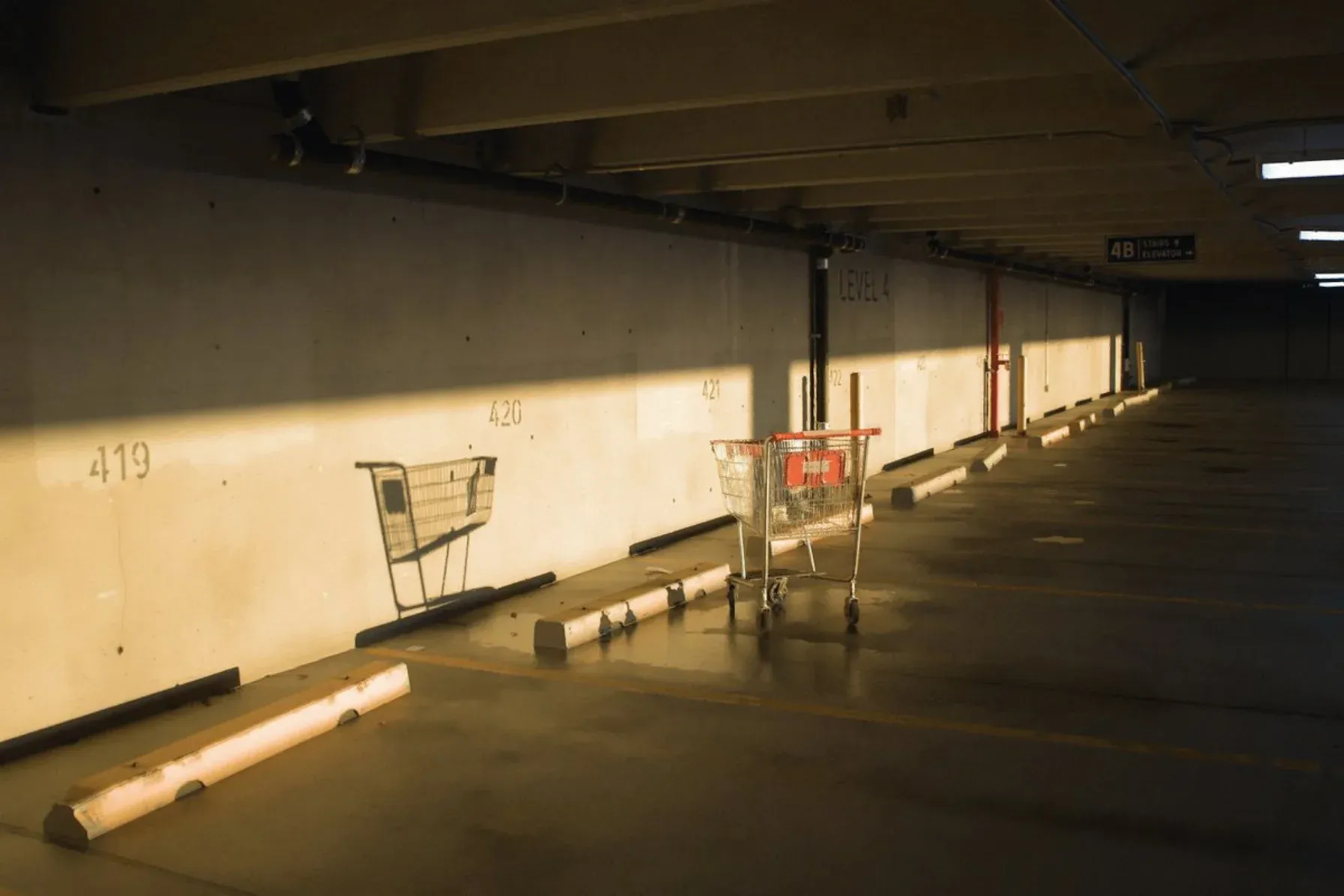
Parking garage scene with cart, created by Claude Fable 5.2 using approximately 700,000 simulated brush strokes. Demonstration and artwork by Jake Eaton, Anthropic.
How Fable Paints and How It Differs From Diffusion Models
Standard modern image generators operate over latent spaces, iteratively denoising a canvas based on textual embeddings. In Eaton's experiment, the imagery emerged through an entirely programmatic mechanism: Fable wrote a 1,000 to 2,000-line Python script that drove a custom painting simulation. The virtual brushes possessed distinct physical attributes, including bristle dynamics and paint loading. The code then sequentially applied strokes to build the scene layer by layer.
There is a critical technical distinction to keep in mind: 700,000 strokes does not mean the language model generated 700,000 individual instructions one by one. Eaton described programs that execute parameterized loops and algorithmic painting routines. Consequently, the stroke count cannot be directly converted into token counts or compared to diffusion denoising steps. Much of the repetitive work is executed by the Python runtime rather than successive LLM calls.
According to Eaton, this specific workflow operated without an auxiliary image-generation model, without a 3D pre-render, and without tracing an existing photograph. However, the complete codebase, execution trace, token expenditures, and total compute cost remain unpublished. As a result, the reproducibility and standalone efficiency of the demonstration cannot be independently audited.
For engineers, the experiment's real value lies elsewhere. The model manipulates a software environment that produces visual output. A human can then review the canvas, provide targeted critique, and let the model modify either its painting engine or its composition strategy. This mirrors the iterative workflow of an autonomous coding agent: formulate a plan, author the script, inspect execution results, and debug flaws.
111 Strokes With No Undo: A More Constrained Experiment
Another Anthropic engineer, Michael Graczyk, subjected Fable 5.2 to significantly more rigorous constraints. The model was tasked with painting a sunrise silhouette of a bird, defining each stroke as an explicit sequence of coordinates, width, and hexadecimal color. Crucially, the model had no undo functionality. After each stroke sequence, it inspected the intermediate canvas and determined how to proceed.
A published 21-second recording captures the creation process unfolding in exactly 111 discrete strokes. For the opening brushwork, Fable selected #30346a, a 90-pixel width, and five slightly offset control points. The model explained that these deliberate micro-irregularities simulated natural human hand jitter. When the bird's back turned out too narrow, Fable simply applied a broader stroke directly over it; the underlying brush marks ended up resembling layered feathers.
This serves as a pristine demonstration of error correction within a physically constrained environment. The model cannot rewind its state or arbitrary overwrite pixel buffers. It must reckon with the existing marks on the canvas and plan subsequent actions so they harmoniously integrate with and refine the artwork.
Video demonstration by Michael Graczyk: Claude Fable 5.2 paints a bird stroke by stroke without an undo function. By Michael Graczyk, Anthropic. Original post on X.
Graczyk also showcased a more elaborate composition: two people painting at sunset, completed in 280 strokes. At one stage, an aggressive lighting wash accidentally obscured tabletop objects, including paint tubes and a mug. The model subsequently painted over the affected zones, cleanly restoring the still-life details. In both experiments, what stands out is not merely the aesthetic finish, but the structured decision-making under irreversible conditions.
Why Claude Invents Fictional Artists
In the same thread, Eaton described a complementary experiment. Previous viewers had observed that Opus 5.5's stylistic tendencies often mirrored prominent historical masters. In response, Eaton prompted Fable 5.2 to first conceptualize an entirely fictional painter — complete with backstory, aesthetic tastes, and recurring idiosyncrasies — and then paint consistently in that persona.
This gave rise to personas such as "Dermot Hale," who favors industrial urban landscapes, drab overcast skies, and heavy impasto palette-knife work, and "The Tidewright," centered on atmospheric aerial perspectives. According to Eaton, Hale's output exhibited consistent thematic motifs: harsh natural light, human labor, heavy machinery, and industrial architecture. Eaton cautioned that he does not interpret these behavioral patterns as evidence of machine "personhood."
It is important not to mistake artistic consistency for autonomous intent or consciousness. Instead, it demonstrates how a rich context window and structured persona constraints enable an LLM to maintain coherent stylistic parameters across multiple sessions. In gaming, procedural graphics, and industrial design, this stylistic continuity can prove far more valuable than one-off showcase images.
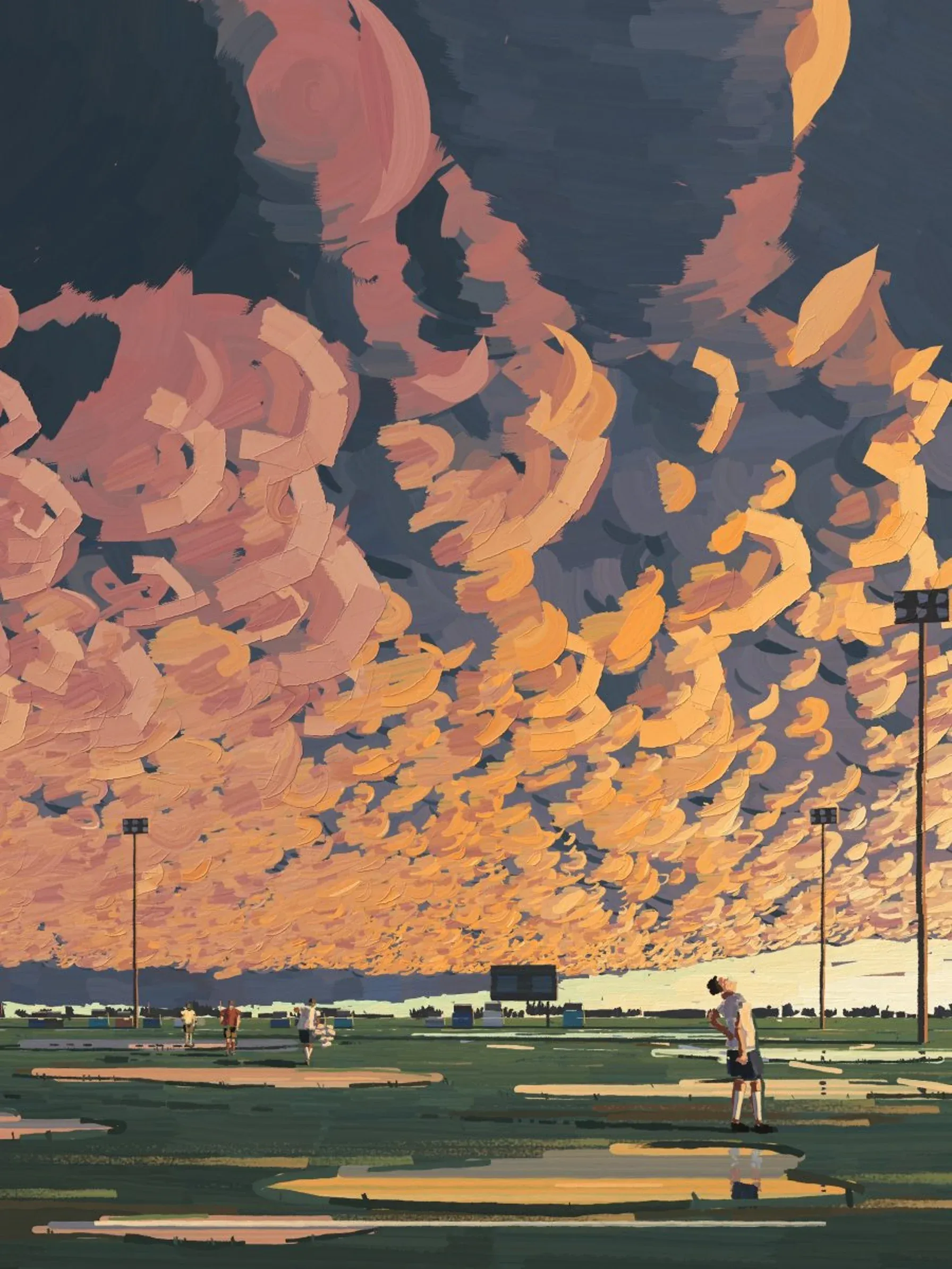
Painting from the fictional artist persona Dermot Hale, created by Claude Fable 5.2. Demonstration and artwork by Jake Eaton, Anthropic.
Developer and Community Reactions
Community reaction to the parking garage was divided. Many observers praised the realistic lighting, specular highlights, and perspective control. Others questioned whether the image looked suspiciously like a real photograph run through a stylized impasto filter, calling for the underlying source code to be released. On technical forums, the core debate centered on an actionable question: was every stroke synthesized from scratch, or could the script have produced a 3D scene render and post-processed it into painterly marks?
Because public materials remain high-level, independent reproduction is currently impossible. Claims regarding the absence of external image generators stem entirely from Anthropic staff; no open audit has taken place. Consequently, one cannot assert that this methodology outcompetes dedicated image models.
AI researcher Ethan Mollick framed the experiment within a broader perspective. In his evaluation of Fable 5.2, he reiterated the concept of Jagged AGI: models demonstrate world-class capabilities on demanding technical tasks while simultaneously exhibiting blind spots in evaluating their own output. In Mollick's tests, Fable built sophisticated applications, yet occasionally failed to recognize when a piece became excessively unwieldy or aesthetically clumsy. In algorithmic painting, technical complexity does not inherently guarantee aesthetic merit.
Feasibility and Practical Applications
The underlying principle can be explored with existing LLMs: grant a model access to a Python sandbox, let it design a procedural canvas library, execute scripts, review rendered frames, and iteratively adjust coordinates. However, this is not an exact replica of Eaton's proprietary implementation, as the precise prompts and simulation libraries have not been disclosed.
Three factors dictate practical utility. First is compute latency and cost: multi-step generation, evaluation, and correction loops consume substantial tokens. Second is workflow predictability: for standard commercial graphics, ad banners, and product mockups, specialized diffusion or transformer image models remain dramatically faster and more consistent. Third is programmatic editability: when an artwork is represented as executable code, a human can alter brush dynamics, lighting vectors, and color swatches without having to regenerate the scene from scratch.
For creative technologists, this points toward a compelling niche: procedural texture generation, computational painting, and automated game asset authoring. For AI researchers, its primary value is observational: studying how an agent plans interdependent actions, monitors intermediate states, and executes corrective routines.
Conclusion
The 700,000-stroke experiment highlights a language model's ability to wield programming as a creative instrument. The most convincing aspect is not the claim of photorealism, but Fable 5.2's capacity to orchestrate complex visual synthesis via code and feedback loops. The 111-stroke and 280-stroke demonstrations further illuminate the mechanics of constraint-based error recovery.
Nevertheless, a sharp boundary separates an intriguing research demo from a commercially viable production pipeline. Until code, token costs, and independent benchmarks are made public, this work should be viewed as an impressive developer showcase rather than a replacement for specialized creative suites.
References and Original Posts
- Jake Eaton, original parking garage post and 700,000-stroke claim, X, November 9
- Jake Eaton, description of Python engine and fictional artist personas, X, November 9
- Michael Graczyk, 111-stroke bird painting video, X
- The Decoder, in-depth analysis of Anthropic painting demos, November 15, 2026
- Anthropic, official announcement of Claude Fable 5.2 and Mythos 5.2, November 9, 2026
- Ethan Mollick, "Fable 5.2 and Jagged AGI", November 9, 2026