
On 19 November a mysterious model called Gestalt appeared on the new Frontier Design Benchmark. In blind comparisons of websites built from client briefs it scored 1931 Elo. For comparison, Claude Fable 5.2 has 1713 and professional designers 1739. Just as striking: Gestalt's sites hardly show the visual habits that usually give AI away.
The news quickly turned into guesses about the developer. On the Chinese side of X people started talking about GLM-5.5 from Z.ai. So far, though, Gestalt's lead is confirmed in one specialised design test, and its origin remains undisclosed. There is also a public statement that contradicts the Chinese theory.
What Gestalt showed
According to the current Contra Labs leaderboard, Gestalt wins 90% of the pairwise comparisons it is rated in. Claude Fable 5.2 sits at 73%, and the reference work by designers at 74%. The gap between Gestalt and Fable reaches 218 Elo points. The next known AI model is Claude Opus 5.5 with 1691 Elo.
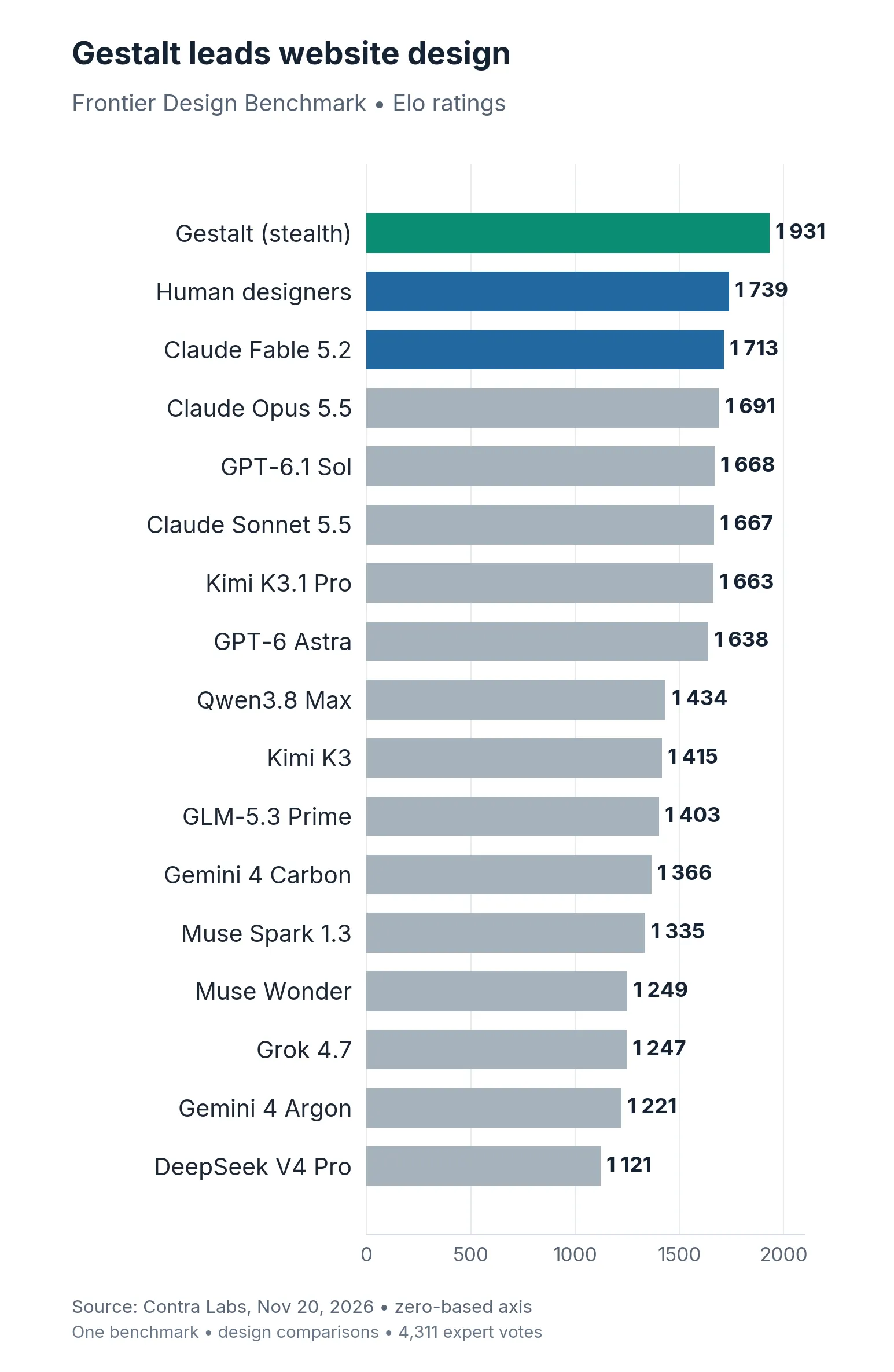
Chart 1. All 17 entrants of the Frontier Design Benchmark. Source: Contra Labs, data as of 20 November 2026.
One caveat matters: 90% is Gestalt's overall win share against different opponents, not the probability of beating Fable head to head. The organisers have not published a separate table of direct Gestalt versus Claude Fable 5.2 results. The research post does contain another concrete comparison: professionals preferred Gestalt's site over a human reference 20 times out of 28.
The numbers move slightly as the leaderboard updates. The organisers' original article lists 1928 Elo for Gestalt and 1714 for Fable, while the current leaderboard shows 1931 and 1713.
What Frontier Design Benchmark is and how it was run
The benchmark was launched by Contra Labs and BenchFlow. The organisers analysed roughly 4,600 website orders from the Contra network and prepared 33 tasks. Of those, 27 are based on real orders reworked for fictional clients, and six came from partners. The current public table is marked separately as a ranking over the 27 Contra tasks.
This is harder than the usual request to make a pretty landing page. Models receive information about the brand, the target audience and user scenarios; some tasks include logos, source materials and requirements for the mobile layout, accessibility and interface behaviour. Among the examples are a multi-page site for a cybersecurity company, a donation app and an education service with tests.
Agents build working sites in an isolated environment. Professional designers then pick the better of two results blind and can explain their choice. The methodology lists 35 designer judges, 4,311 votes and five rounds. The ranking is computed from pairwise preferences using a Bradley–Terry model and expressed on an Elo scale. When the experts were split randomly into two groups, the rankings agreed closely: Spearman's coefficient 0.95.
There is a significant limitation too: the full task set, answers and votes are closed and available to researchers on request. The test also runs in agent environments from different developers. The final score reflects the performance of the whole configuration, including tools and task orchestration.
Why Gestalt may be more interesting than a simple Elo lead
The study includes two additional scores. The first, the Design Critique Rubric, checks the result against 35 design criteria: composition, typography, contrast, structure, usability and others.
Here the picture changes. Claude Fable 5.2 and Claude Opus 5.5 score 84 each, Gestalt 83. So Gestalt's lead in professional preference cannot be explained by the absence of formal errors alone. Experts generally like its result more, even though competitors follow individual design rules slightly better.
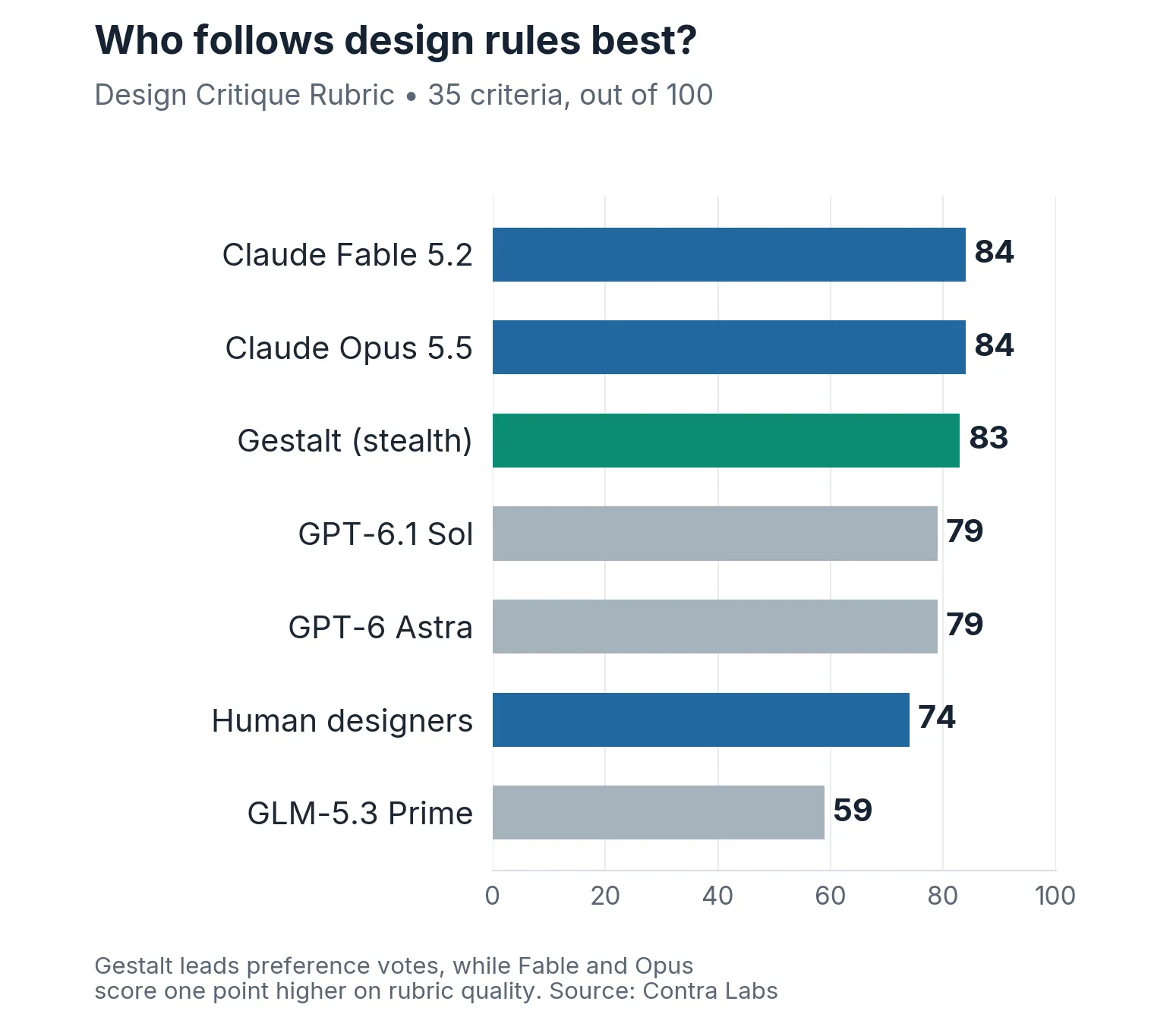
Chart 2. Results of the review against design criteria.
The second score, the Slop Detector, measures how recognisable the typical AI style is. The lower the value, the fewer such markers. Human work sits around 0.9, Gestalt at 1.2, Fable 5.2 at 31, GPT-6 Astra at 41 and Gemini 4 Carbon at 54.
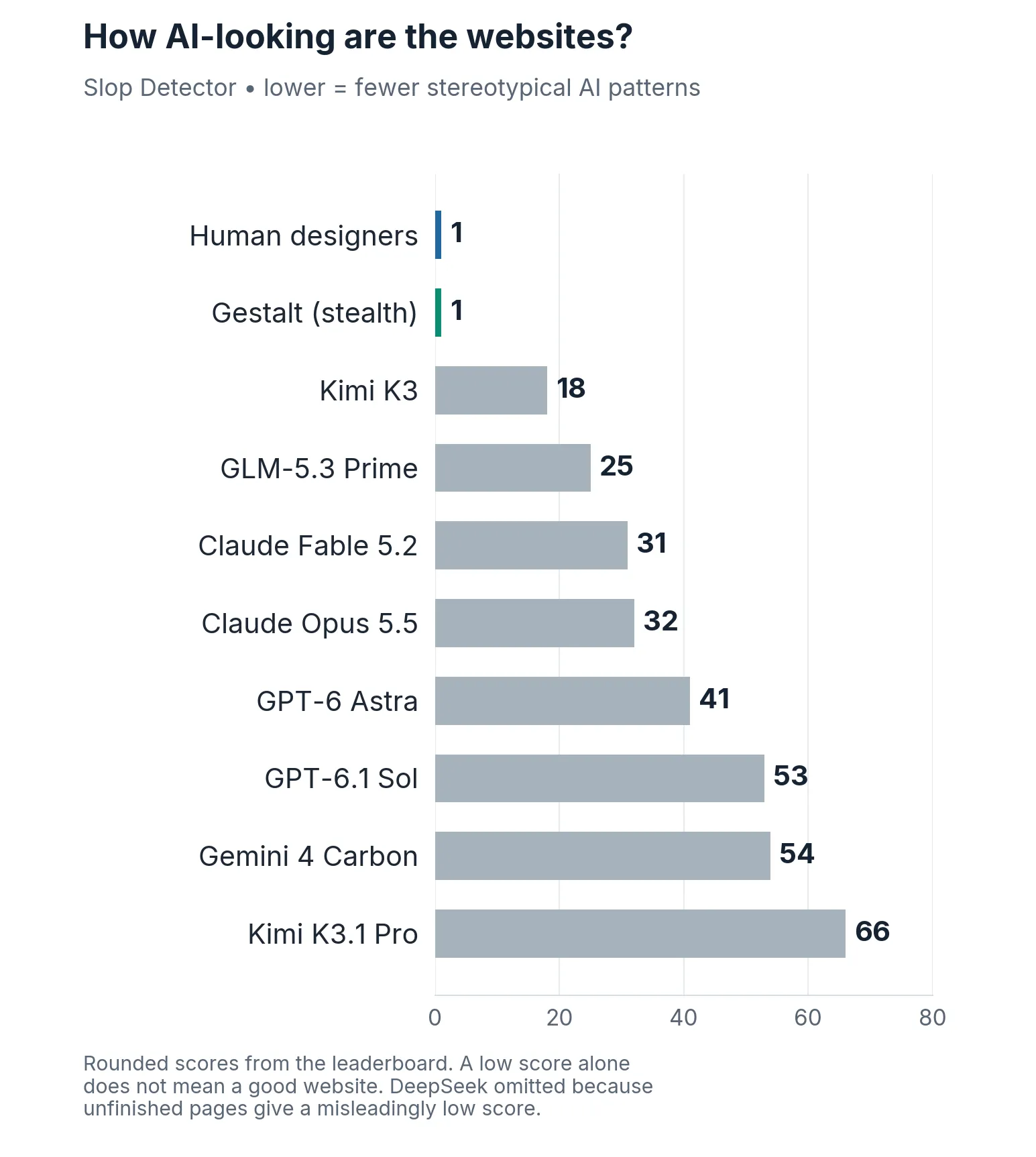
Chart 3. Rounded Slop Detector scores from the official table.
The Contra team also names recognisable habits of other models: Claude often puts horizontal arrows on buttons, GPT diagonal ones, and Gemini overuses cards and technical captions. In this check Gestalt looks unusually human.
At the same time a low Slop Detector score does not prove quality by itself. DeepSeek V4 Pro is close to one as well, because some of its sites were left unfinished: the detector does not recognise the familiar AI design where the work has barely been done.
Where the GLM-5.5 theory came from
On 20 November the author of the X account @mylesBaiM claimed that Gestalt is supposedly GLM-5.5. His arguments: Chinese GLM had already shown outstanding results in web design, several months have passed since GLM-5.3, and the names Gestalt and GLM start with the same letter.
The hypothesis does have a real basis. In June GLM-5.2 did take first place in Design Arena for single-prompt HTML generation, ahead of Claude Fable 5. But that is a different test and an earlier version of Claude. Such a result shows the competence of the GLM family in design, yet says nothing about who built Gestalt.
On top of that, entrepreneur Siqi Chen, who hinted on social media that he knows Gestalt's creator, said the model does not belong to Anthropic, OpenAI, Google, xAI or SSI. In a separate post he called it American. That is not an official developer announcement, but it directly contradicts the GLM-5.5 theory.
The Hacker News discussion has both GLM guesses and scepticism. Users ask where Gestalt can be tried and why there are not enough public examples. A Contra representative clarified another error in the widely shared reports: the leaderboard has one hidden model, and the next row is work by real designers. He also said Gestalt is not a model built by Contra itself.
What remains unclear
So far the developer, the architecture, the exact agent environment of Gestalt, the cost of generating a site, API availability and a release date are all unknown. In the public results gallery you can study sites from known entrants, but in the example reviewed Gestalt was absent. Independently verifying its visual advantage from public materials is therefore difficult for now.
The result matters for practical AI use: design evaluation is gradually moving from pretty one-page mockups to working sites with real constraints. But calling Gestalt more powerful than Fable across many benchmarks is premature. That conclusion needs results from independent coding, reasoning and agentic tests, plus an open comparison with identical tools.
As of 20 November the defensible conclusion is this: Gestalt leads convincingly in one new benchmark of professional web design. The GLM-5.5 theory is unconfirmed and has a public objection. The next significant event will be the developer revealing itself and the results becoming independently checkable.
Sources
- Contra Labs: Frontier Design Benchmark, current table
- Contra Labs: research and Gestalt results
- Experiment methodology
- Design Critique and Slop Detector
- Dataset access description
- Design Arena: the GLM-5.2 result
- @mylesBaiM's GLM-5.5 post
- Siqi Chen on Gestalt's supposed origin
- Hacker News: Gestalt discussion