

A couple of words for anyone who isn't sure what this is about: ChatGPT stands for Chat Generative Pre-Trained Transformer. It's an AI neural network. The user types in a query, and the chat provides the relevant information.
Right now ChatGPT, especially GPT-4, works better than ever and is rapidly gaining popularity. It's especially loved by school and university students — after all, it can solve math problems faster than your favorite app loads on your phone. But in reality, neural networks can do much more — write code, run statistical analysis, and even generate business models!
So can you use ChatGPT to make school or university grind easier? It's a rhetorical question, because of course you can! The real question is how to do it smartly, so the resulting text, code, solved problem, essay, or paper doesn't end up being read aloud by your professor in front of the whole class while they roll on the floor laughing.
It's time to figure out what ChatGPT can do well, and what you'd better not trust it with.
How you can use ChatGPT
1. Quick summaries and plain-language explanations
This problem is very real in school, and for university students it's even worse. Ever had a textbook or research paper written so dense and dry that reading it feels like a dementor sucking the life out of you? Just paste the text into ChatGPT and ask it to summarize the whole thing or explain it in plain language. It's great at this, so it'll give you a short, clear text.
Here's a prompt showing how this works on GPT-4 (it's most convenient to use through our service):
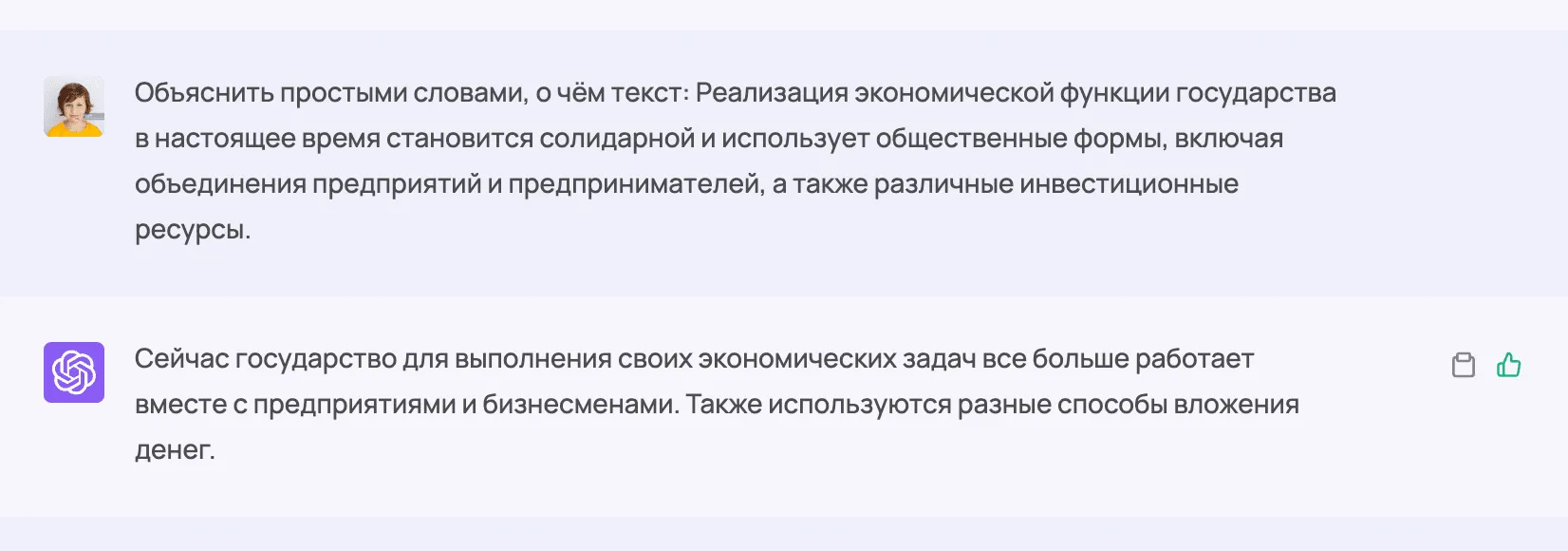
By the way, this is also a great way to write longer research papers. The summaries ChatGPT produces are sometimes so well put together that you can drop them straight into your own work (just don't forget to run a plagiarism check).
2. Generating new topics for essays and research papers
Writing texts, even academic ones, is an art — and art requires inspiration. The trouble is, inspiration doesn't always show up when you need it. But ChatGPT is always on hand and ready to help. Don't know what topic to write your paper on? It does. And ChatGPT can help not just with topics, but with plot lines or an outline for your work too.
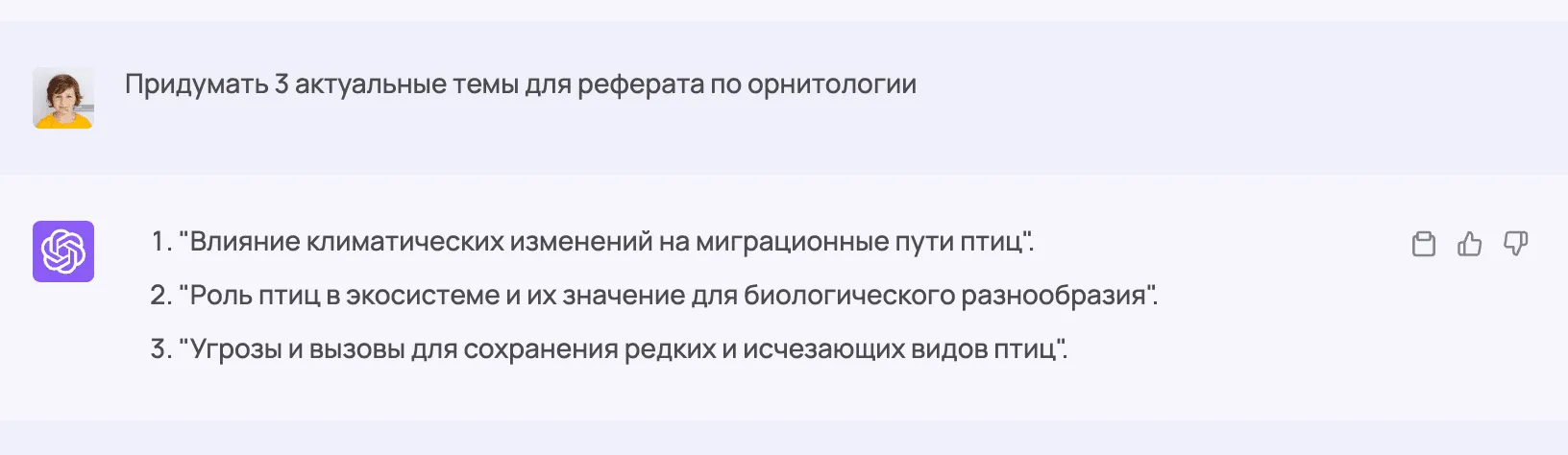
3. Summarizing and drawing conclusions
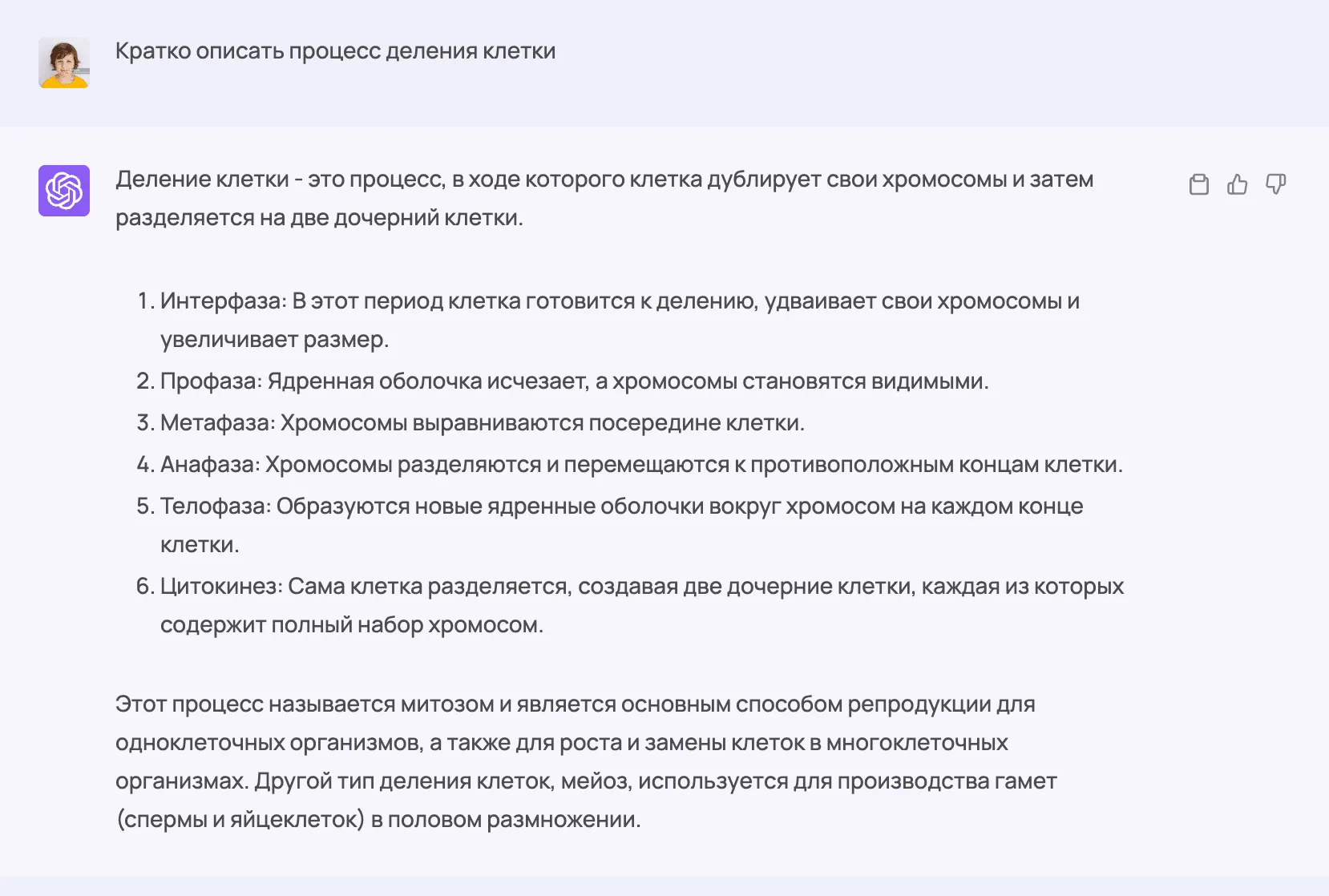
This point overlaps closely with the first one. If you keep your notes digitally but they end up too detailed, and you need a kind of short cheat sheet for the material — don't write it yourself! Feed your notes to ChatGPT and give it the command "summarize this text" — it'll do a great job! Here's another prompt showing how ChatGPT briefly explains cell division:
4. Grammar and spelling checks
Any language is objectively hard, and making mistakes in it is completely normal. However, your teacher or advisor probably won't accept that as an excuse — so it's better to avoid awkward situations upfront. So we create a request like "check grammar" or "fix mistakes," then add our text to ChatGPT:
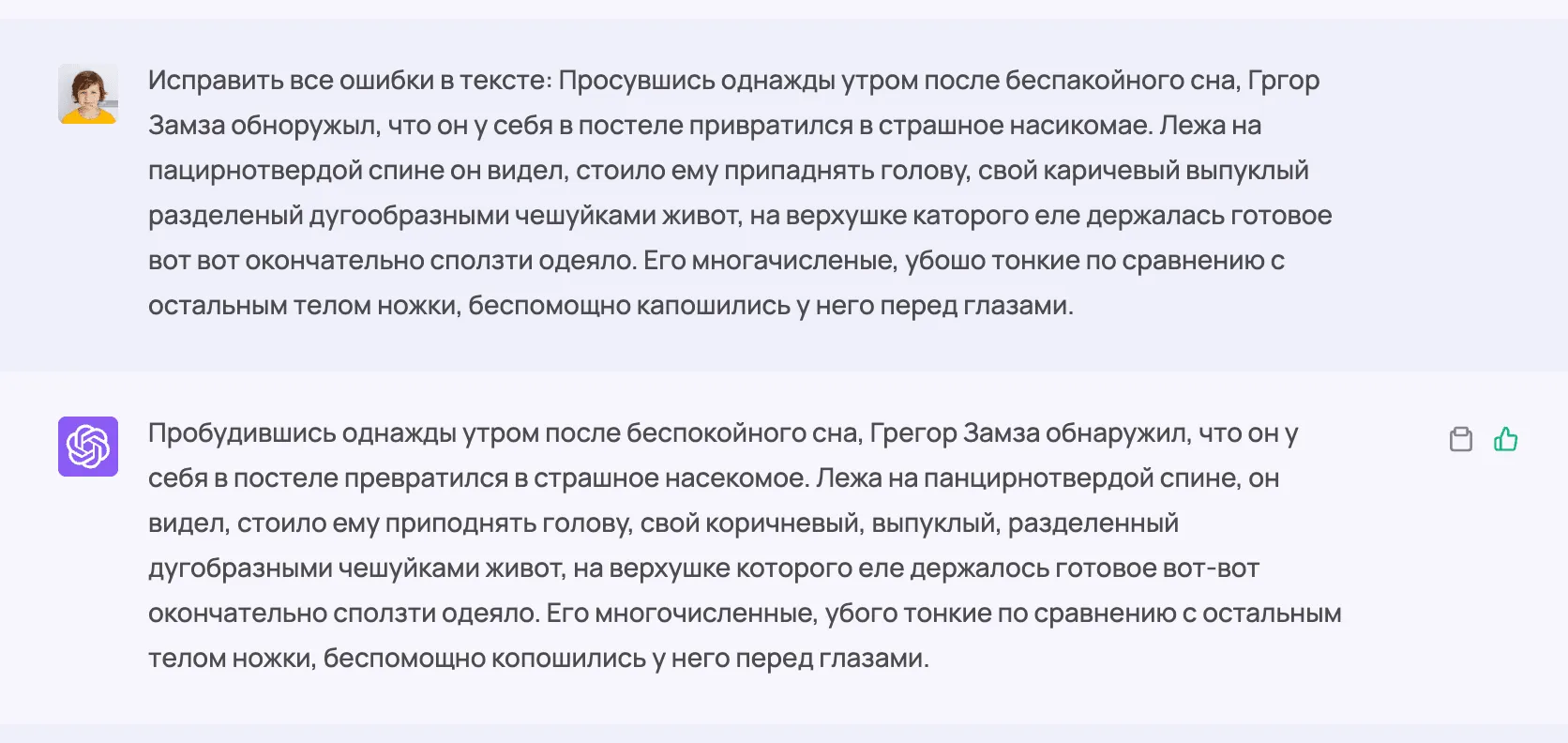
The result isn't perfect (the chatbot missed a couple of small things), but it's still pretty solid. ChatGPT-4 fixes typos and errors, both spelling and syntax, about 9 times out of 10.
5. Writing official documents
We're not talking about complex tax or government forms here (only a higher power can make sense of those without a drink), but rather various kinds of recommendation letters, notices, invitations, requests, and so on. You can write a free-form draft and ask the neural network to polish it, or lay out the necessary details and conditions and ask it to compose, say, a cover letter based on them. ChatGPT is quite familiar with formal, official language, so the task will get an "A."
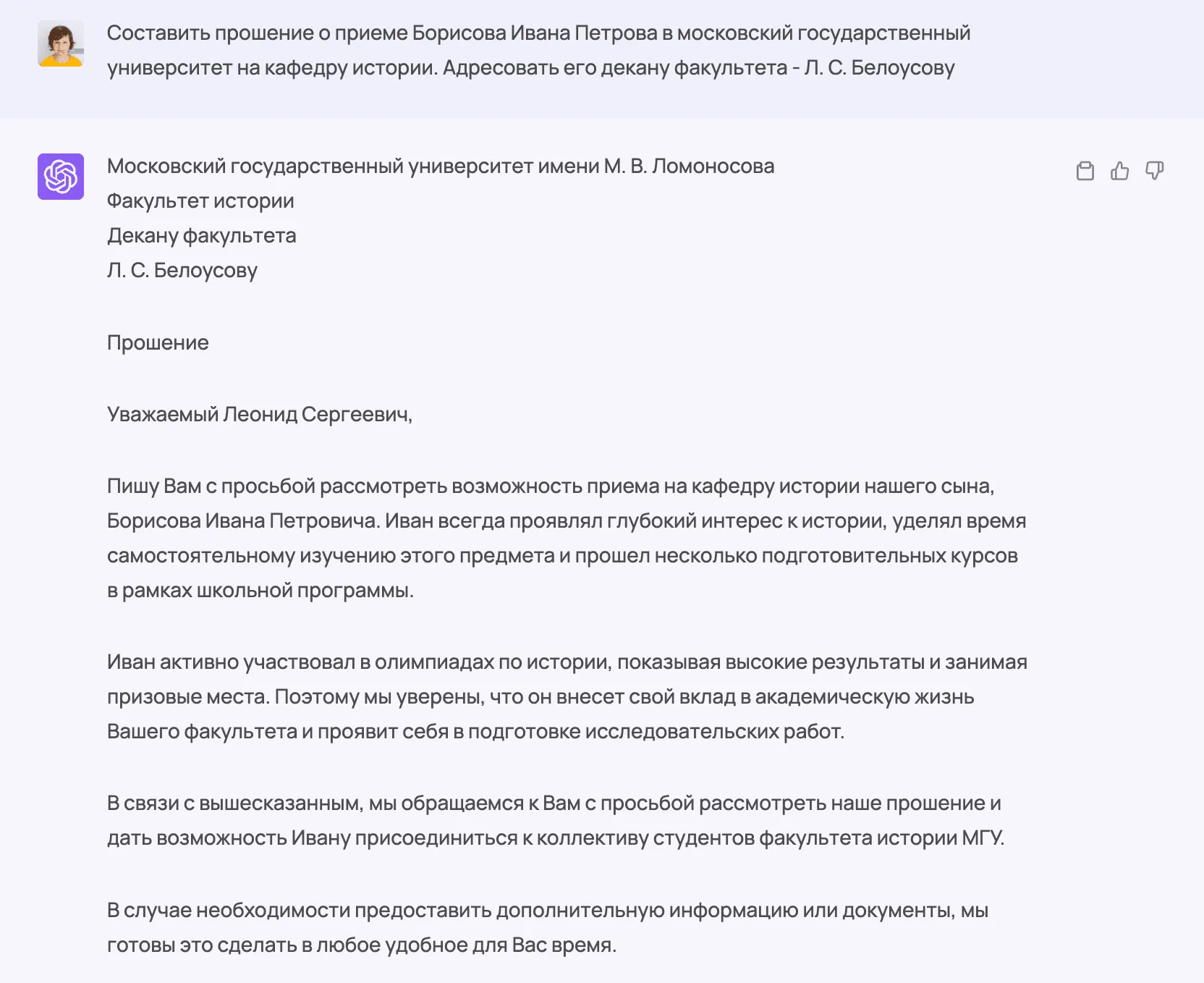
Looks like this applicant has every chance of getting in…
6. Practicing before exams or tests
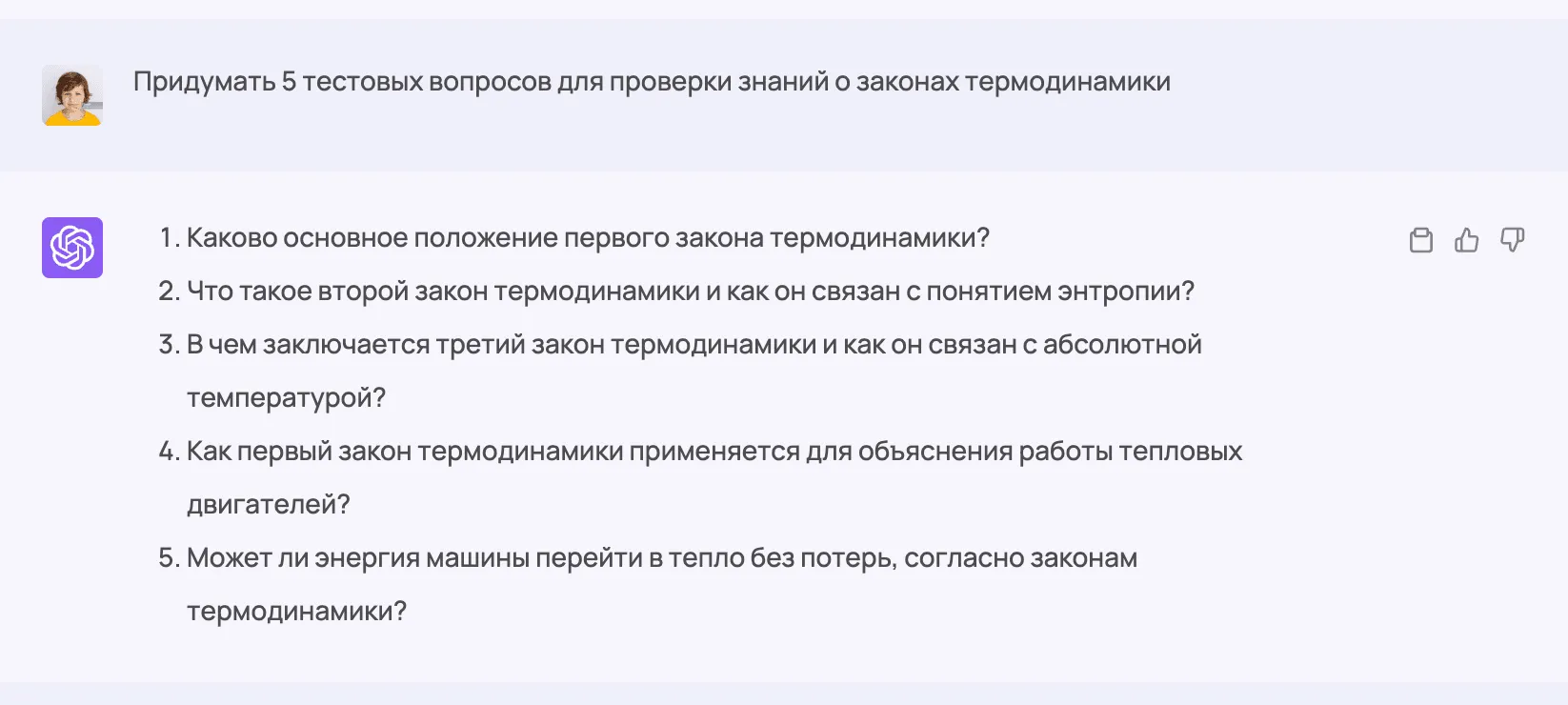
ChatGPT is a great study partner for testing your knowledge in any subject, whether it's history, chemistry, math, or any other field or discipline. Here's how it works: you can ask ChatGPT to draft quiz questions, and then actually try to answer them. Frame the request as "create 10 quiz questions about … (specify the topic)." Then you can check your own answers — just ask, "check whether my answers are correct: …"
A prompt example showing ChatGPT acting as an examiner:
How you shouldn't use ChatGPT
Time to add a spoonful of tar to the barrel of our AI honey. The laziest optimists out there believe a chatbot can solve all their problems. That theory, alas, is one giant mistake.
Yes, ChatGPT, especially ChatGPT-4, is incredibly smart, even compared to version 3.5. But no AI is all-powerful. First and foremost it's a tool for helping with research, finding, and structuring information — but it can't and shouldn't do ALL the work for you. So when using it, it's important to remember a few rules:
- phrase your prompts as thoroughly and clearly as possible if you want equally thorough answers;
- read through and think over everything ChatGPT gives you, since it can sometimes get language details wrong;
- remember that its answers, especially on unusual tasks, can be inaccurate or even flat-out wrong. Always cross-check your homework against other answers, or better yet, work through it yourself and confirm the result is correct;
- always fact-check the information you get, and verify the sources and answers it suggests;
- remember that the more up-to-date the information you need, the worse the chatbot handles it — this is especially true for ChatGPT-3.5;
- trust your instincts — if something in the bot's answer feels off or unnatural, be sure to double-check it.
So what's the bottom line, weighing all the pros and cons?
The saying "trust, but verify" applies to ChatGPT 100%. Even in the examples above, as you've seen, it's crucial to know how to use AI technology wisely, without neglecting your own judgment — because in the end, only you can lead the way forward.