

People now delegate all kinds of everyday tasks to AI: checking the weather, finding a local business. Someone walking down the street or driving simply says: "Find me a good coffee shop nearby" or "Where can I get my bike fixed quickly?" Where companies once fought for a spot in the top 10 search results, in the age of voice interfaces the battle is for the single, non-negotiable answer the assistant reads out loud. A voice assistant doesn't rank businesses by ad spend — it relies on accuracy, freshness, geographic relevance, and how well-structured the underlying information is. Getting into voice answers is the shortest path to a customer's attention, with no middlemen. It puts you in the right place at the right moment, exactly when a customer is ready to buy.
Master your business listing platform
The first, most important, and completely non-negotiable step toward showing up in voice answers is registering your business on a maps and business-directory platform. A voice assistant doesn't pull facts out of thin air — its foundation for knowledge about the physical world is a structured business directory. If your company isn't on that map, it simply doesn't exist for the assistant. Turning your business listing into a perfect data source for AI takes a few deliberate steps that spell out exactly what your business does.
- Precise coordinates and address. Spell out the route in detail. Note the floor, office number, entry code, sign color, or landmarks — for example: "Enter from the courtyard, third door right past the arch." An assistant uses this data when building walking or driving directions for people searching for services in a specific location.
- Clear activity categories. Most platforms let you list several lines of business. If you run a bakery that also hosts kids' workshops, list both categories — "Bakery" and "Kids' activities." Get this wrong, and while you'll show up for "where to buy a cake," you'll be invisible for "things to do with kids."
- Synced business hours. Hours need to update instantly, especially around holidays. Imagine the frustration of a customer told cheerfully by the assistant that your shop is open until nine, only to arrive and find the door locked.
- Regularly refreshed photos. Interior shots, the storefront, the entrance, and your products need to be high quality. AI systems analyze images with computer vision to gauge how appealing a place looks. Sharp, bright photos win over both algorithms and the real customers who check the listing after hearing the voice answer.
- Up-to-date price list or menu. Voice assistants can now answer direct pricing questions, like "How much does an oil change cost at the garage on Main Street?" If your listing includes a detailed, structured catalog with accurate prices, your odds of landing in the audio answer go up significantly.
How reviews build AI trust
An assistant will never recommend a place with a questionable track record or poor service. The main signal of a small business's reliability, as far as an AI system is concerned, is the reputation built from real customer reviews. A high rating (ideally above 4.5 stars) is your ticket into voice recommendations.
- Encourage detailed reviews. Ask customers not just to leave a star rating but to describe their experience. Specific details — "the technician was polite," "coffee arrived hot in 3 minutes," "fixed my phone screen while I waited" — get parsed by the underlying algorithms and signal to the assistant that the business runs smoothly.
- Respond to negative feedback quickly and constructively. If a business gets a bad review, management should respond within hours. A polite, constructive reply without defensiveness shows the algorithm the business is active, cares about its reputation, and works to fix mistakes. That responsiveness keeps a business from sliding down in recommendations.
- Use relevant keywords in review replies. When responding to customers, naturally weave in the names of your services. Instead of a generic "Thanks for the review!", write something like: "Thank you for the kind words about our thin-crust pizza! We hope to see you again at our family pizzeria." That gets picked up by search crawlers too.
- Earn a "top-rated" badge. Many directory platforms award businesses with the highest ratings a special digital and physical badge each year. For an assistant, that status is a green light — such businesses land automatically on the shortlist for general recommendations.
- Keep a steady stream of new reviews. If your business got a hundred glowing reviews three years ago and nothing since, the algorithm reads that as a business fading out. A continuous, organic flow of fresh opinions signals that a place stays relevant and popular.
Build your own AI voice skill
If filling out your listing and optimizing your text presence is the bare minimum for staying competitive, building a custom skill for a voice assistant is another marketing channel — one that lets a small business speak to customers in its own unique voice. A skill is a small application integrated into the voice assistant that activates with a specific phrase, like: "Launch the Cozy Dental skill" or "Open the Flower Paradise bouquet picker."
- Design an intuitive, flexible conversation flow. Map out every possible branch of the conversation carefully. The AI needs to handle not just ideal user responses but also ask clarifying questions if someone hesitates, jokes, or goes off-topic. The flow should guide the customer toward the end goal — placing an order or booking a service.
- Use no-code builders. A small business owner doesn't need to hire expensive developers to write code today. Convenient visual platforms exist where you can assemble a working voice skill from ready-made logic blocks.
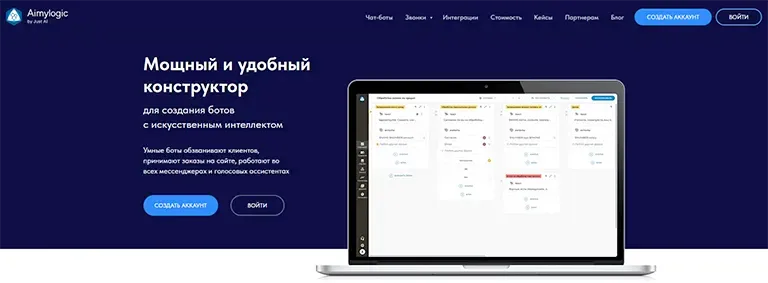
- Integrate with your CRM and internal systems. For a skill to deliver real commercial value, connect it to your working database. That way a customer can ask, "Is there an open slot with Elena tomorrow for a haircut?" and the assistant, checking your CRM, books the slot instantly.
- Pass platform review. Once built, a skill goes through a review process on the assistant's own marketplace. Reviewers check for grammar issues, speech-recognition accuracy, server response time, and compliance with platform rules. Passing review makes your skill available on millions of devices.
- Promote the activation phrase to your audience. A skill won't get used until people know about it. Put information about ordering through your voice skill on your website, print the activation phrase on business cards, menus, coffee cups, or packaging — motivate customers to try this new way of interacting with your brand.
How to measure what's working
Getting AI's attention and landing in voice answers is a real win, but staying there is much harder. The market moves fast, the underlying algorithms keep improving, and competitors don't sit still — they copy what works quickly. You need a system for regularly monitoring and analyzing exactly how your business shows up in voice answers, using the analytics tools built into your listing platform.
- Check the "Statistics" tab in your business dashboard regularly. Pay close attention to metrics like search impressions for map-related queries, the number of directions requested to your location, and direct clicks on your phone number. A sudden drop in these numbers is a clear sign that either your hours went out of sync or competitors updated their pricing and started looking more appealing to the algorithm.
- Run your own audit periodically. Grab a phone or smart speaker and ask a few questions typical of your niche out loud. Listen to what the assistant actually says. If it recommends you, figure out which piece of your listing or site content was the source. If it names a competitor instead, don't get discouraged right away. Study their digital footprint: how their listing is set up, what reviews their customers leave, what keywords appear on their site. Borrow the best ideas, improve on them, make your content even more detailed and useful, and soon the assistant will point back to you.
Comparing voice-search promotion channels
The voice-first future starts today
Don't be intimidated by how complex AI technology seems. In practice, building a good relationship with a voice assistant comes down to simple, human principles: honesty, openness, attention to detail, and genuine care for your customer's experience. Start small — register your business, get your listing in perfect shape, start talking to your audience in plain language. These first steps cost nothing, but they lay a solid foundation for your business not just to stay afloat, but to be heard loud and clear across millions of smart devices.