
What is multimodal AI? It's a paradigm that combines several data types within a single system. Instead of analyzing only text or only images, modern multimodal AI models on GPTunneL process text, images, code, tables, and even files at the same time, building a fuller understanding of information.
This integration of different input types is fundamentally different from the traditional approach, where separate neural networks handled tasks within their own domains. Multimodal AI opens the door to use cases that were previously impossible. For example:
- Medical AI that analyzes MRI scans together with a patient's medical history and doctor's notes;
- Surveillance systems that process video, audio, and metadata simultaneously;
- Virtual assistants that understand not just words, but tone of voice and visual context.
By the way, according to HubSpot's 2024 study, 71% of marketers using generative AI to create content say that content performs better than content without AI. While the study doesn't specify the type of AI, it's safe to say — multimodal neural networks are changing our workflows.
In this article, we explain what qualifies as multimodal AI, show what capabilities are available in GPTunneL's models, and give use-case examples and ready-made tools.
Key takeaways
Multimodal AI combines text, images, and audio to remove ambiguity and improve real-time decision-making. Real multimodal AI examples include analyzing product descriptions and images, and building websites from a screenshot. The main technical challenge is aligning different data formats and reducing computational cost while preserving accuracy.
What are multimodal AI systems and why do they matter?
Understanding what multimodal AI systems are is the key to unlocking their potential. Multimodal AI integrates input data from different sources:
- Video;
- Code;
- Text;
- Audio from a microphone;
- Images;
- Tables;
- Others (sensor readings, geospatial data, and more).
Multichannel neural networks learn the relationships between these inputs using deep learning frameworks such as transformers and convolutional neural networks. Meanwhile, traditional AI systems excel at only one task: a language model predicts text, and a computer-vision model labels images.
Multimodal AI models are built around fundamentally different questions:
- What does an image tell us in the context of a conversation with the user?
- What does a table reveal in light of what's shown in a chart?
- How does an object's shape in a photo relate to its description in the prompt?
This shift from single-channel to multichannel perception mirrors how people actually understand the world — we don't separate sight from hearing, or context from observation. When you watch a movie, you simultaneously see the actors, hear the dialogue and music, read subtitles, and all these streams of information merge into one impression. Multimodal AI models work on the same principle.
To compare the analysis capabilities of different AI models, try this experiment:
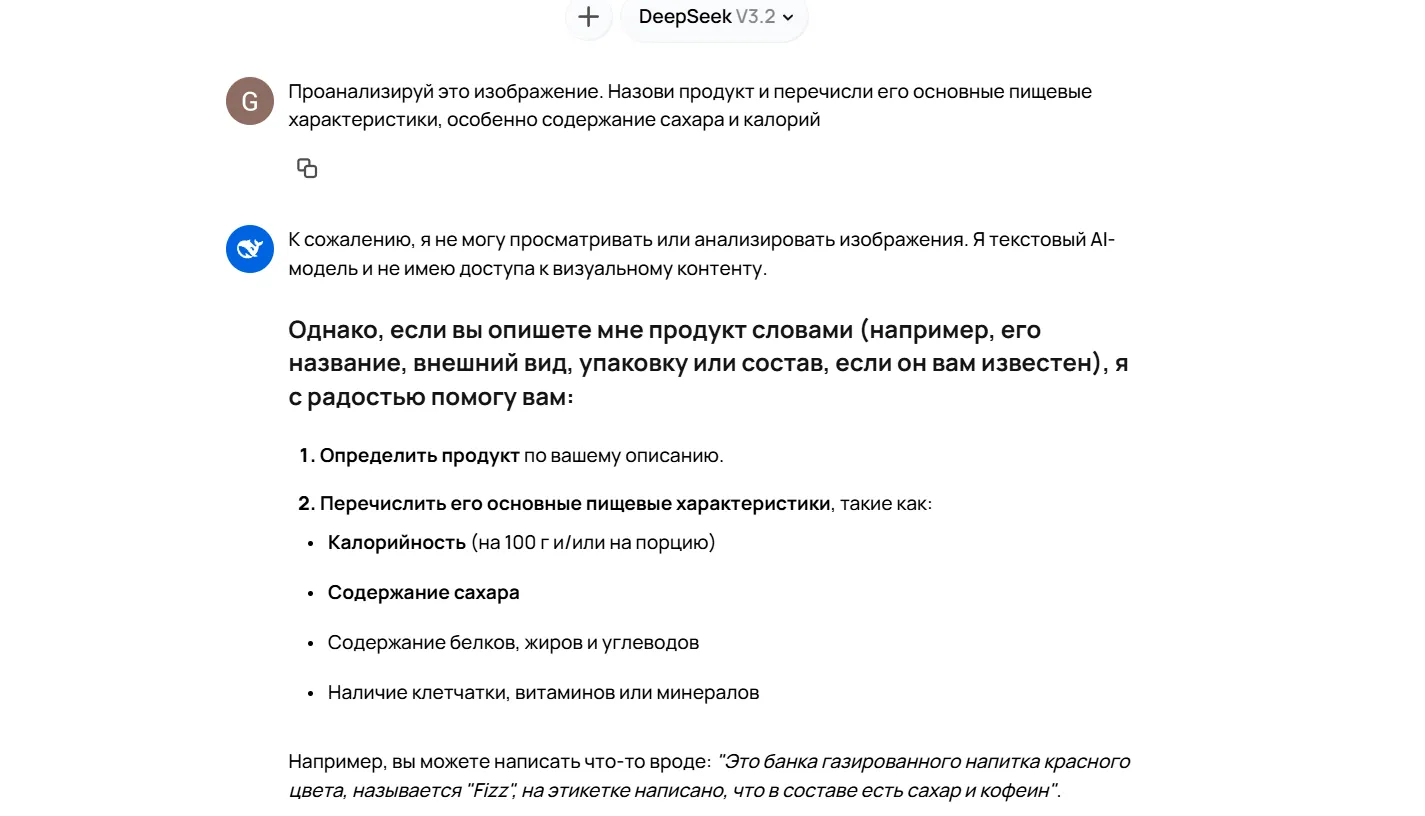
- Go to our platform and pick a pair of models — for example, the multimodal Claude 4.5 Sonnet and Deepseek V3.2, which can't work with images.
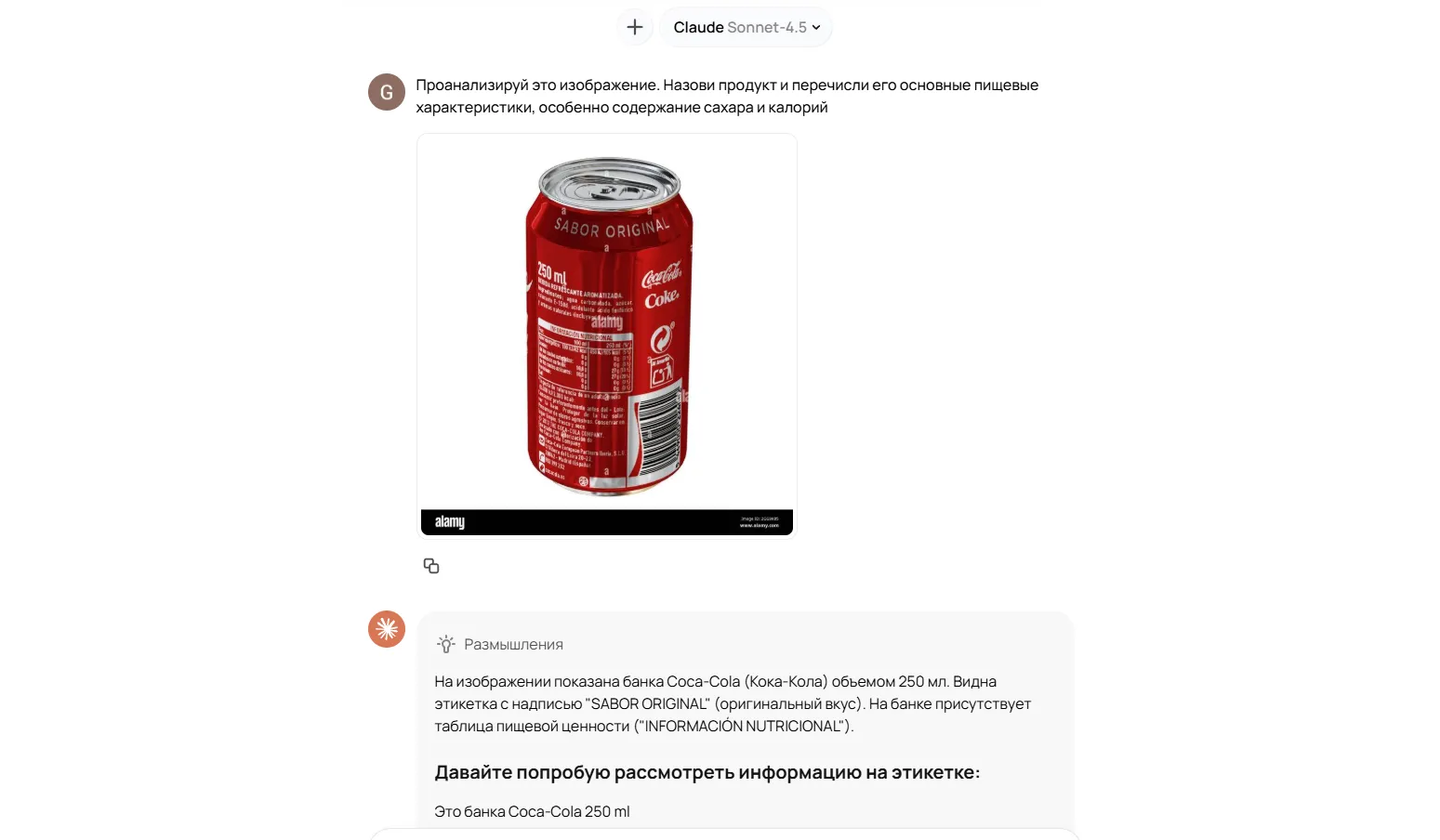
- Send both models the same prompt with a photo of a product label attached (say, a can of Coca-Cola): "Analyze this image. Name the product and list its main nutritional facts, especially sugar and calorie content."
- Deepseek won't be able to accept the attachment at the prompt stage and will ask you to describe the image so it can help with the analysis.
- Claude will provide a full analysis of the image. It will identify the product (Coca-Cola), read off the calorie count and sugar content from the label, and present this data in a structured format.
You can run your own tests with other models on GPTunneL to see their capabilities in practice. Multimodal AI reduces errors, speeds up workflows, and lets systems handle ambiguity that single-modality models miss entirely.
This creates enormous business value — from more accurate data analysis to faster production processes and better customer service.
How multimodal LLMs process data: the technical pipeline
To understand how a multimodal LLM achieves this depth of understanding, it helps to trace the path data takes from input to the final decision. This process consists of five key stages, each solving its own specific task:
- The process starts with data collection and preprocessing. Raw data arrives in different formats — JPEG images, MP3 audio, plain text. Each data type is cleaned and standardized.
- Next comes feature extraction, which encodes each modality into numerical vectors using specialized techniques.
- The third stage is alignment — synchronizing data across modalities by matching features.
- The fourth stage is fusion, which merges features from all modalities into a single representation.
- Finally, the model recognizes patterns and relationships across all data types and generates a response.
Data alignment and feature extraction
After collection, each modality goes through specialized encoding. Here's an example with three data types:
- Text is analyzed using embedding techniques, such as BERT, to turn words into numerical vectors.
- Images are processed by convolutional neural networks (CNNs) to extract features of objects, their edges, and spatial characteristics.
- Audio is converted into spectrograms — visual representations of sound patterns that show how frequency and amplitude change over time.
Alignment ensures that data from different modalities refers to the same moment or entity. At this stage, how you phrase the prompt matters a great deal.
For example, we gave ChatGPT-5 a prompt with charts attached from a DataReportal report showing the world's most popular social networks:
"Analyze the attached charts from DataReportal ('Global social media statistics') and describe:
- How the global number of social media users has changed over the past 1–2 years.
- What percentage of the population (or of internet users) currently uses social media.
- Which are the main platforms by number of users or share of time — and how their rankings compare.
- What trends are visible: growth, slowdown, saturation, how many new users appear monthly or yearly.
- What can be expected next based on this data (a forecast or key risk)."
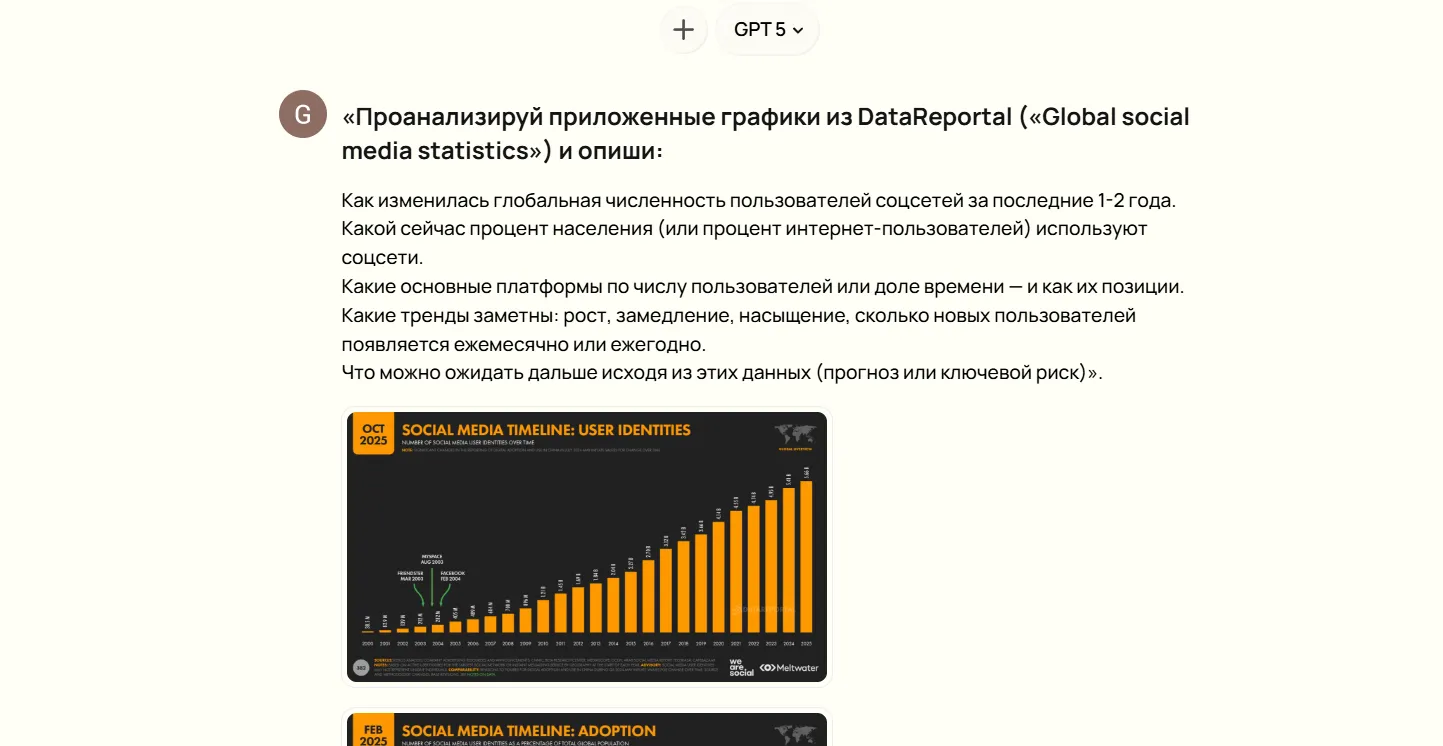
The instructions in our chat with the model give the AI clear guidance on what to look for in the attached charts. As a result, the model produced an accurate breakdown of the leaders, pulled numerical data on users, and calculated trends in social media usage. Without specifics in the prompt, an AI can incorrectly link parts of different data streams, leading to faulty conclusions.
Fusion and training
Once features are extracted and aligned, they move to the fusion layer — where all the data finally comes together. There are several fusion strategies, each with its own advantages:
- Early fusion combines raw or minimally processed data at the very beginning, letting the model learn from it directly.
- Late fusion combines the outputs generated for each modality, which reduces computational complexity.
- Hybrid approaches combine both methods, using raw data at some layers of the network and predictions at others to balance accuracy and performance.
Attention mechanisms let the model focus on the relevant parts of each modality. For instance, we gave Claude 4.5 Sonnet a prompt about an image of a cat with intentionally incorrect context:
"This image shows a Labrador retriever in a park. Describe what you see in the picture and what animal is shown."

See the model's full response in our chat. The model correctly identified that the image showed a cat, not a dog, giving more weight to the content of the image itself than to the text. This shows that advanced multimodal AI models can focus on the important details rather than wasting time analyzing incorrect information.
Inference and real-time decision-making
For a neural network to focus on the right elements and avoid confusion, multimodal training in AI is applied alongside attention mechanisms. This includes human data labeling during training, so the model learns which combinations mean what. This way, the network "learns" what distinguishes, say, a table from a bench.
Once training is complete, a multimodal AI model is ready to work with new data. Here's what the response-generation process looks like:
- The AI analyzes the input — your prompt;
- It predicts the most mathematically probable outcome based on its data and context;
- Finally, the network interprets the combined representations and turns them into practical decisions — whether that's analyzing an image, giving a recommendation to a doctor, warning a driver, or replying to a customer automatically.
This architecture makes multimodal agents flexible and effective in real-world conditions. The theory becomes much clearer once we see how multimodal AI systems solve specific tasks.
Multimodal AI in practice: 4 real tasks on GPTunneL
GPTunneL offers analysis of text, video-script transcripts, files, code, and images. Analyzing video and audio themselves isn't yet among the available features when working with LLMs in chat. With that in mind, here are examples of using multimodal AI for work and creativity.
Content creation and marketing
Marketers and creative teams use multimodal AI to speed up their workflows.

Example prompt: upload a series of product images to a chat with Claude 4.5 Sonnet along with a table of target-audience profiles, then ask the model:
"Based on this, generate five unique ad copy variants. Each variant should target a separate audience segment from the table. For each variant, add short visual-design recommendations for a designer."
The system analyzes the product's visual elements
- Color;
- Shape;
- Style.
Then it matches them against the brand requirements from the prompt and tailors the message to the audience's demographics. See the model's full response in this chat.
Web development and prototyping
Multimodal models dramatically speed up the path from idea to implementation. Designers and developers can turn visual concepts into code within minutes.

Example prompt: upload an image of a webpage wireframe (hand-drawn or made in a graphics editor) and write in a chat with GPT-5 Codex:
"Turn this mockup into working HTML and CSS code. Use semantic tags and ensure basic mobile responsiveness."
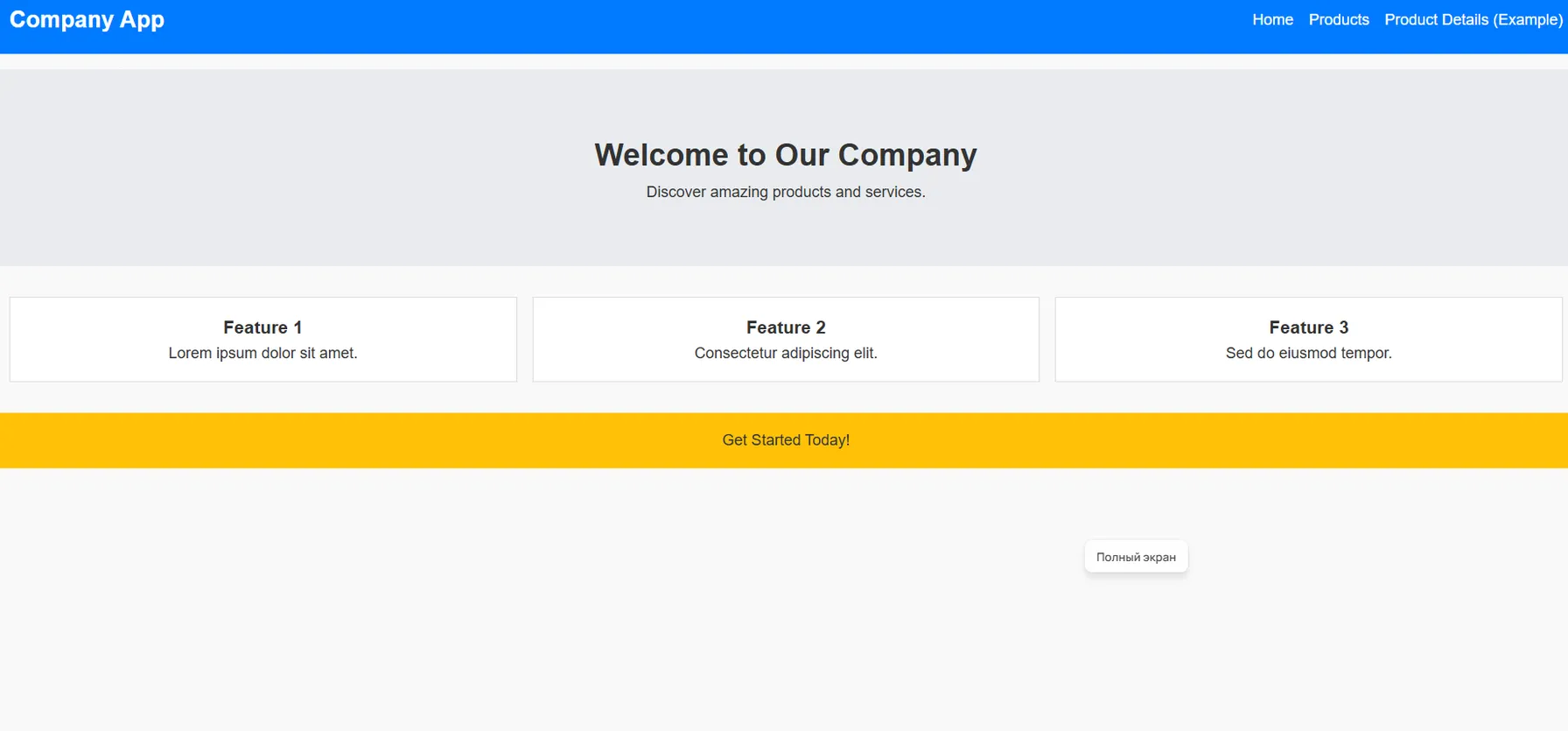
The model will analyze the wireframe's visual structure, identify key blocks (header, menu, main content, footer), recognize text labels, and generate ready-to-use code. This lets you instantly create a working prototype that used to take hours of manual layout work. See the model's full response in this chat.
Data analysis
Multimodal AI can "read" visual data such as:
- Charts;
- Reports;
- Presentation slides.
Example prompt: upload an image of a sales chart along with a table of last quarter's advertising campaign data. Then ask the AI:
"Find the key trends, identify the most successful month, and suggest possible reasons for the rise or drop in sales."
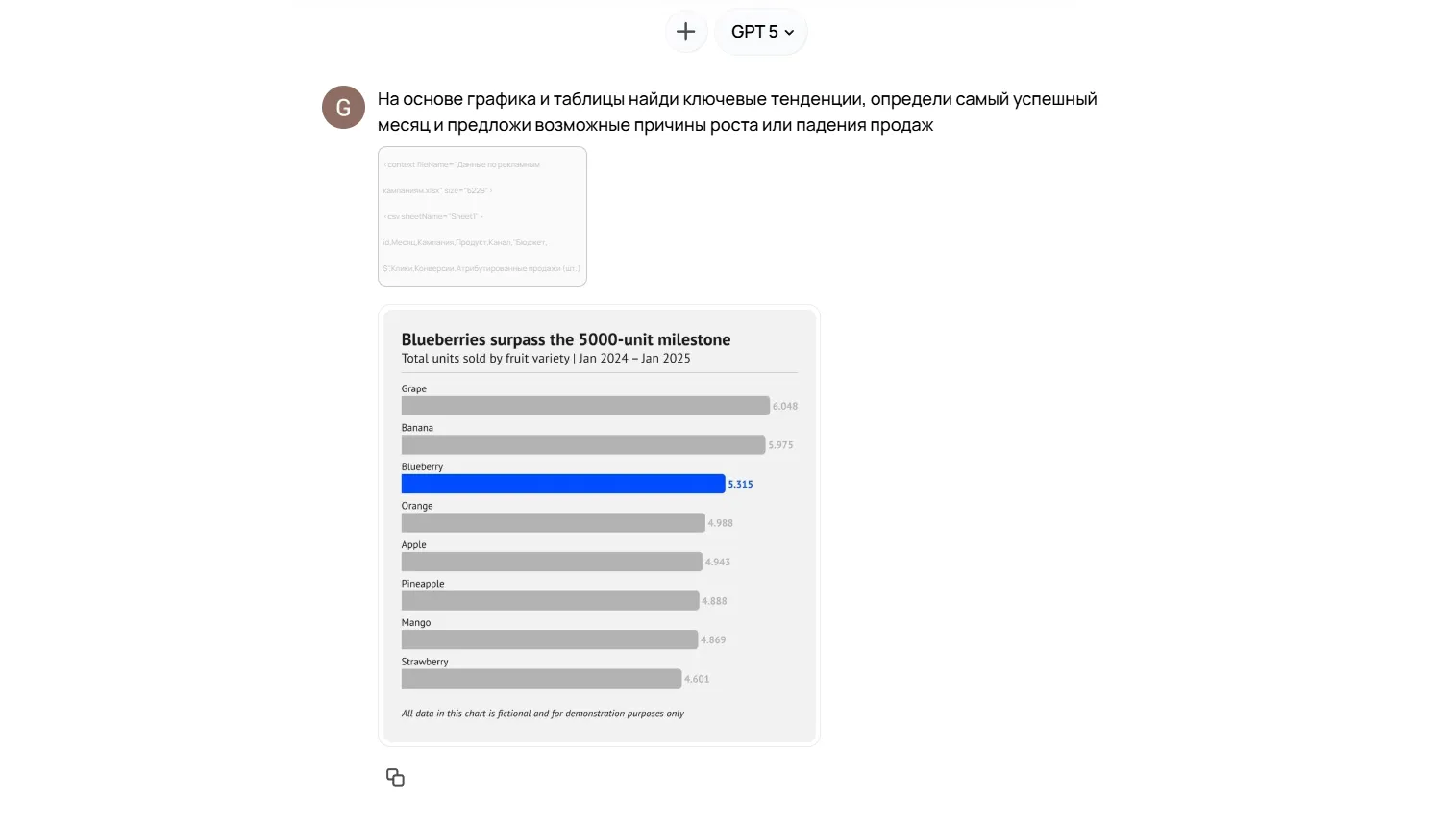
A model like ChatGPT-5 extracts numerical data and text labels from charts, tables, and infographics, producing a summary analysis. This saves analysts from having to manually transcribe data from images or PDF reports, saving hours of work and reducing the risk of input errors. See the model's full response in this chat.
Learning and research
Students and researchers can use multimodal AI to study learning materials. Models can analyze handwritten notes, diagrams, and charts from textbooks.
Example prompt: photograph a handwritten diagram from a lecture and upload the image with the prompt:
"Turn this diagram into structured study notes in English to prepare for an exam. Highlight the key terms and prepare three self-check questions."
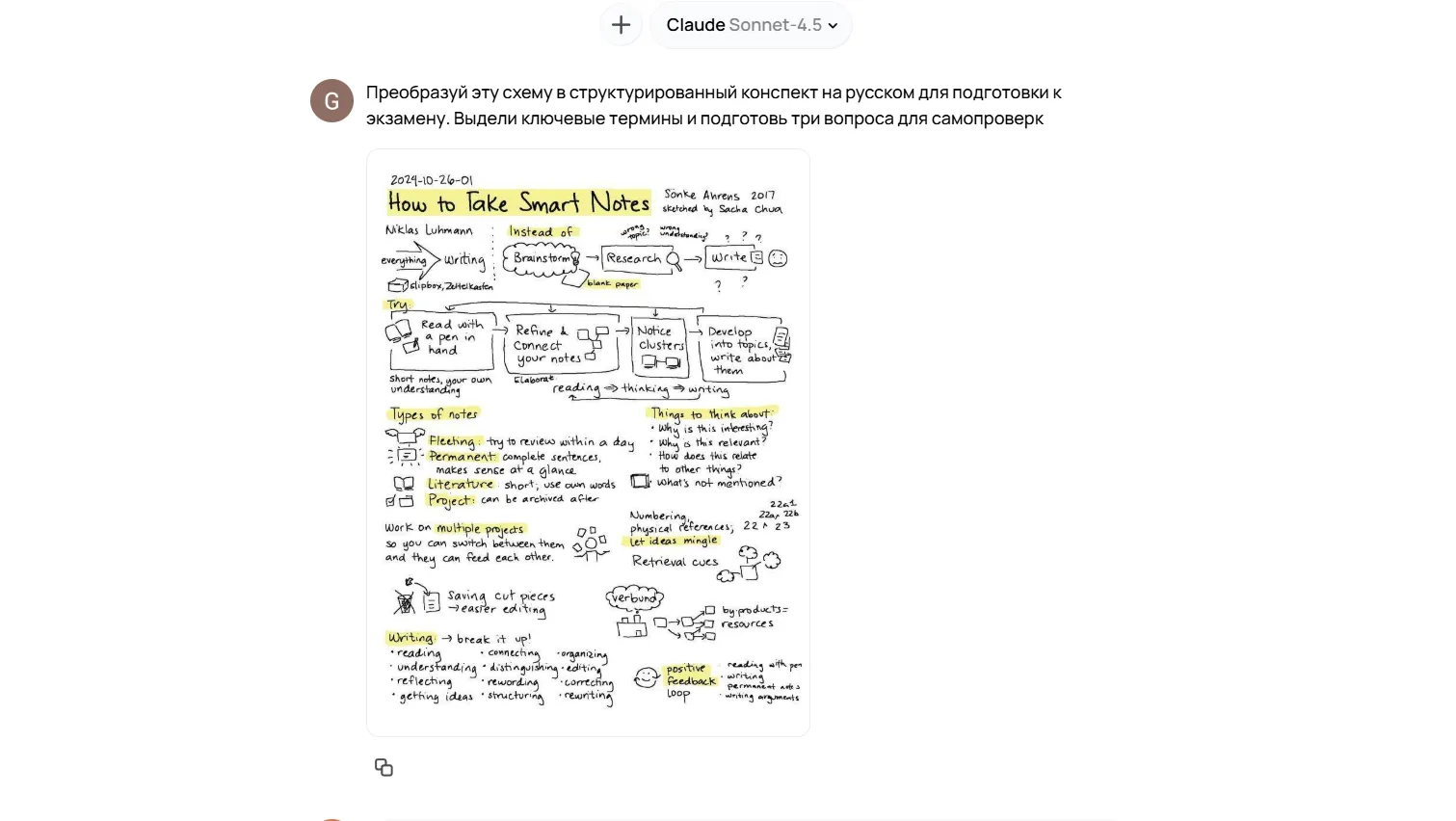
The model recognizes handwritten text and the visual relationships between blocks, then turns non-linear information into logical, coherent text. This turns static notes into an interactive learning tool and significantly speeds up review. See the model's full response in this chat.
Which multimodal neural networks are on GPTunneL? 4 best LLM examples
GPTunneL gives you access to leading multimodal neural networks, each with its own unique strengths. The right model depends on your task — creativity, analytical precision, safety, or privacy.
Here are 4 market leaders:
- ChatGPT is great for creative tasks and analyzing text, images, code, and other types of information.
- Sonar — a multimodal model from Perplexity that can combine image, code, and text analysis with up-to-date data from search.
- Claude excels at working with large volumes of text and images, ideal for analyzing documents and reports.
- Grok — a model from xAI known for its sarcastic tone and unconventional approach to problem-solving, which makes it unique for analyzing current events.
These platforms offer a wide range of capabilities for solving business tasks. Let's look at each one in more detail.
ChatGPT (OpenAI)
ChatGPT is OpenAI's family of general-purpose conversational AI models. GPT-5 can analyze the content of photos, charts, and documents — for example, you can upload an image and ask questions about it, ask for a description, or extract text.
ChatGPT can interpret charts and tables presented as images, helping surface trends without manual data processing.
ChatGPT's strengths:
- Creativity;
- Solving logical problems involving visual data;
- Holding a conversation that accounts for visual context.
You can show the model a screenshot of an interface and ask it to write code that recreates that design. You can also upload a photo of a dish and get a recipe based on it.
Sonar (Perplexity)
Sonar and Sonar Pro from Perplexity approach multimodality from a researcher's perspective. They analyze code, images, text, or files and enrich the response with the latest information from the internet, always citing sources.
For example, you could upload a photo of a newly announced gadget or a car prototype spotted at a trade show. On your request, Sonar will find the latest news about the announcement, provide official specs (price, release date, specifications), quote early reviews, and give links to articles and the manufacturer's website where the information came from.
Sonar's strengths:
- Up-to-date visual analysis: the ability to find the freshest information about objects in an image, which is critical for news, technology, and market trends.
- Verifiability and source links: every claim in the response is backed by a link, letting the user verify the data and dig deeper into the topic. This builds a high level of trust in the results.
- Contextual enrichment: the model doesn't just identify an object — it places it in a broader context: news, market position, technical details, comparisons with similar products.
While other models describe what they "see" based on their training data, Sonar uses the image as a starting point for a full real-time search and fact-check.
Claude (Anthropic)
Claude excels at analyzing PDFs, reports, images, and presentations. The Claude 4.5 Sonnet model can extract data from tables and charts while retaining an understanding of the overall context. Anthropic places a strong emphasis on ethics and safety, aiming to minimize harmful or biased content generation — important for enterprise use, where a mistake can have serious consequences.
Claude's strengths:
- Document, text, and code analysis;
- Safety;
- Summarizing information from mixed sources.
The model is also known for maintaining long context without losing quality, making it ideal for working with large reports, contracts, or research papers.
Grok (xAI)
Grok from xAI can process text, code, and tables, as well as analyze a wide range of visual information, including:
- Documents;
- Diagrams;
- Charts;
- Photos.
For example, Grok 4 can answer questions about image content and combine visual data with text prompts. A distinctive feature of this model is strong performance on tasks that require spatial reasoning. For instance, it can explain how a mechanism works from an image of it.
The model's strengths include converting visual information into code, solving logic problems based on images, and producing creative descriptions with a distinctive style.
Conclusion: multimodal AI — your next step toward efficiency
Multimodal AI is a powerful business tool that lets you solve tasks faster, more accurately, and more creatively. It erases the boundaries between disconnected data sources, bringing human-machine interaction closer to human communication. Start simple: identify one task in your business that requires analysis. Ask yourself:
- Do you want AI to write compelling captions for your photos by analyzing what's in them and the mood they convey?
- Would a combined analysis of photos, text, and a results table help you understand why some posts take off while others go unnoticed?
- Can the technology automatically help you find the best shots of your products and give you fresh ideas?
Run a small experiment on GPTunneL, see the results, and build on what works best.
FAQ
Is multimodal AI the same thing as generative AI?
No, they're two different concepts, though they can overlap. Generative AI creates new content based on learned patterns, while multimodal AI processes multiple data types together. A model can be generative, multimodal, both, or neither.
What type of generative AI can be called multimodal?
Generative multimodal AI can generate responses to prompts while also processing several types of information at once. For example, GPT-5 is both generative (creates text, code) and multimodal (processes images). Meanwhile, an AI for defect detection that analyzes images and sensor logs to classify parts as pass or fail is multimodal but not generative.
Can multimodal AI replace people?
Multimodal AI should be seen as a powerful tool for augmenting human abilities, not replacing them. It excels at spotting anomalies, reducing the burden of data review, and providing relevant context for decision-making. The best results come when AI complements human judgment rather than replacing it.
What's the biggest risk when using a multimodal neural network?
Data misalignment and bias are the biggest risks. If the training data contains systematic gaps — for example, under-representation of a particular demographic or language — the model can entrench that bias and reproduce it in its outputs. This leads to poor-quality results that can disrupt workflows or even cause harm. Always check the model's responses on critical tasks and test it on a diverse range of examples before relying on automated decisions.