
How do you pick an AI image generator in late 2026? Official showcase demos look impressive everywhere, while most "top 10" lists online boil down to personal taste.
In this guide we:
- Combined six independent leaderboards from three major platforms - Artificial Analysis, Arena AI, and Design Arena - where millions of users compare images blind in head-to-head battles and vote for the better result. Because voters never see which model drew which image, it is one of the cleanest objectivity signals available.
- Ran our own hands-on stress tests (in the middle of the article) to show the real gap between leaders and mid-tier models. Abstract Elo scores do not tell you how different two images actually look in practice, so we ran seven available models through seven tough scenarios - from candid street photography and constructivist typography to 4-panel comics, liquid physics, anatomy, and chess logic.
Short verdict: what to pick if you want the answer right away
- Best overall AI image generator right now: GPT-Image-2.5 Sunburst (yes, the slightly older version: 65.5 composite score and tied for #1 in our hands-on English tests at 58/63). The most balanced model on the market - leads in editing and design, passes physics, anatomy, and typography tests cleanly, and in its standard quality mode (
medium, the default in most apps and on Arena AI) costs four times less thanmax. - Results depend heavily on prompt difficulty: on scenic fantasy prompts, #1 and #11 look nearly identical; on complex logic and geometry (see the chess test below), the leaders pull far ahead.
- Best selection strategy: when you need a clean final image without subtle (or glaring) artifacts, go straight to the top model. For simpler high-volume work, pick from the price-to-quality frontier - see the Pareto chart near the end of the article.
- Best price-to-quality balance: MAI-Image-2.7 by Microsoft (59.9 score). Close behind OpenAI's flagships, #1 in editing on Artificial Analysis, and 6x cheaper than GPT-Image in
maxmode. - Biggest surprise in the budget tier: MAI-Image-2.7-Flash (53.5 score). Sits at the very bottom price tier (almost identical to the cheapest model in the Top-20), renders in 11.3 seconds, and beats much pricier models from Google, xAI, and ByteDance.
- Fastest near-flagship: GPT-Image-2.6 Flare (59.2 score) - averages 12.6 seconds per image while staying close to the heavier Sunburst models.
Top-20 AI Image Generators: Composite Ranking and Raw Elo Scores
One simple rule in the table below: one column - one metric. To avoid tying the ranking to regional currencies or changing platform tariffs, cost is normalized into a Price Index - how many times more expensive each model is compared to the most affordable model in the Top-20 (Muse Image = 1×). For OpenAI models, a slash shows standard (medium) vs. maximum (max) quality modes.
Scroll the table right to see render speed, price index, and raw Elo scores from each benchmark →
| Rank | Model | Overall | Text-to-Image | Editing | Design | Time, s | Price Index | AA T2I (Elo) | Arena T2I (Elo) | AA Edit (Elo) | Arena Single Edit (Elo) | Arena Multi Edit (Elo) | Design Arena (Elo) |
|---|---|---|---|---|---|---|---|---|---|---|---|---|---|
| 1 | GPT‑Image‑2.5 Sunburst | 65.5 | 63.7 | 66.7 | 65.7 | 25.4 | 5× / 21× | 1229 | 1429 | 1201 | 1519 | 1527 | 1451 |
| 2 | GPT‑Image‑2.6 Sunburst | 64.4 | 65.8 | 62.9 | 64.7 | 67.2 | 21× (max) | 1263 | 1412 | 1211 | 1481 | - | 1445 |
| 3 | GPT‑Image‑2.5 Flare | 60.1 | 60.2 | 59.8 | 61.1 | 16.9 | 5× / 21× | 1210 | 1400 | 1185 | 1484 | 1475 | 1423 |
| 4 | MAI‑Image‑2.7 | 59.9 | 59.7 | 60.9 | 57.5 | 30.9 | 3.5× | 1215 | 1385 | 1215 | 1475 | 1458 | 1401 |
| 5 | GPT‑Image‑2.6 Flare | 59.2 | 60.2 | 58.1 | 60.3 | 12.6 | 21× (max) | 1227 | 1376 | 1205 | 1461 | 1442 | 1418 |
| 6 | GPT‑Image‑2 | 55.4 | 57.6 | 53.1 | 58.2 | 59.4 | 6× / 21× | 1195 | 1382 | 1139 | 1462 | 1455 | 1405 |
| 7 | MAI‑Image‑2.7‑Flash | 53.5 | 49.8 | 56.8 | 53.9 | 11.3 | 1.0× | 1160 | - | 1179 | - | - | 1379 |
| 8 | Kling Image 4.0 | 52.9 | 53.5 | 57.8 | 47.4 | 211.6 | 6.5× | 1180 | - | 1183 | - | - | 1339 |
| 9 | MAI‑Image‑2.6 | 50.9 | 51.8 | 49.6 | 51.3 | 26.2 | 3.9× | 1168 | 1329 | 1151 | 1427 | - | 1363 |
| 10 | Gemini Nano Banana 2.1 | 50.4 | 50.9 | 50.6 | 48.6 | 22.5 | 3.4× | 1175 | 1305 | 1152 | 1427 | 1432 | 1346 |
| 11 | Grok Imagine Image 2.0 | 48.9 | 50.9 | 46.1 | 50.4 | 76.3 | 6.0× | 1166 | 1318 | 1117 | 1437 | - | 1357 |
| 12 | Seedream 5.5 | 47.1 | 45.1 | 51.4 | 44.8 | 27.9 | 2.4× | 1134 | - | 1159 | - | - | 1323 |
| 13 | Reve 2.1 | 46.8 | 48.9 | 39.6 | 51.8 | 76.1 | 2.0× | - | 1302 | - | 1373 | - | 1366 |
| 14 | MAI‑Image‑2.6‑Flash | 46.7 | 43.4 | 47.7 | 49.1 | 11.0 | 2.0× | 1125 | - | 1145 | - | - | 1349 |
| 15 | Muse Image | 44.1 | 43.9 | 44.7 | 42.7 | 18.2 | 1.0× | 1126 | 1265 | 1128 | 1400 | 1400 | 1310 |
| 16 | Seedream 5.0 Pro | 43.3 | 40.8 | 45.3 | 42.6 | 104.1 | 9.0× | 1104 | 1247 | 1132 | 1392 | 1412 | 1309 |
| 17 | Gemini 3.1 Flash (Nano Banana 2) | 43.1 | 45.0 | 41.9 | 43.0 | 18.2 | 6.7× | 1144 | 1256 | 1125 | 1387 | 1372 | 1312 |
| 18 | Reve 2.0 | 41.9 | 44.6 | 36.6 | 49.9 | 70.4 | 4.0× | - | 1268 | - | 1359 | 1346 | 1354 |
| 19 | MAI‑Image‑2.5 | 41.8 | 42.4 | 43.3 | 37.4 | 22.6 | 4.8× | 1118 | 1253 | 1123 | 1400 | - | 1277 |
| 20 | FLUX 3 Image | 41.7 | 41.4 | 41.0 | 42.7 | 40.1 | 4.8× | 1114 | - | 1120 | - | - | 1310 |
Column guide: AA T2I - Artificial Analysis (text-to-image); Arena T2I - Arena AI (text-to-image); AA Edit - Artificial Analysis (image editing); Arena Single Edit - Arena AI (single-image edit); Arena Multi Edit - Arena AI (multi-image edit); Design Arena - overall visual design leaderboard.
Note: the Price Index is calculated from official API cost ratios published by Artificial Analysis and Arena AI relative to Muse Image = 1×.
Where is Midjourney? Midjourney still has no official public API, so the current V8 / V8.2 lineup is excluded from automated blind battles on Arena AI and Artificial Analysis and cannot be priced on the same per-image API scale. Among older versions, only
v7 Alphaappears on Artificial Analysis - sitting very low around rank #110 with ~878 Elo (v6andv6.1are lower still). Midjourney remains strong for artistic direction, but it cannot be benchmarked head-to-head against API models on objective metrics.
How we calculated the ranking (and one important caveat)
Methodology and OpenAI quality modes
You cannot average raw Elo scores across platforms directly because each leaderboard uses a different scale and spread. We normalized all six benchmarks onto a single unified scale anchored on 12 strong models tested across every leaderboard:
- 50 points - average of that anchor group;
- every +10 points - a clear jump of one full tier;
- to qualify for the Top-20, a model must appear in at least three benchmarks, covering both text-to-image and editing.
We grouped results into three practical pillars:
- Text-to-Image - generating an image from a text prompt (Artificial Analysis and Arena AI).
- Editing - modifying an existing photo, swapping objects, and combining multiple images (Artificial Analysis and both Arena AI editing tracks).
- Design & Aesthetics - commercial visual quality, where we also pulled real average render time (Design Arena).
Important caveat on OpenAI quality modes. OpenAI image models expose selectable quality tiers: standard (
medium, the default on Arena AI and in our hands-on tests - price index5×) and maximum (high/max, used on Artificial Analysis - price index21×, four times more expensive). We kept one row per model to avoid duplicates and listed both indices where applicable.
Key Takeaways from the Ranking
- Why
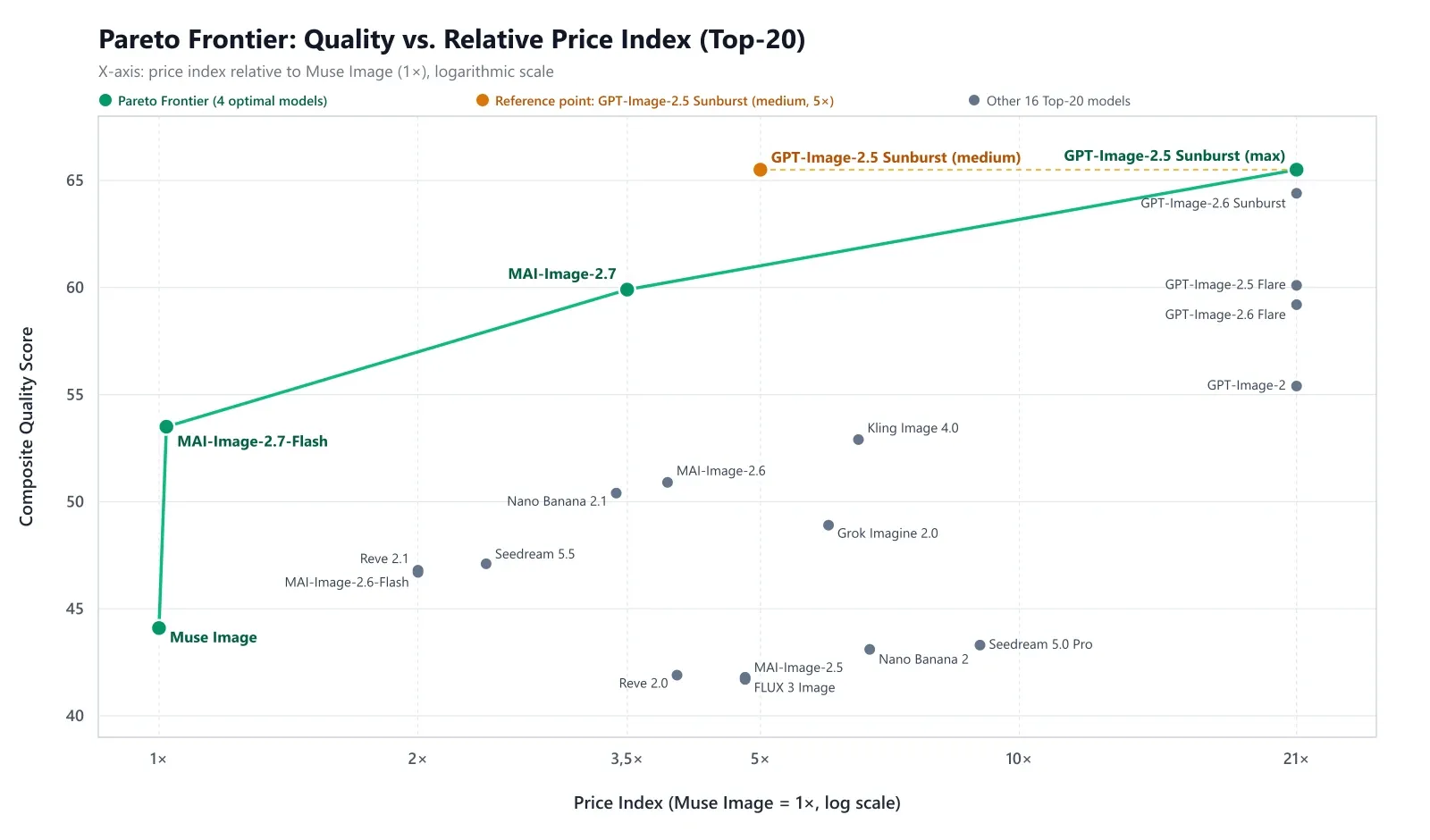
2.5 Sunburstbeat the newer2.6 Sunburst(65.5 vs. 64.4): inmax-mode text-to-image,2.6is indeed #1 (+34 Elo on Artificial Analysis). In standardmediummode, editing (1519 / 1527 on Arena AI), and design (1451 on Design Arena), however,2.5 Sunburstis more consistent - plus it renders 2.6x faster (25.4 s vs. 67.2 s) and tied for #1 in our hands-on English tests (58/63 each). - Economics - only 4 truly rational models out of 20: on the quality-vs-price Pareto frontier, only
Muse Image(1×),MAI-Image-2.7-Flash(1.02×, +9.4 points for +2% cost),MAI-Image-2.7(3.5×, 59.9 points), andGPT-Image-2.5 Sunburst(5×inmedium/21×inmax) are Pareto-optimal. See the full chart and overpayment breakdown in Pareto Frontier below. - Text-to-image and photo editing are two separate markets: models noticeably stronger at editing include
MAI-Image-2.7-Flash(+7.0 points in editing),Seedream 5.5(+6.3),Kling Image 4.0(+4.3), andGPT-Image-2.5 Sunburst(+3.0). Models that drop sharply when editing existing photos includeReve 2.1(-9.3),Reve 2.0(-8.0), andGrok Imagine 2.0(-4.8). Outside the Top-20, Krea 3 Ultra is a dedicated editing specialist (1412 / 1431 on Arena AI). - A 20x spread in render speed: the fastest Top-20 models are
MAI-Image-2.6-Flash(11.0 s),MAI-Image-2.7-Flash(11.3 s), andGPT-Image-2.6 Flare(12.6 s); outside the Top-20,Nano Banana 2 Litedelivers images in 6.1 seconds. The slowest areSeedream 5.0 Pro(104.1 s) and Kling Image 4.0 (211.6 s in benchmarks and ~95 s in our API runs, though it still earned 3rd place in our practical tests). - Open-weights models remain outside the Top-20: closed flagships still lead on overall quality, but for self-hosting, LoRA fine-tuning, and custom pipelines, the strongest open-weights options are MiniMax H3-Image (fast at 14.6 s), Qwen-Image-2.1, ultra-budget FLUX 3 Image Klein (cheaper than
1×), Fibo 2.0, and Ideogram 4.0 (Quality).
Editorial Hands-On Tests
To verify whether blind Elo leaderboards match day-to-day practice, we ran 7 stress-test prompts across seven directly testable models - GPT-Image-2.5 Sunburst, GPT-Image-2.6 Sunburst, Kling Image 4.0, Nano Banana 2.1, Grok Imagine 2, Seedream 5 Pro, and Qwen Image 3 (plus targeted spot checks of GPT-Image-2.6 Flare in Test 5 and GPT-Image-2.5 Sunburst in max mode in Test 7). Microsoft's MAI-Image-2.7 was excluded from the hands-on run because it was not available through public APIs at the time of testing.
All prompts ran with fixed aspect ratios (4:3 for photos and scenes, 3:4 for posters, 1:1 for comics) on default settings (medium / 1K for OpenAI, defaults for the rest), single-shot - zero cherry-picking from multiple retries.
How we scored each generation (max 9 points per test, 63 points across 7 tests):
- Prompt accuracy (0-3): how many instructions, details, and text strings were followed without errors.
- Technique (0-3): anatomy, physics, geometry, absence of artifacts and blur.
- Believability (0-3): whether the output looks like a real photo or production-ready asset you can ship right away.
Why are there no epic fantasy landscapes in the 7 tests? We intentionally chose diverse, hard prompts - candid photography, dense poster typography, exact object counting, 4-panel comics, liquid physics, anatomy, and chess logic - to separate model quality. On dramatic fantasy art, modern generators look nearly indistinguishable: here is the exact same celestial palace prompt rendered by #1 (GPT-Image-2.5 Sunburst) and #11 (Grok Imagine 2):
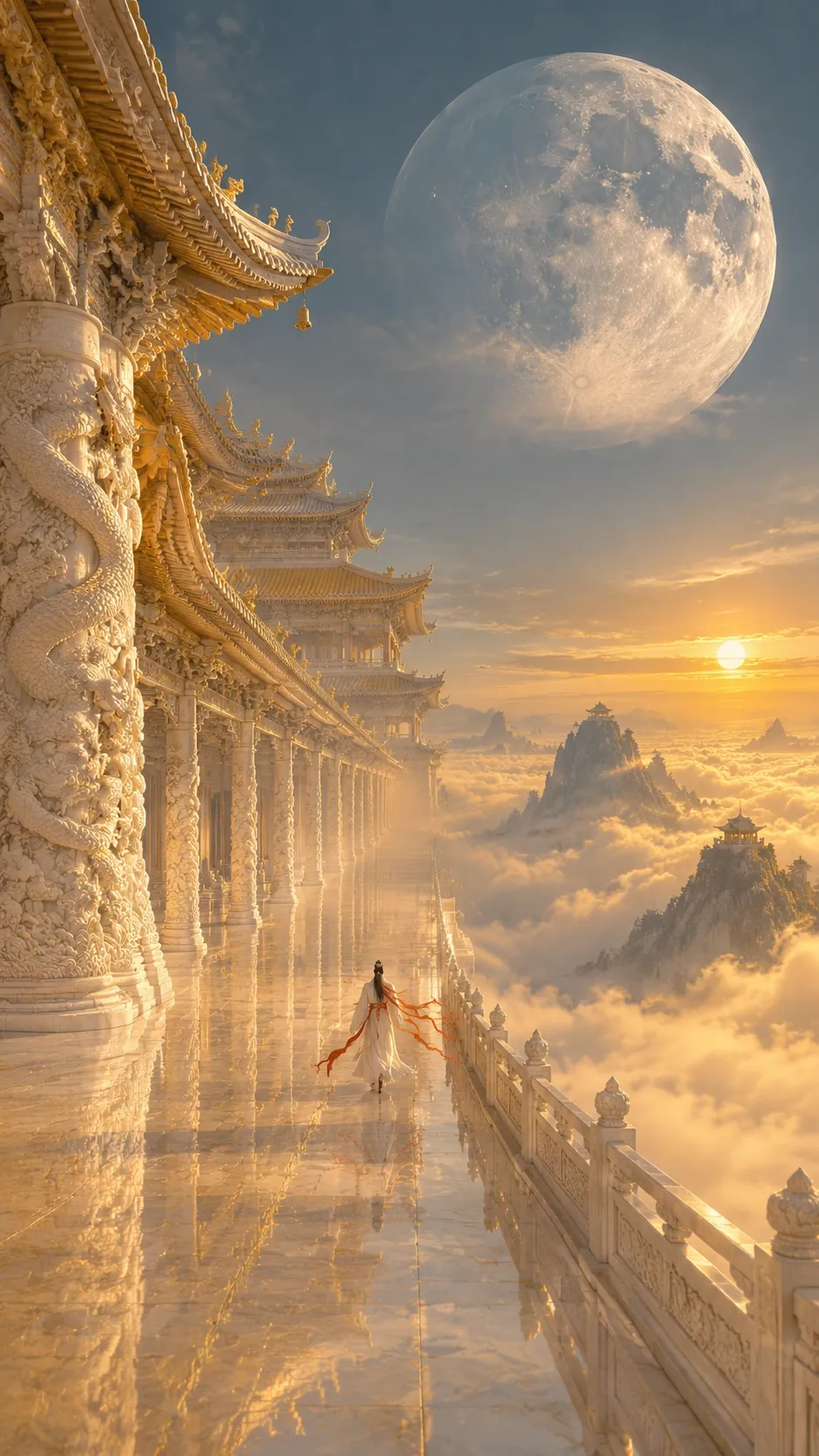
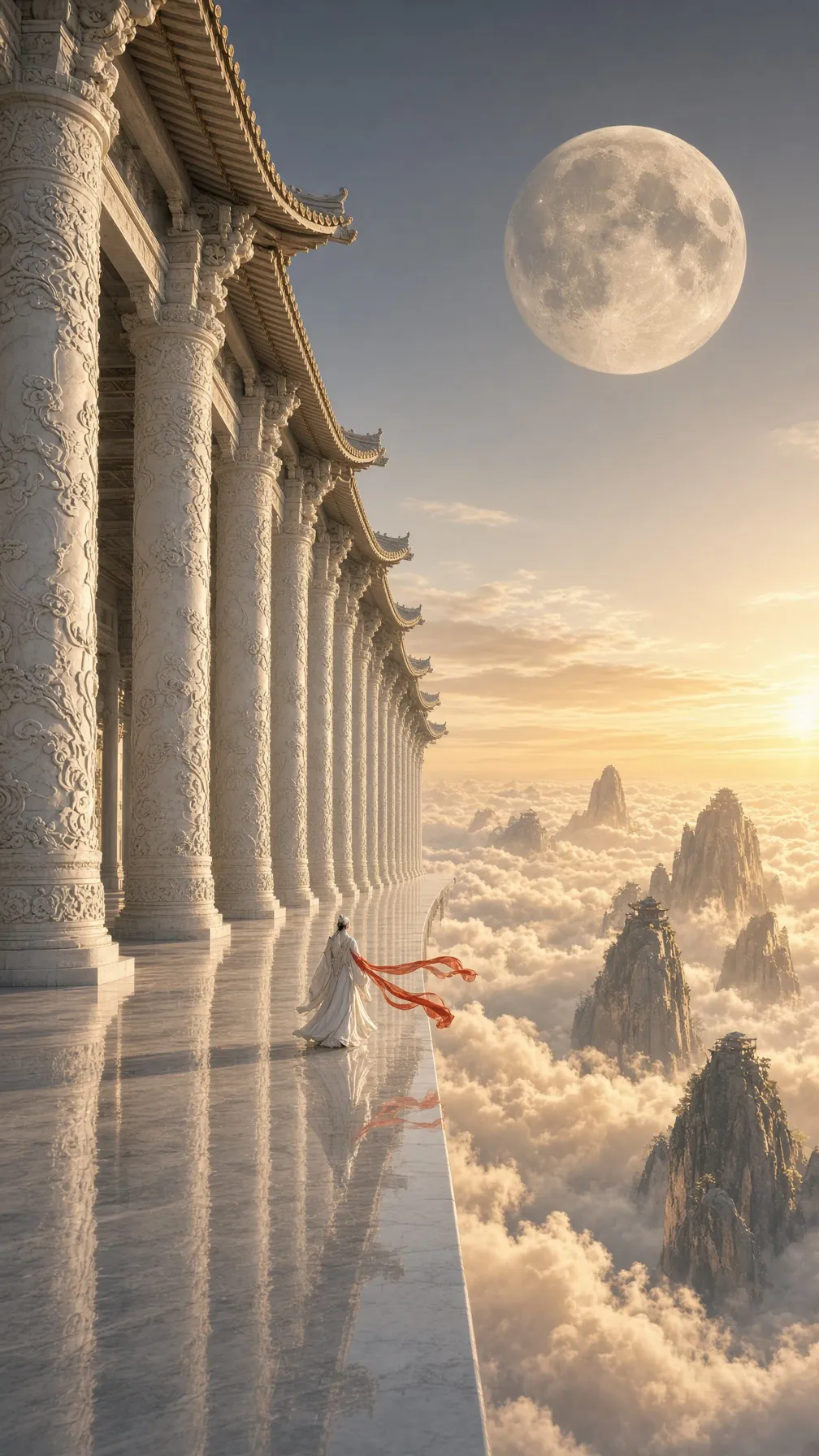
The real gap only shows up when a model has to follow strict spatial, textual, and logical constraints - which is what the 7 tests below measure.
Test 1. Candid Photorealism Without "AI Gloss"
What we test: natural skin texture, overcast daylight, believable hands and mechanical scales, and zero staged commercial polish.
Prompt: Candid smartphone photo: an elderly woman in a warm jacket at an outdoor farmers market weighing ripe tomatoes on old scales and handing a bag to a customer. Overcast autumn day, natural diffused light, slight motion blur in the hands, slightly imperfect framing, no staging and no studio retouching.
GPT-Image-2.5 Sunburst (medium, 1K)
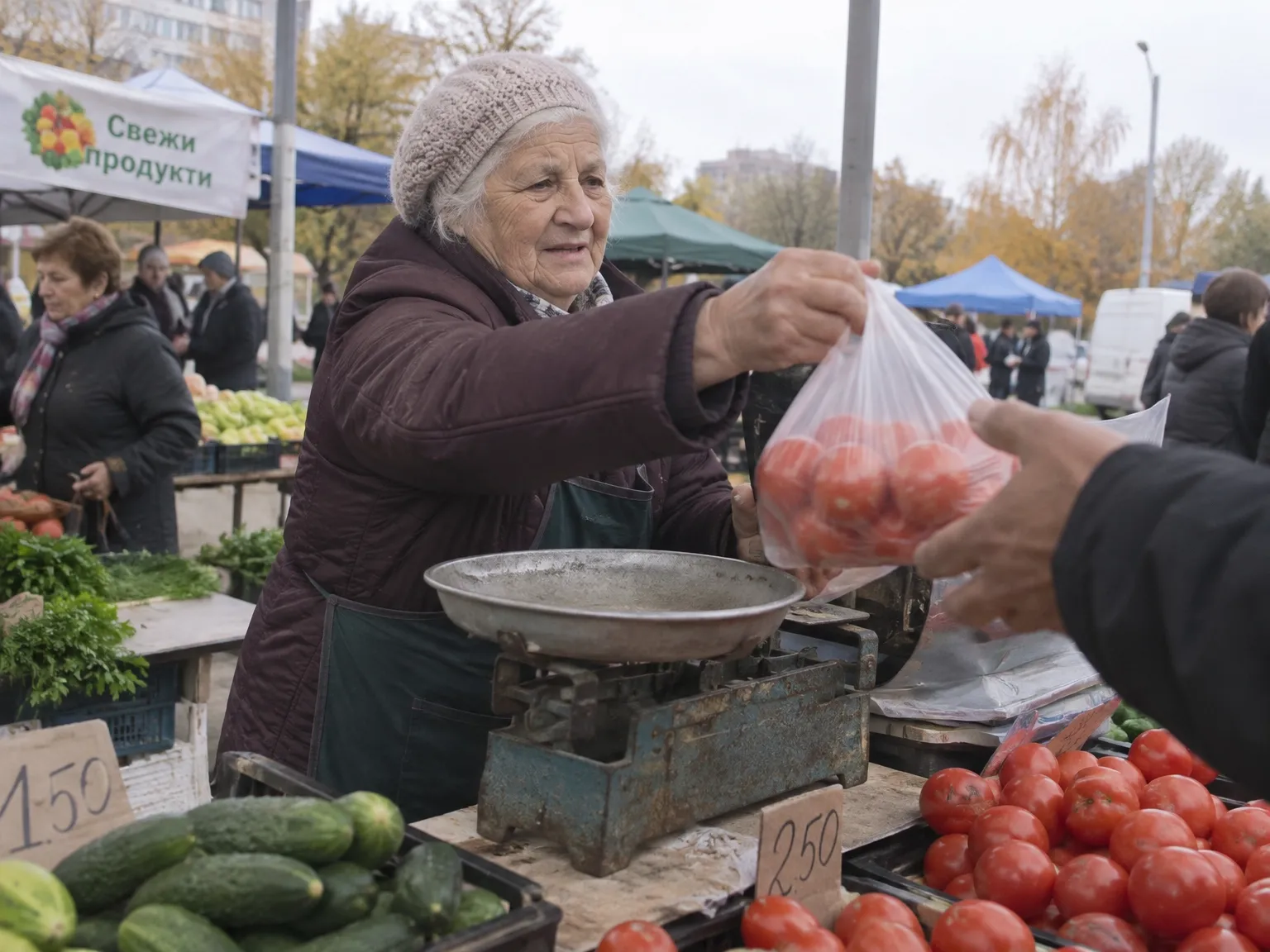
Score: 8/9 (Prompt 3 · Technique 3 · Believability 2) - authentic overcast lighting, natural hand blur, and realistic old scales; only a tiny visual distraction from a non-English background banner.
GPT-Image-2.6 Sunburst (medium, 1K)
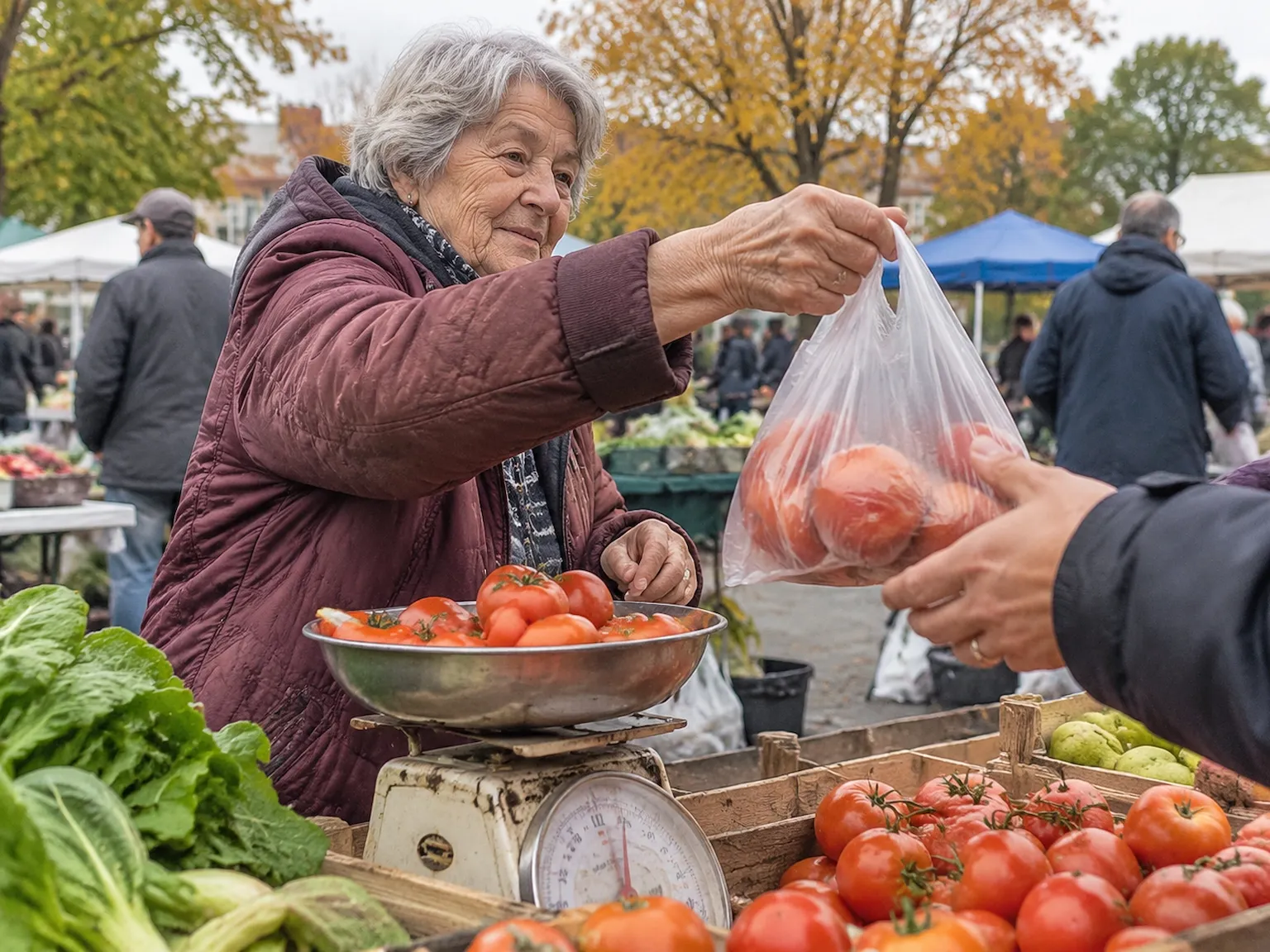
Score: 9/9 (Prompt 3 · Technique 3 · Believability 3) - indistinguishable from a real autumn smartphone snapshot: believable hands, vintage dial scale, natural wrinkles, zero plastic sheen.
Kling Image 4.0 (KlingAI)
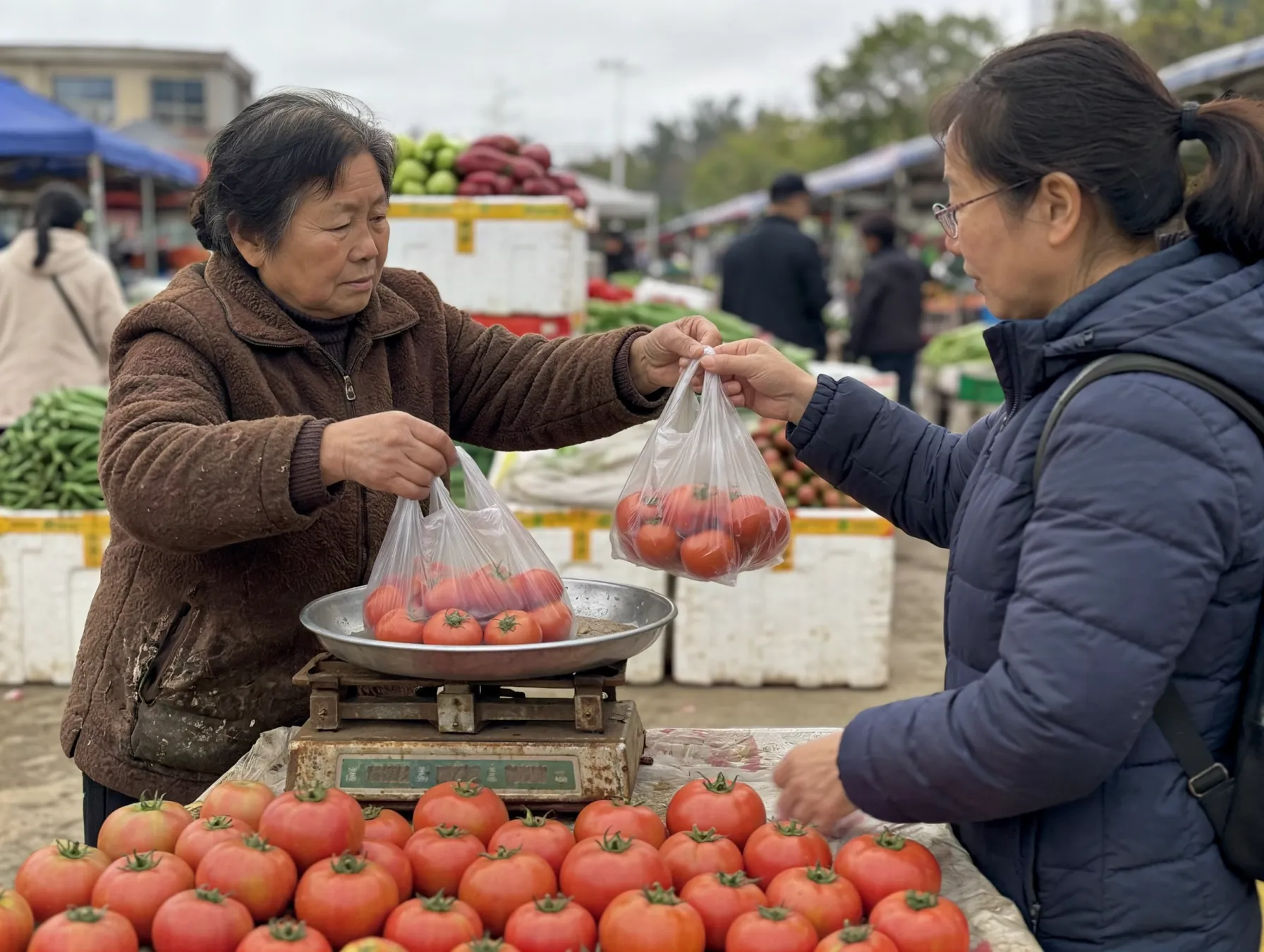
Score: 8/9 (Prompt 3 · Technique 2 · Believability 3) - very convincing documentary street-market vibe and overcast daylight, with one minor quirk: she handles two tomato bags at once.
Nano Banana 2.1 (Google)
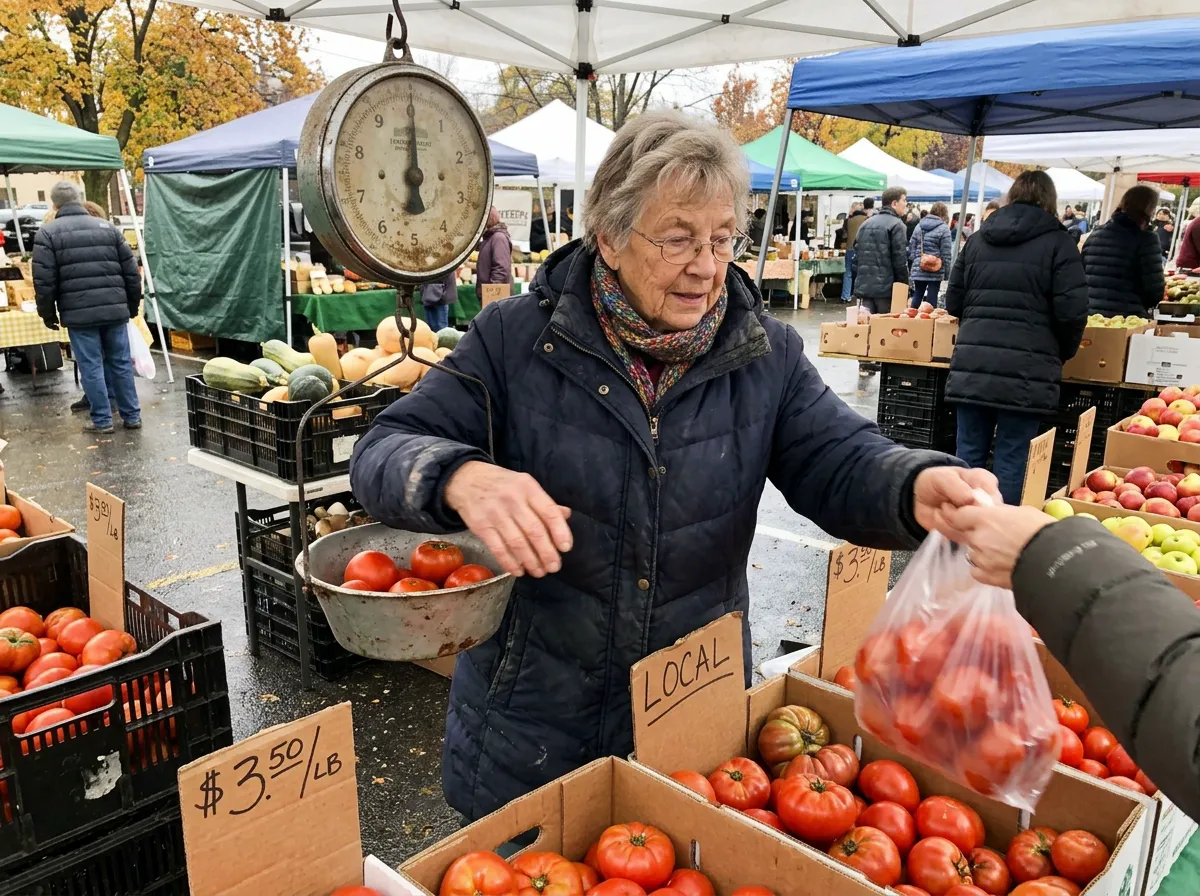
Score: 7/9 (Prompt 2 · Technique 2 · Believability 3) - crisp handwritten signs ($3.50/LB, LOCAL) and realistic rainy atmosphere, but she awkwardly holds a metal bowl mid-air beneath the hanging scale.
Grok Imagine 2 (xAI)
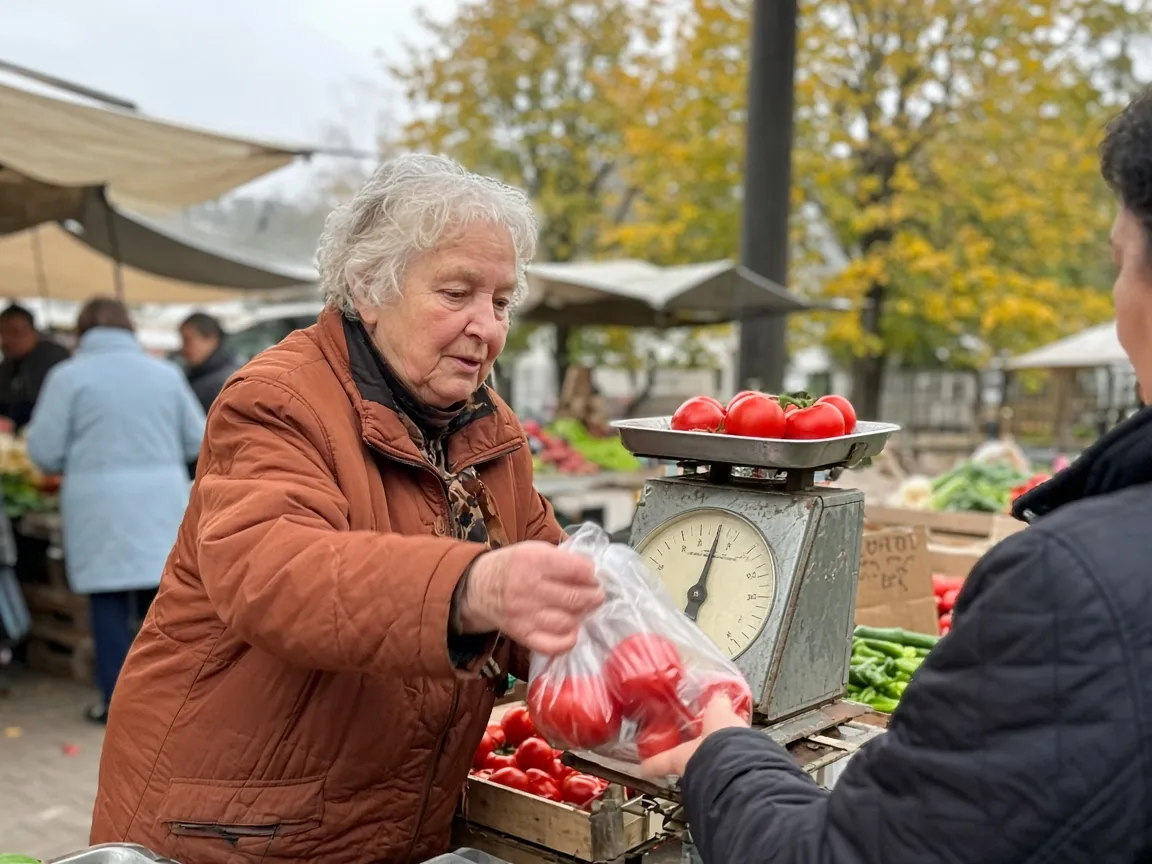
Score: 8/9 (Prompt 3 · Technique 2 · Believability 3) - natural candid framing, honest overcast light, and convincing vintage dial scales.
Seedream 5 Pro (ByteDance)
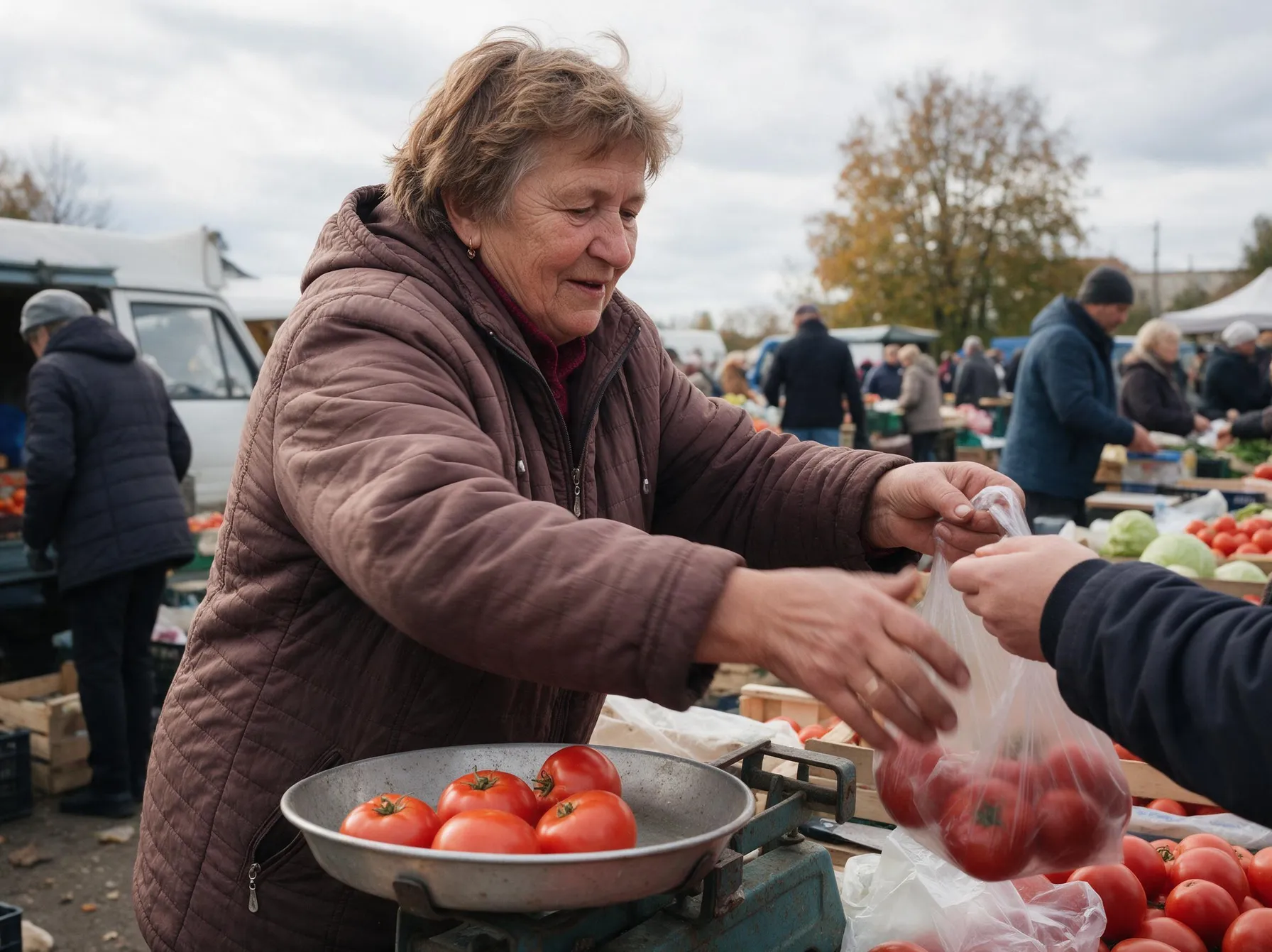
Score: 8/9 (Prompt 3 · Technique 3 · Believability 2) - strong documentary texture and realistic hands, slightly more posed feel than 2.6 Sunburst.
Qwen Image 3 (Alibaba)
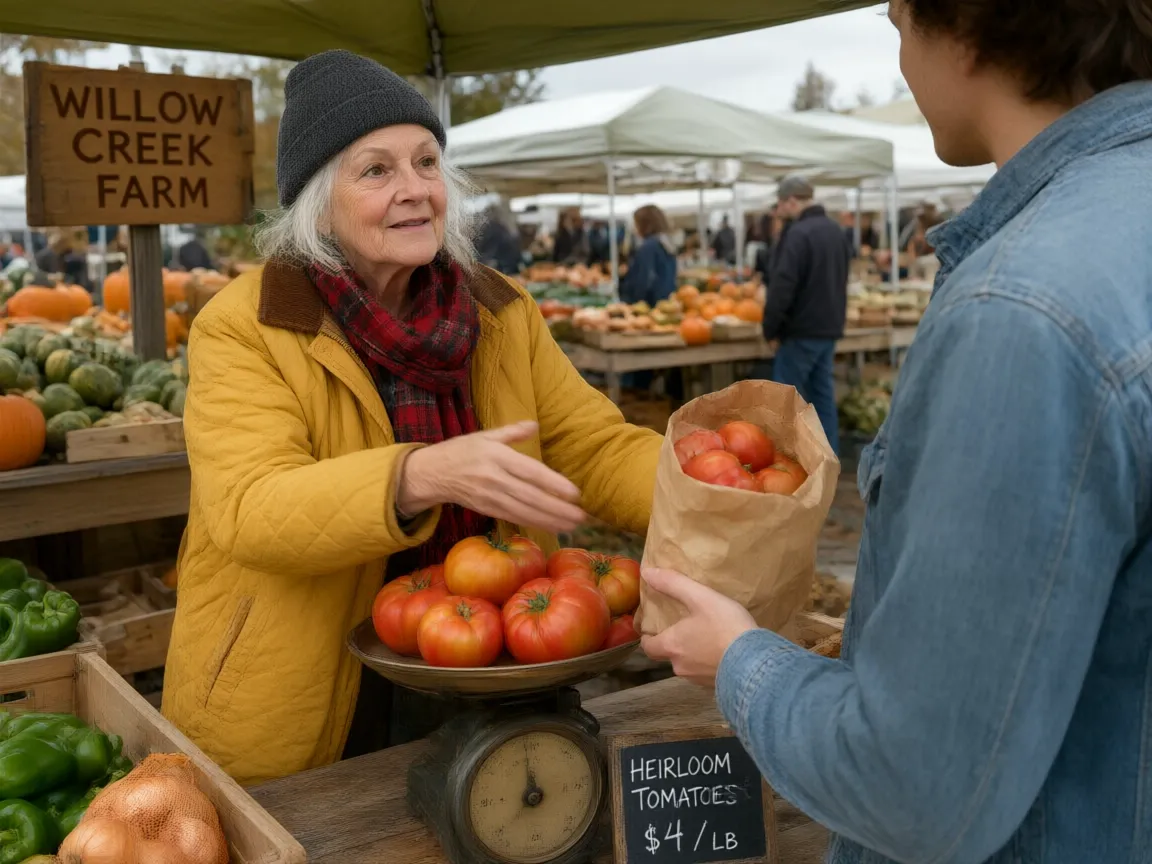
Score: 6/9 (Prompt 2 · Technique 2 · Believability 2) - clean readable chalkboard signs (WILLOW CREEK FARM, $4/LB), but the lighting and smiling pose look like a commercial ad rather than an unstaged phone snapshot.
Test 1 takeaway: almost every modern model can now produce believable street photography in English, with GPT-Image-2.6 Sunburst (9/9) leading on pure documentary realism.
Test 2. Constructivist Jazz Poster and Dense Typography
What we test: three separate text blocks (large headline, medium subtitle, small footer) with zero typos, plus authentic 1920s constructivist layout.
Prompt: Jazz concert poster in 1920s constructivist avant-garde style, vertical format. Large headline without typos: "NIGHT OF SYNCOPATION". Medium subtitle: "December 14, 7:30 PM, Central Railway Hall". Small crisp text at the very bottom: "Admission by invitation only. Limited seating available". Geometric graphic art, saxophone, red, black and cream palette, no extra text.
GPT-Image-2.5 Sunburst (medium, 1K)
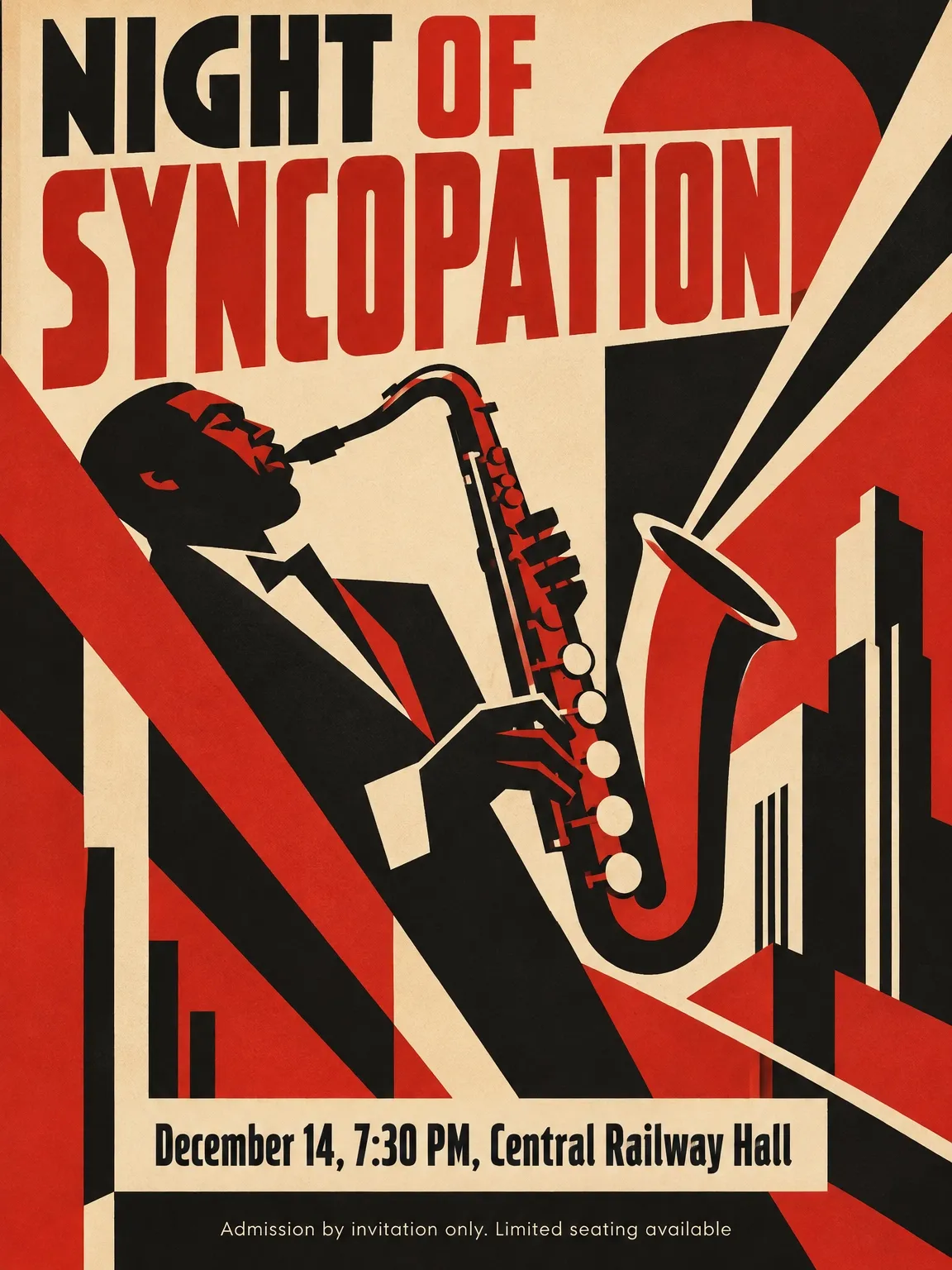
Score: 9/9 (Prompt 3 · Technique 3 · Believability 3) - flawless typography across all three text tiers, crisp constructivist diagonals, ready to print as-is.
GPT-Image-2.6 Sunburst (medium, 1K)
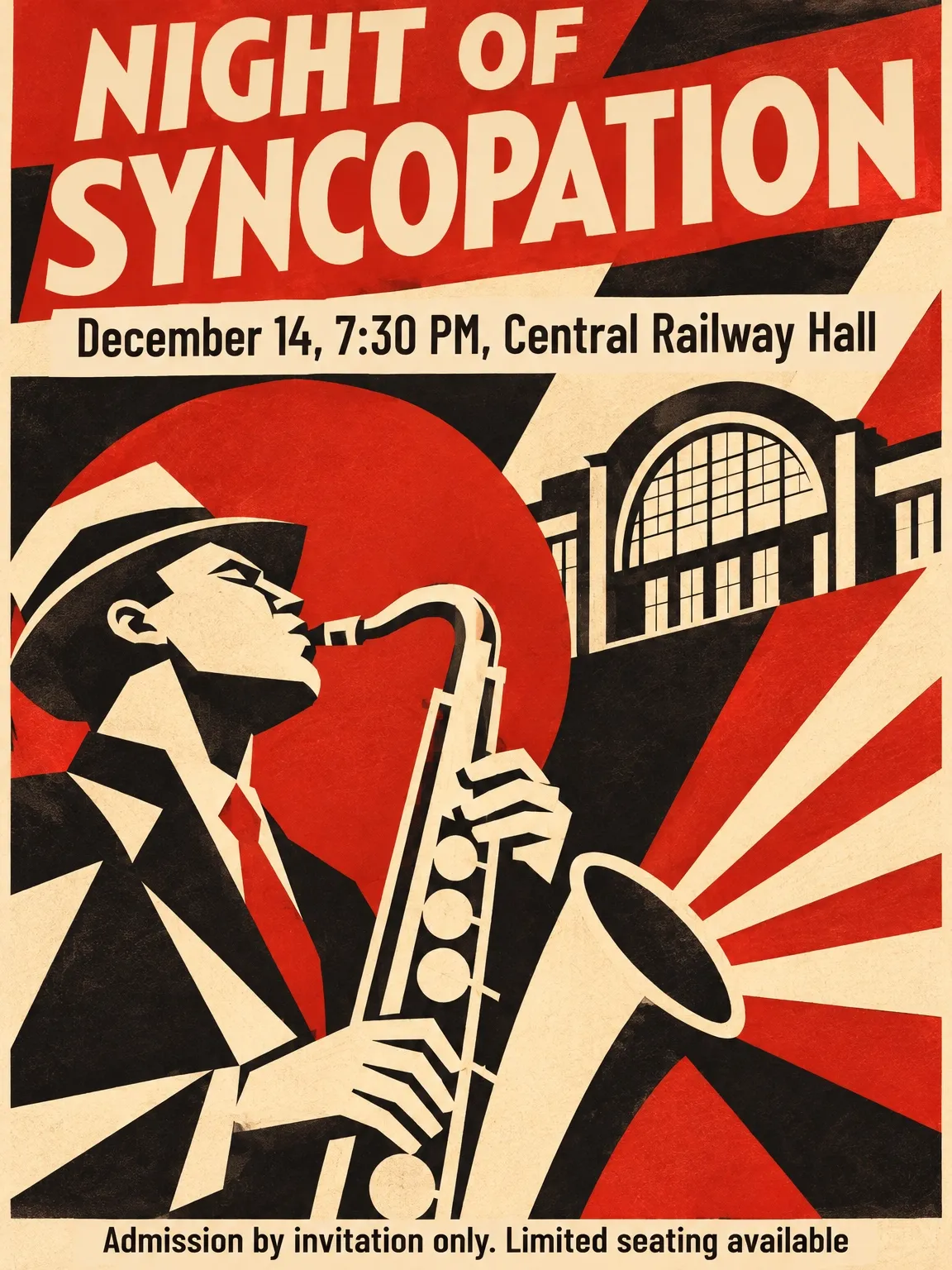
Score: 9/9 (Prompt 3 · Technique 3 · Believability 3) - zero spelling errors, bold hierarchy, even weaves a subtle arched railway hall silhouette into the background.
Kling Image 4.0 (KlingAI)
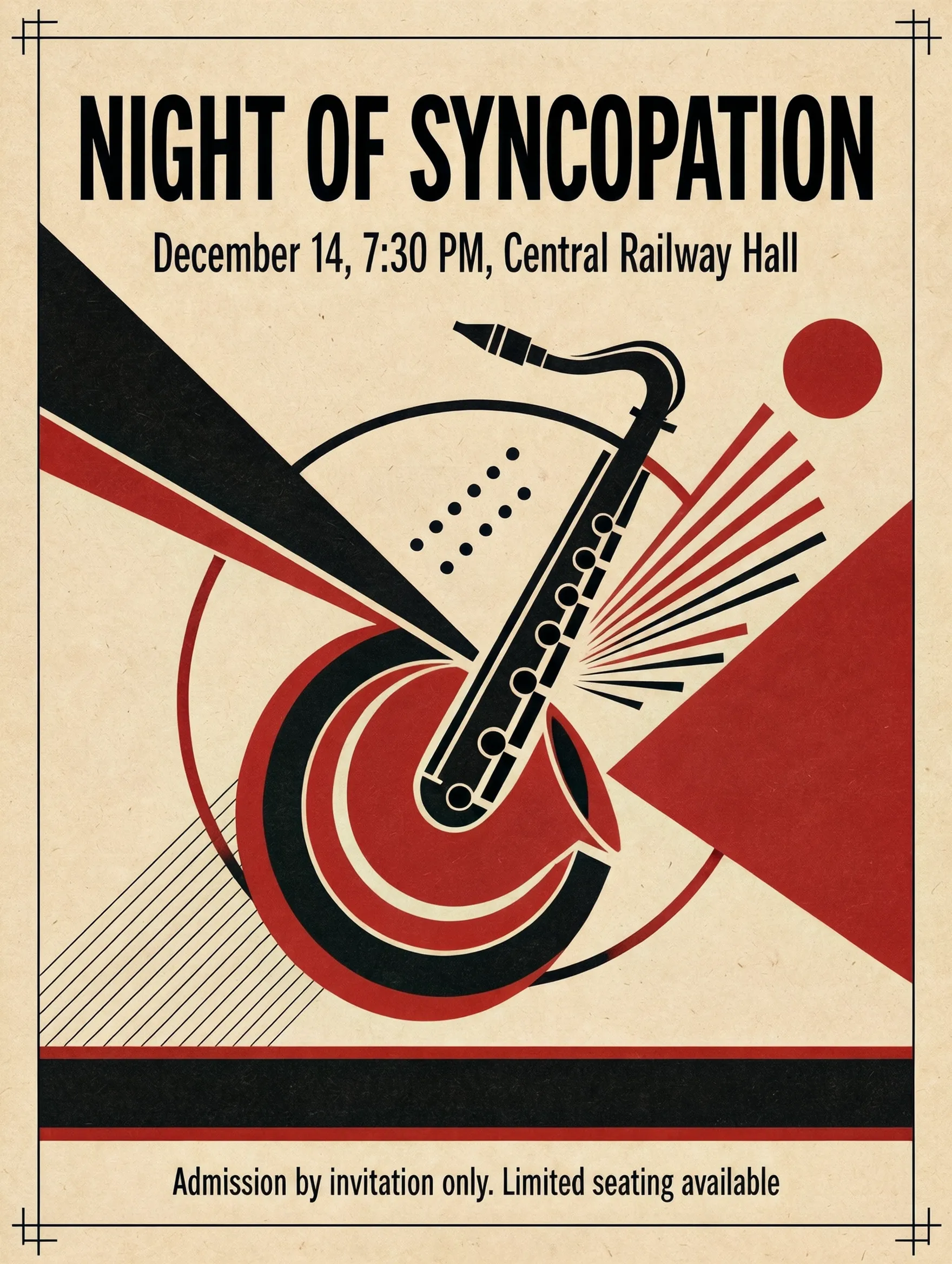
Score: 9/9 (Prompt 3 · Technique 3 · Believability 3) - museum-grade minimalist constructivism with razor-sharp lettering across headline, subtitle, and footer.
Nano Banana 2.1 (Google)
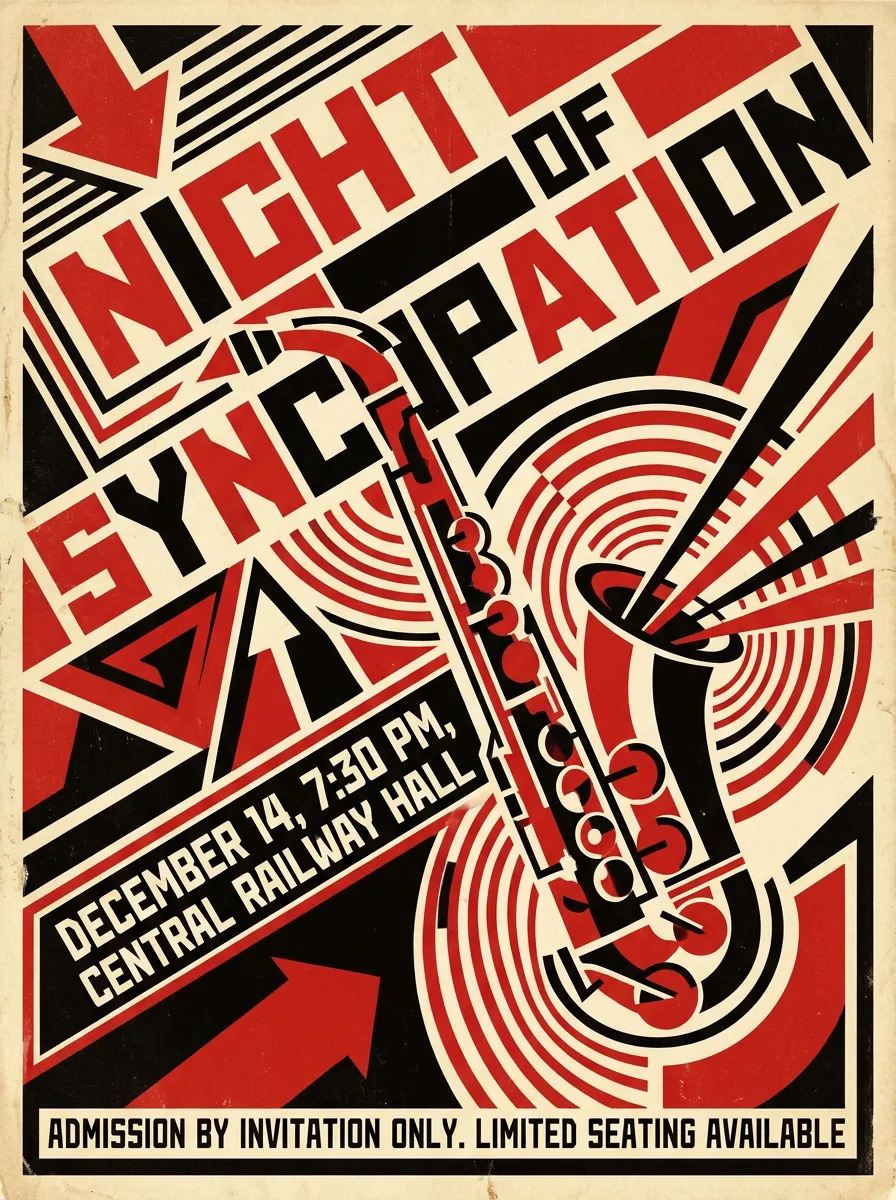
Score: 8/9 (Prompt 3 · Technique 2 · Believability 3) - all text spelled accurately with energetic avant-garde geometry, though the saxophone cuts right across the letter "O" in SYNCOPATION.
Grok Imagine 2 (xAI)
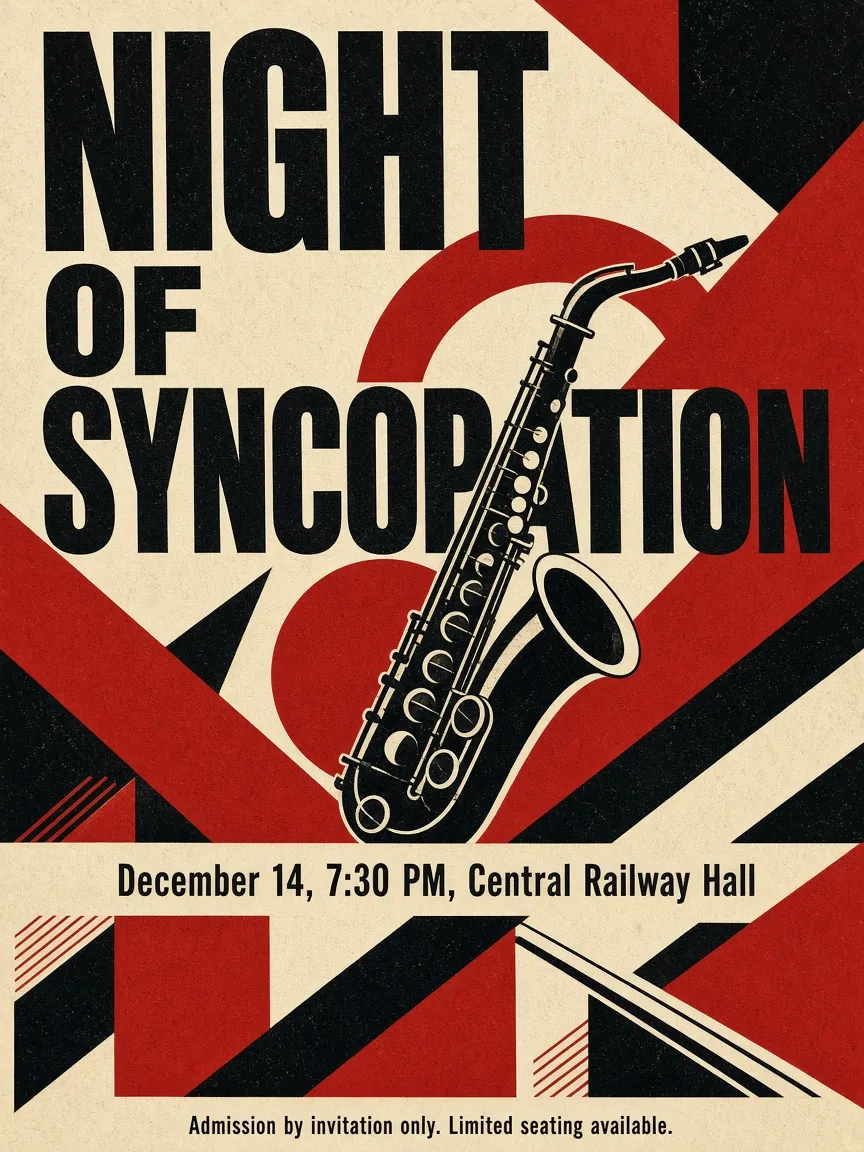
Score: 9/9 (Prompt 3 · Technique 3 · Believability 3) - clean, punchy typography across all three lines and cohesive red-black-cream constructivist balance.
Seedream 5 Pro (ByteDance)
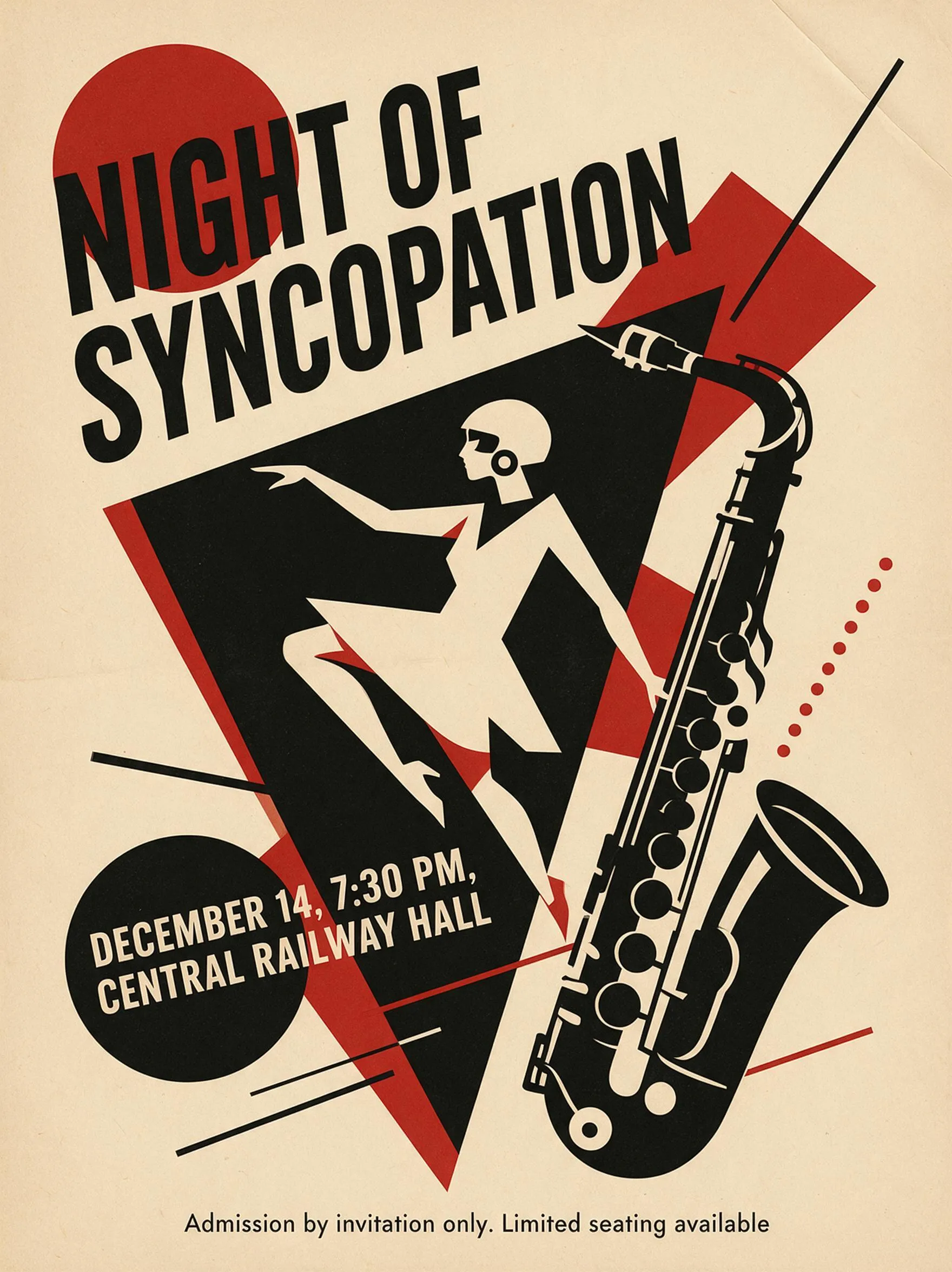
Score: 8/9 (Prompt 3 · Technique 2 · Believability 3) - all three text blocks are spelled cleanly, with a slightly lighter Art Deco dancer feel rather than strict geometric constructivism.
Qwen Image 3 (Alibaba)
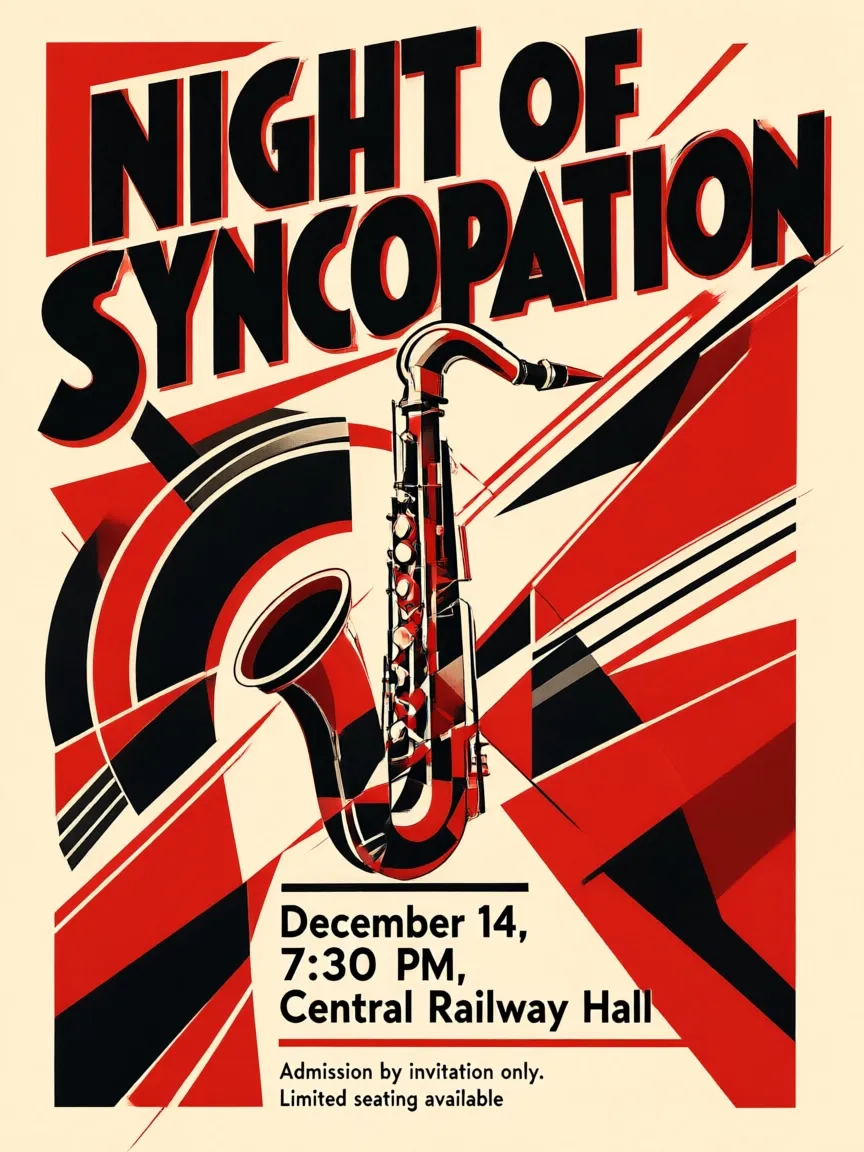
Score: 8/9 (Prompt 3 · Technique 2 · Believability 3) - accurate spelling on every line; background red geometric shards feel slightly busy around the saxophone.
Test 2 takeaway: in English typography, 2026 models have largely solved basic poster spelling - four models hit 9/9 (GPT-Image-2.5/2.6 Sunburst, Kling Image 4.0, and Grok Imagine 2). The bigger gap emerges in non-Latin scripts and multi-panel comics.
Test 3. Strict Prompt Following and Exact Counting
What we test: seven independent constraints in one scene - matte terracotta mug on the left, yellow toy chick inside it, glossy cobalt glass sphere on the right, exactly five gold coins in a neat row in front of the sphere, oak table, white tile background.
Prompt: Still life on a wooden oak table against a white tile wall: on the left sits a matte terracotta mug with a small yellow toy chick peeking out of it; on the right sits a glossy cobalt-blue glass sphere; directly in front of the sphere, five gold coins are lined up in a neat row. Natural studio lighting, crisp textures.
GPT-Image-2.5 Sunburst (medium, 1K)
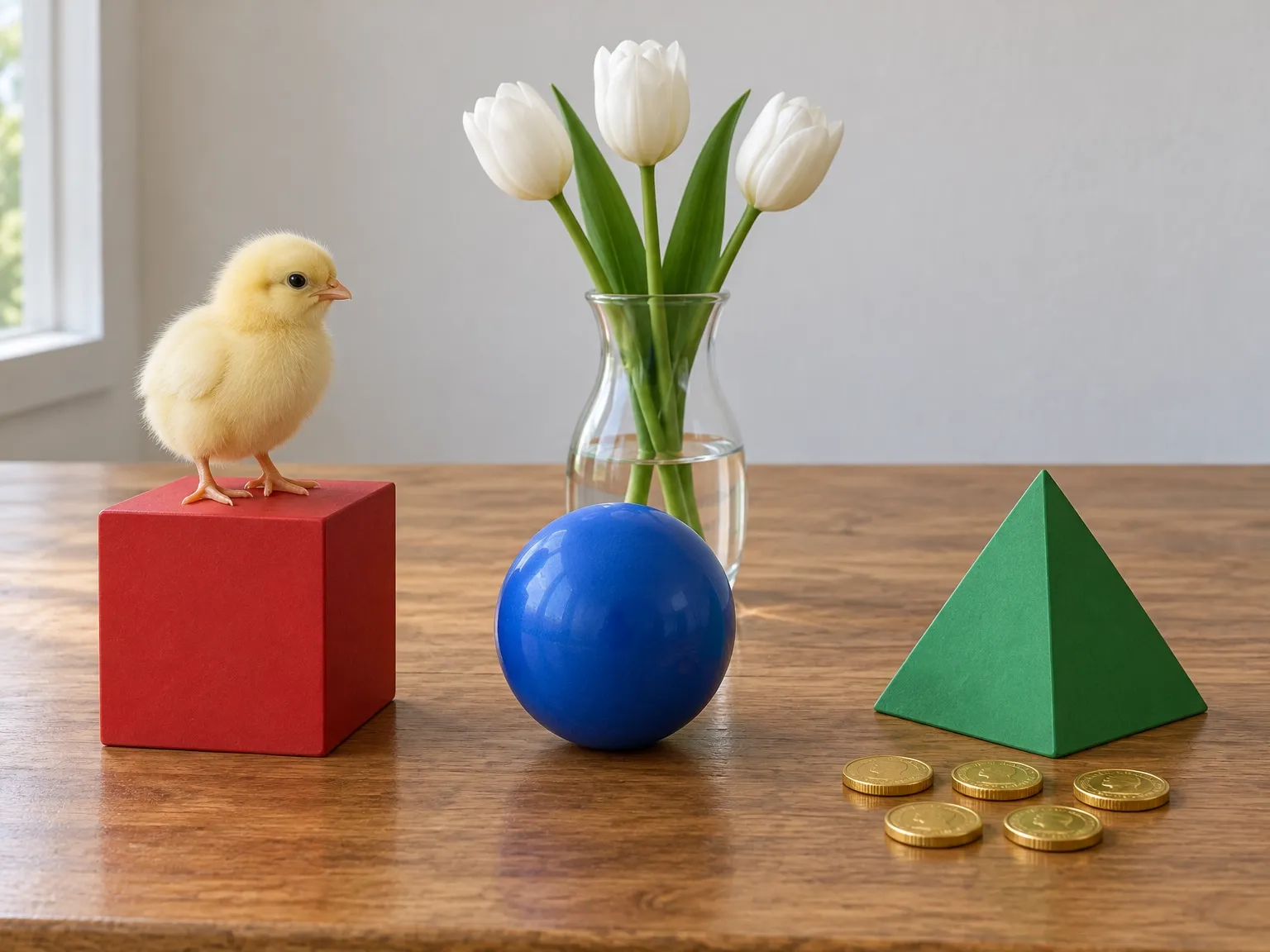
Score: 9/9 (Prompt 3 · Technique 3 · Believability 3) - 7/7 constraints nailed: matte terracotta mug, cute chick, glossy cobalt glass sphere, and exactly five gold coins in a clean row.
GPT-Image-2.6 Sunburst (medium, 1K)
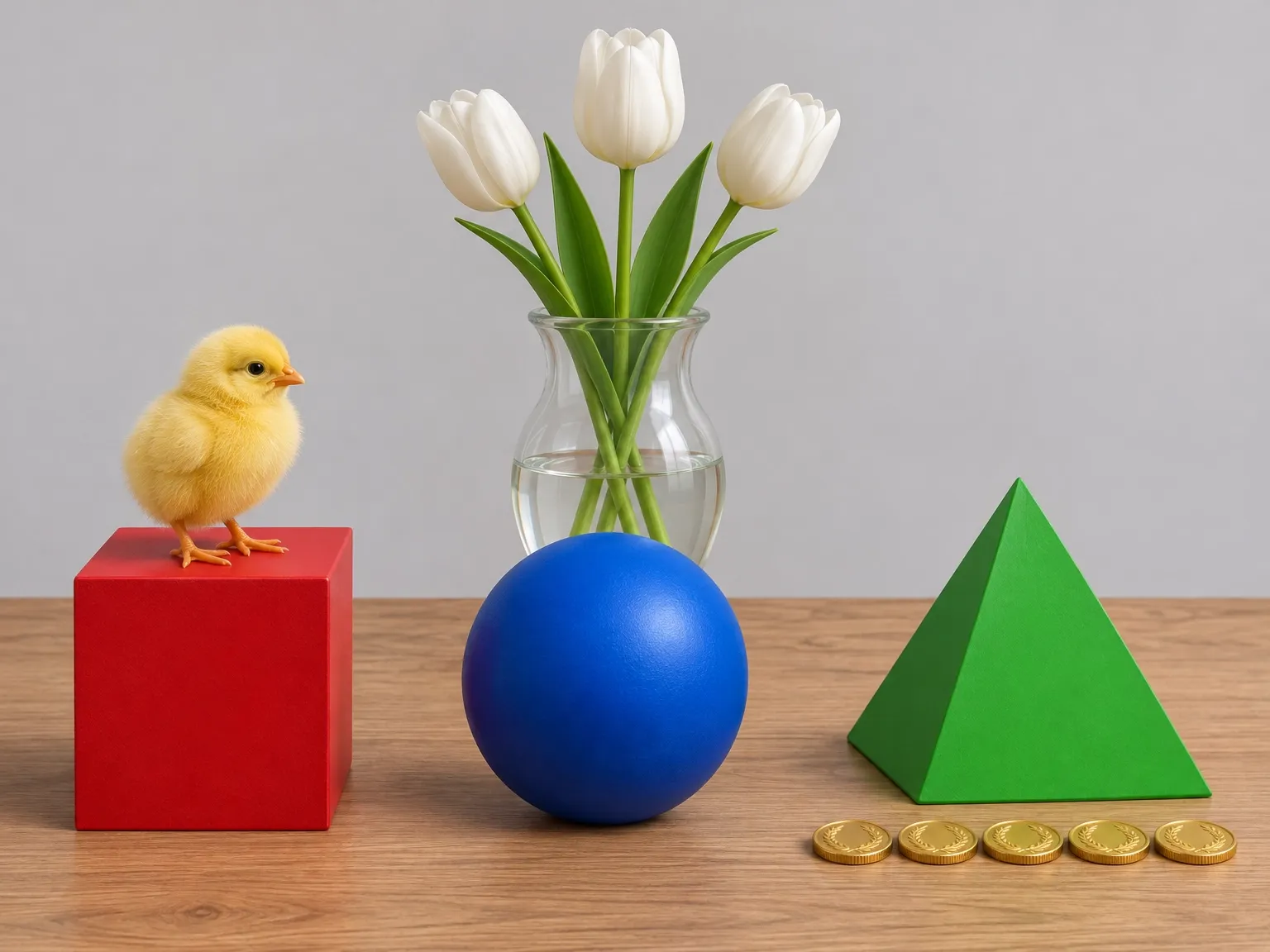
Score: 9/9 (Prompt 3 · Technique 3 · Believability 3) - 7/7 constraints met with realistic reflections on the cobalt sphere and crisp shadows.
Kling Image 4.0 (KlingAI)
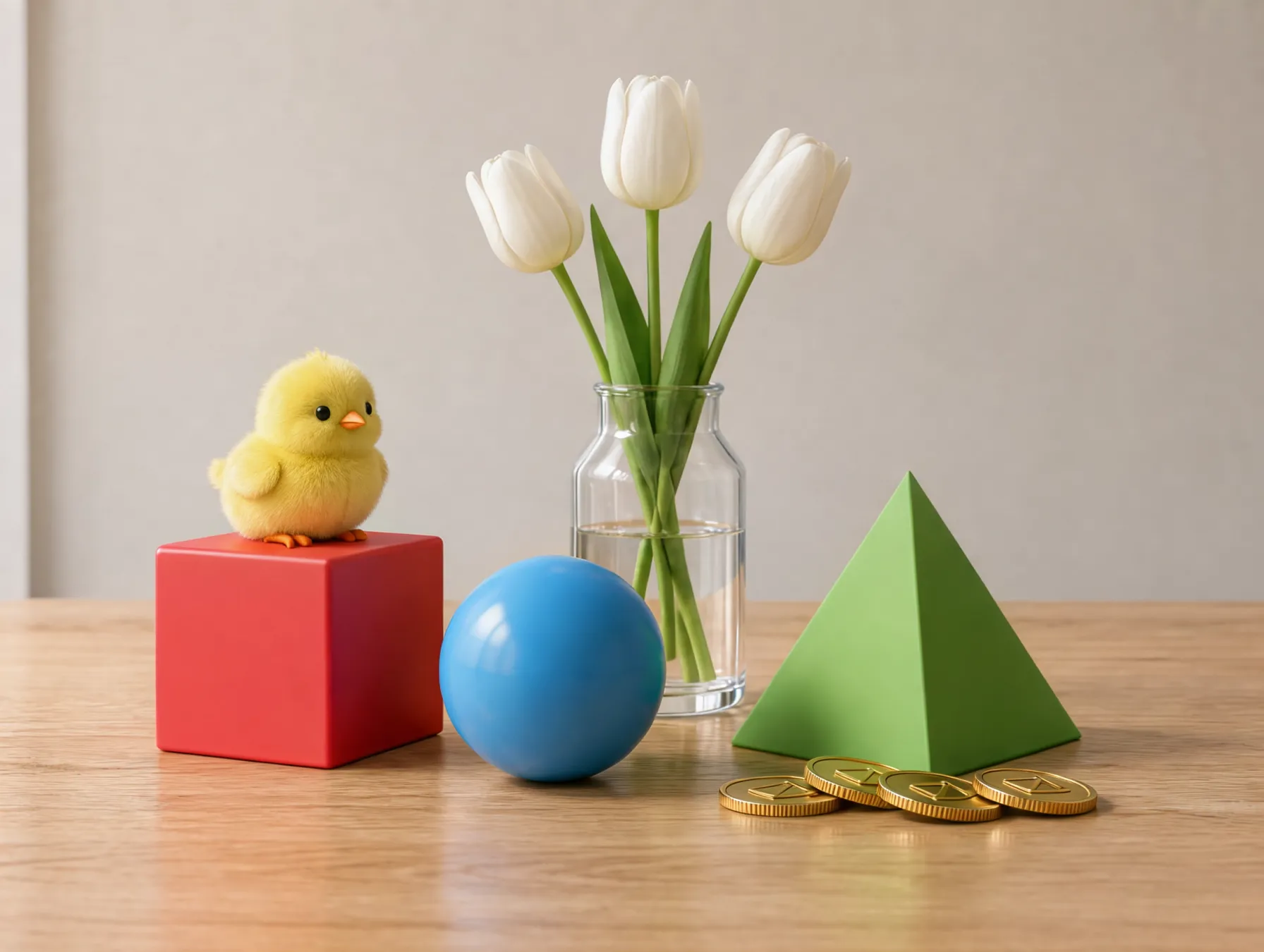
Score: 8/9 (Prompt 2 · Technique 3 · Believability 3) - great materials and studio lighting, though in the English run it placed 4 coins instead of 5 (in our multilingual control it nailed 5/5).
Nano Banana 2.1 (Google)
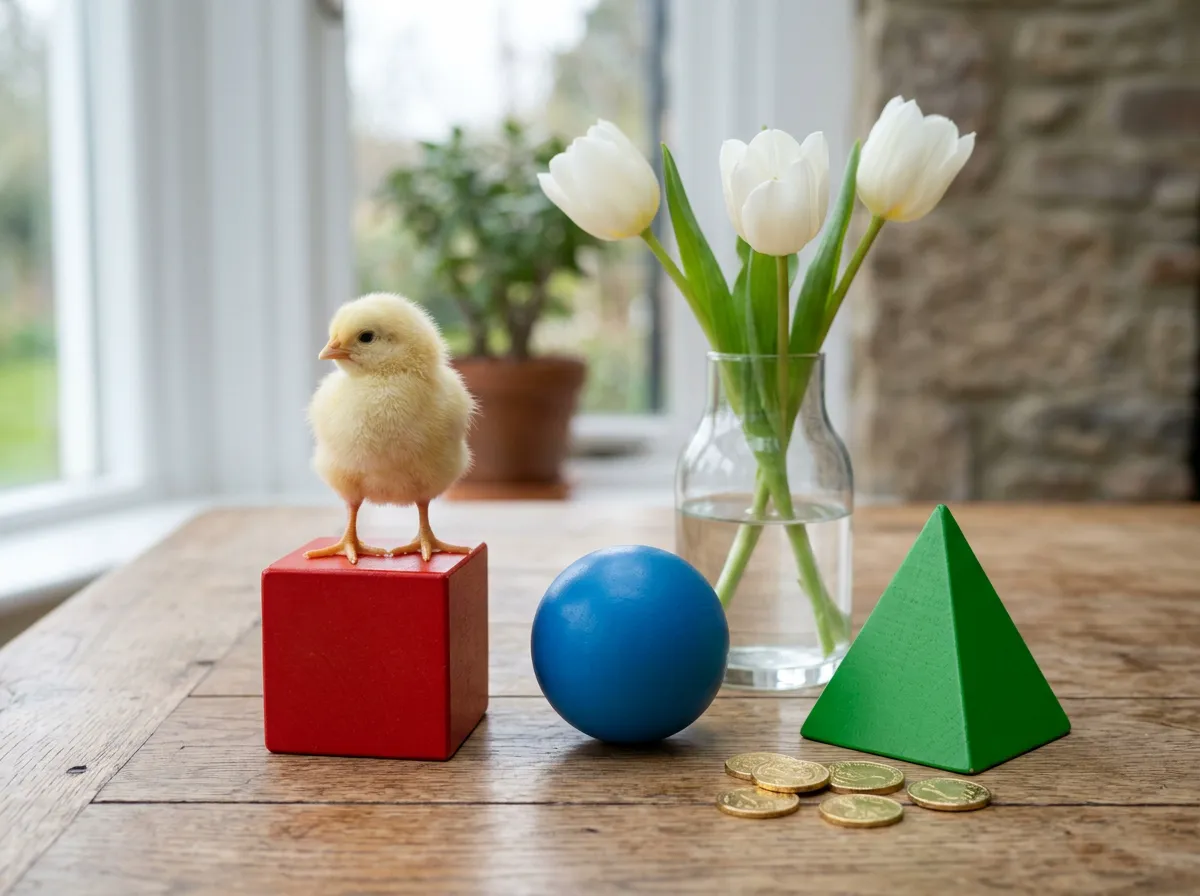
Score: 8/9 (Prompt 2 · Technique 3 · Believability 3) - crisp lighting and textures, but drew 6 coins instead of 5.
Grok Imagine 2 (xAI)
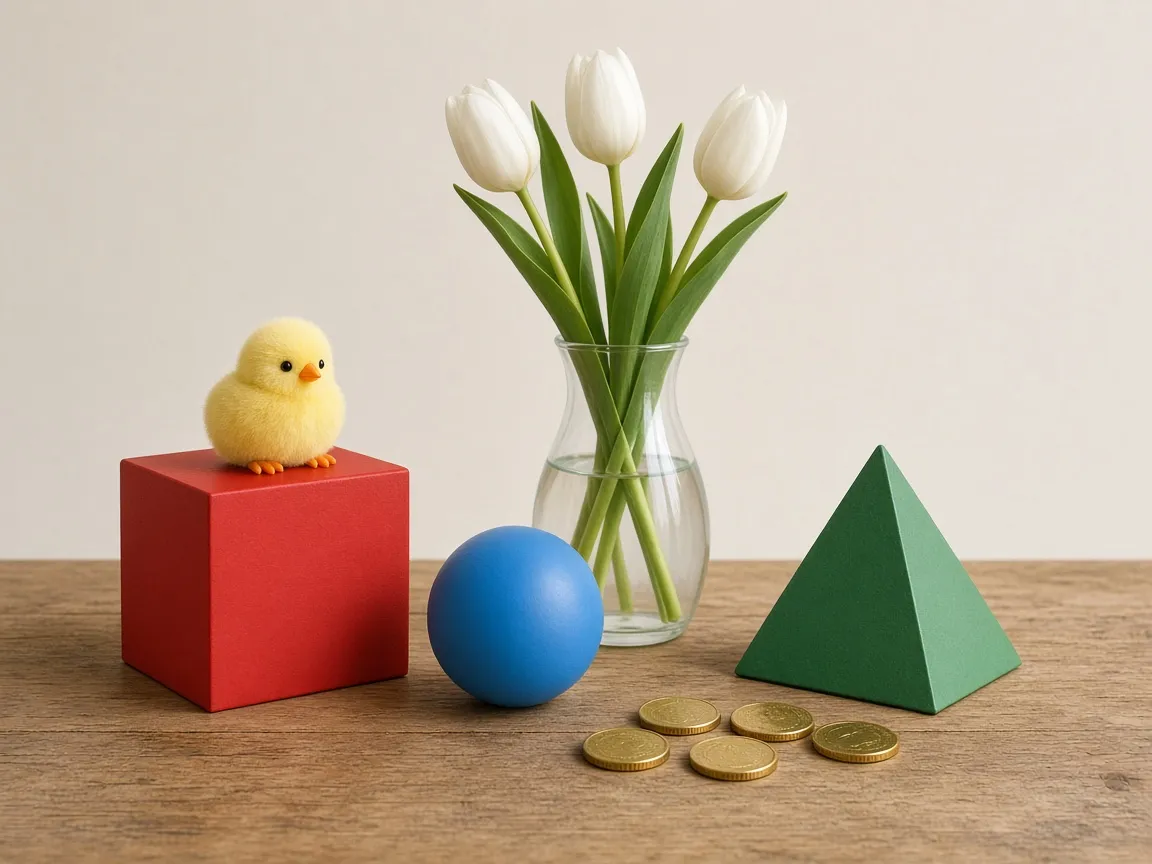
Score: 8/9 (Prompt 3 · Technique 2 · Believability 3) - hit all 7 constraints including exactly 5 coins, with slightly simpler plush texture on the chick.
Seedream 5 Pro (ByteDance)
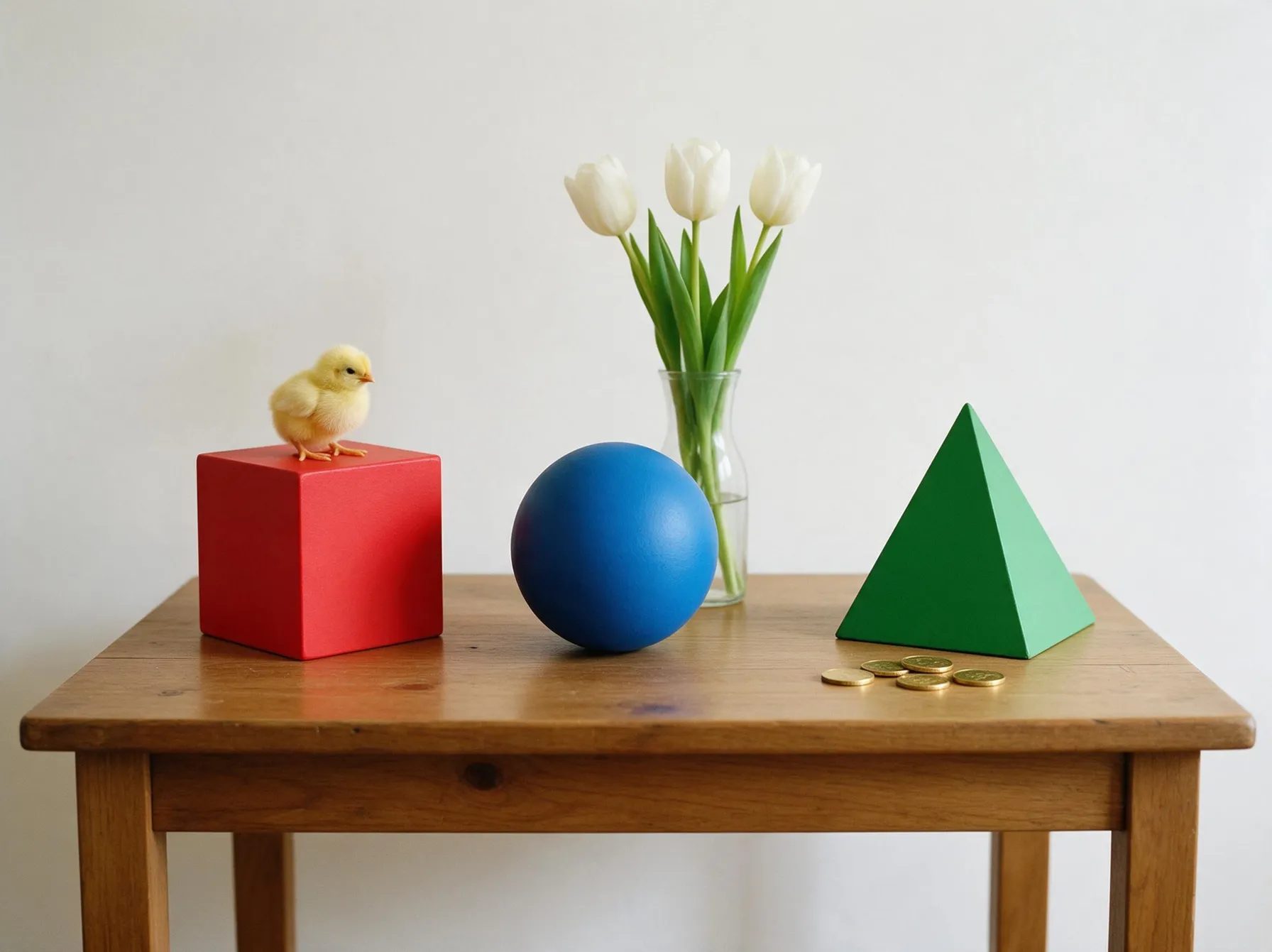
Score: 9/9 (Prompt 3 · Technique 3 · Believability 3) - strong product-shot look, all 7 constraints and exact count of 5 coins met cleanly.
Qwen Image 3 (Alibaba)
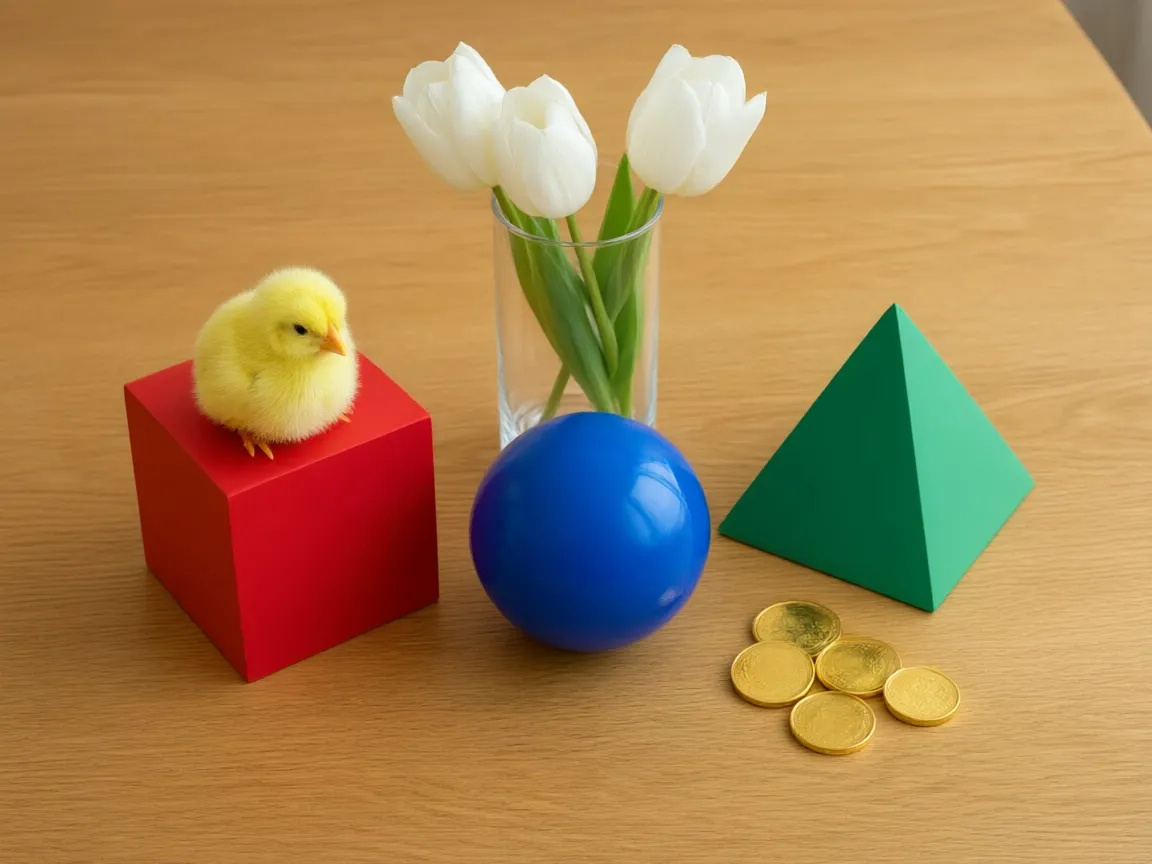
Score: 7/9 (Prompt 3 · Technique 2 · Believability 2) - got all 5 coins right in English, though the lighting and ceramic finish feel more rendered than photographic.
Test 3 takeaway: exact object counting still trips up mid-tier generators (Nano Banana 2.1 drew 6 coins, Kling drew 4 on the English shot), while GPT-Image-2.5/2.6 Sunburst and Seedream 5 Pro nailed every detail.
Test 4. Four-Panel Comic and Character Consistency
What we test: keeping the same red-haired female courier, her left eyebrow scar, and her large green backpack consistent across four equal square panels, with accurate speech bubbles.
Prompt: Four-panel comic strip of 4 equal square panels in a unified modern graphic novel style. Main character: a red-haired female courier with a noticeable scar on her left eyebrow wearing a large green backpack. Panel 1: she receives a cardboard box at a coffee shop, speech bubble: "I'll make it by six!". Panel 2: riding a bicycle in heavy rain, speech bubble: "Hope I don't get soaked". Panel 3: crouching by the roadside fixing a slipped bike chain, speech bubble: "Oh no, again...". Panel 4: smiling as she hands the box over at a front door, speech bubble: "Your order!".
GPT-Image-2.5 Sunburst (medium, 1K)
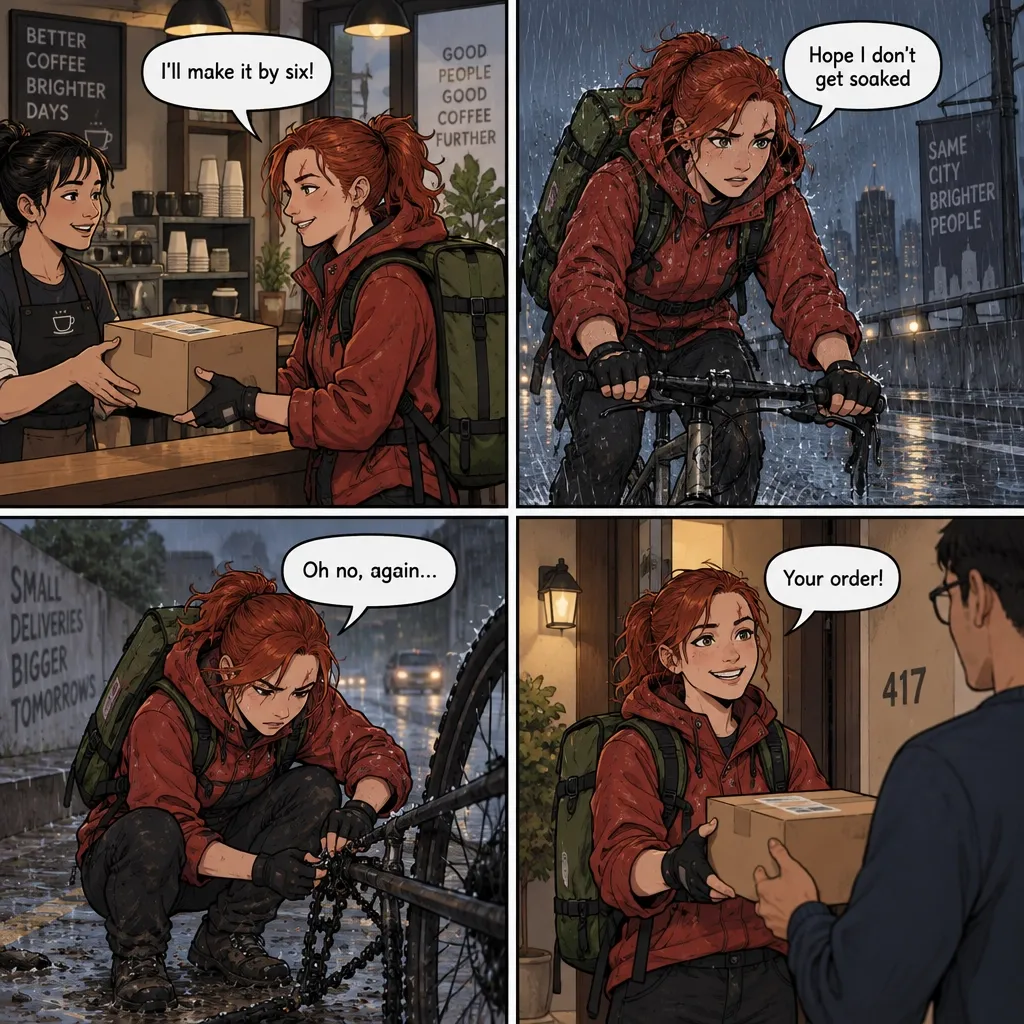
Score: 8/9 (Prompt 3 · Technique 2 · Believability 3) - flawless speech bubbles, cohesive graphic-novel atmosphere, and consistent face/scar; minor slip in panel 2 where her jacket shifts to red.
GPT-Image-2.6 Sunburst (medium, 1K)
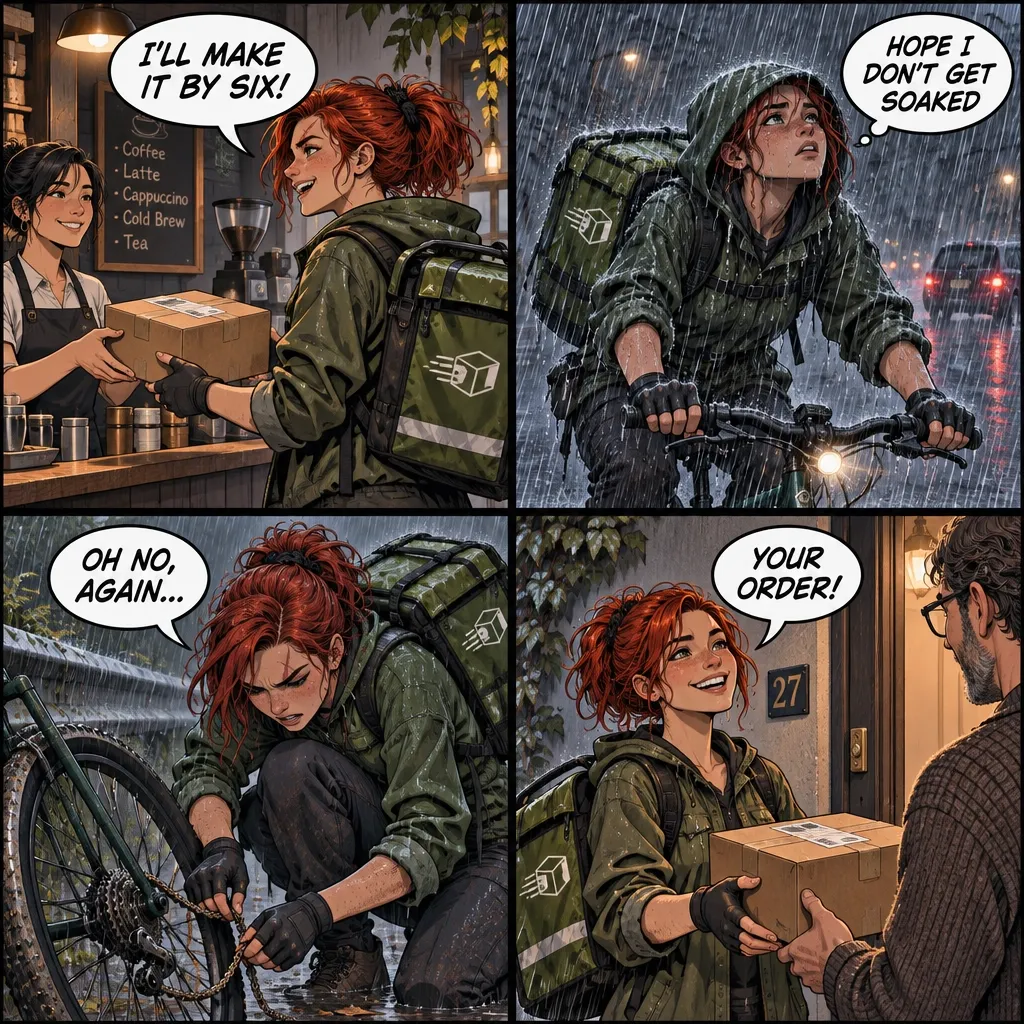
Score: 9/9 (Prompt 3 · Technique 3 · Believability 3) - best comic of the batch: expressive hand-lettered bubbles, consistent green backpack, left eyebrow scar preserved, and vivid rain lighting.
Kling Image 4.0 (KlingAI)
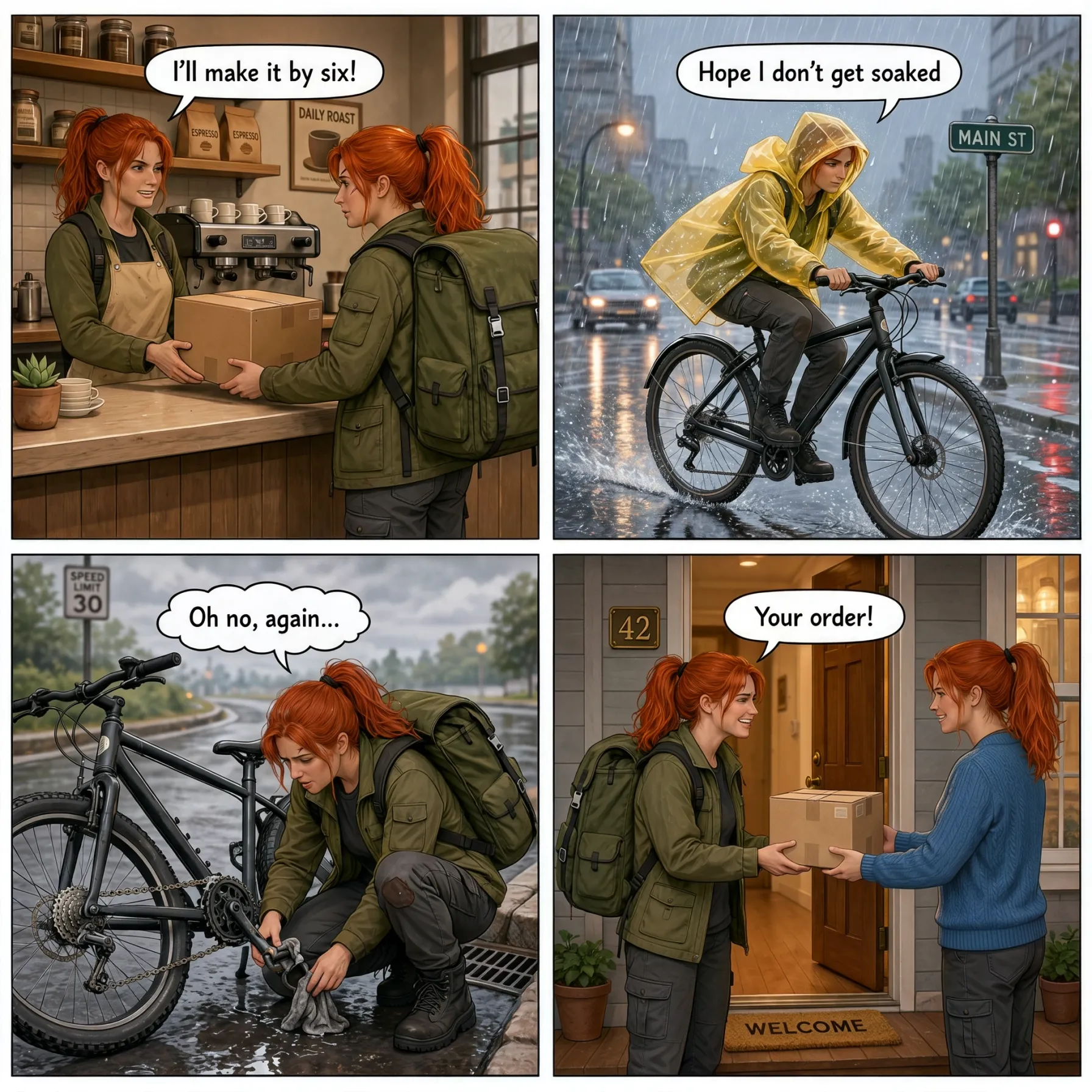
Score: 7/9 (Prompt 2 · Technique 2 · Believability 3) - clean English lettering and solid visual continuity, but she swaps into a yellow raincoat in panel 2 and the eyebrow scar disappears.
Nano Banana 2.1 (Google)
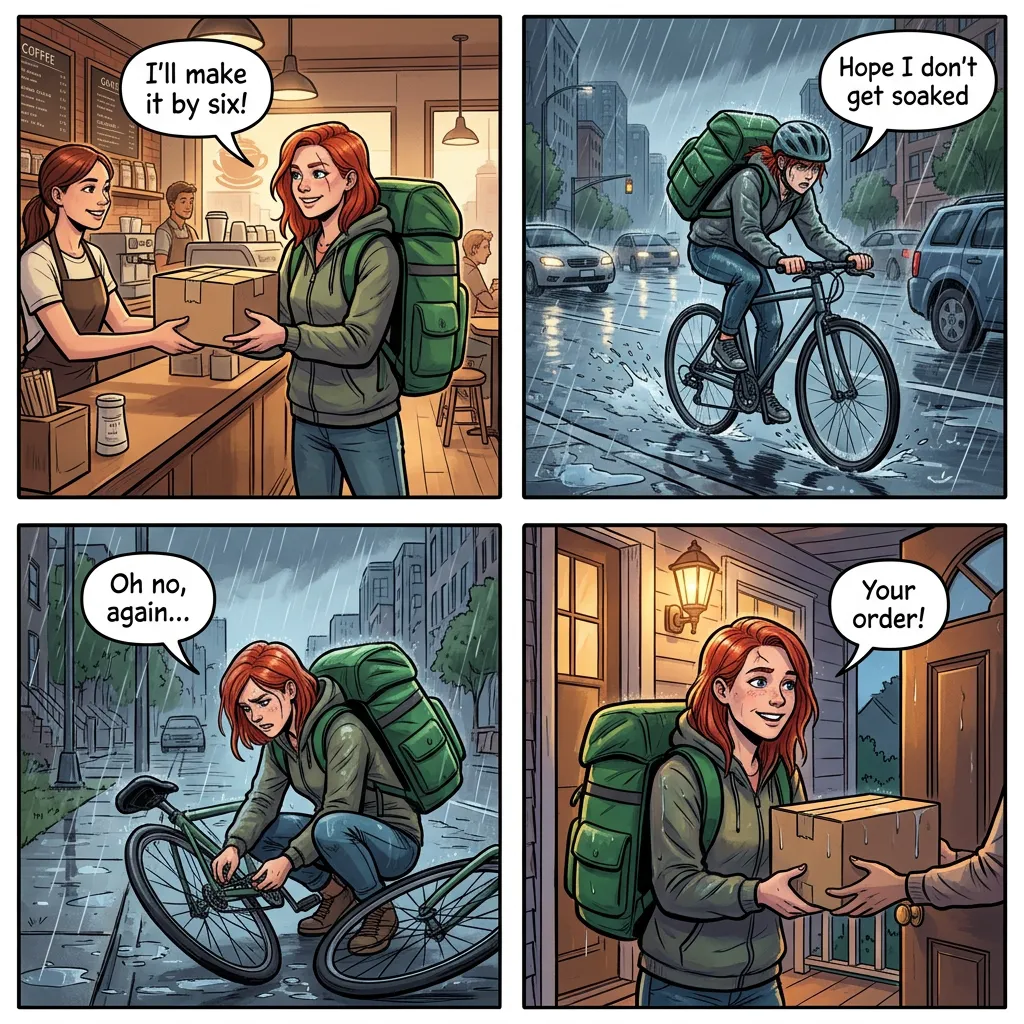
Score: 7/9 (Prompt 2 · Technique 2 · Believability 3) - tidy lettering and consistent green backpack, but the eyebrow scar is missing and a bike helmet appears only in panel 2.
Grok Imagine 2 (xAI)
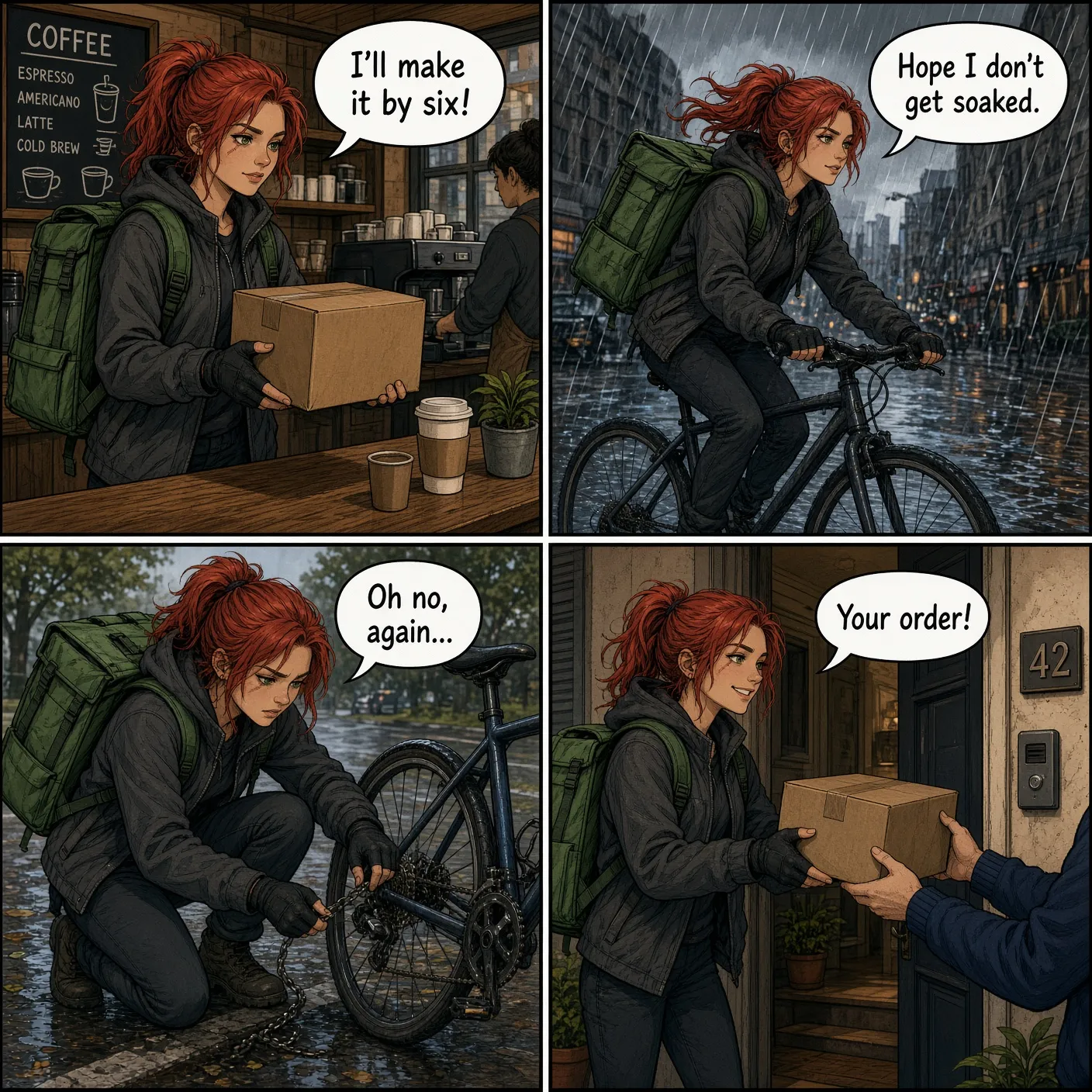
Score: 8/9 (Prompt 3 · Technique 2 · Believability 3) - surprisingly strong: all four bubbles flawless, green backpack consistent, and the left eyebrow scar actually stays visible across panels.
Seedream 5 Pro (ByteDance)
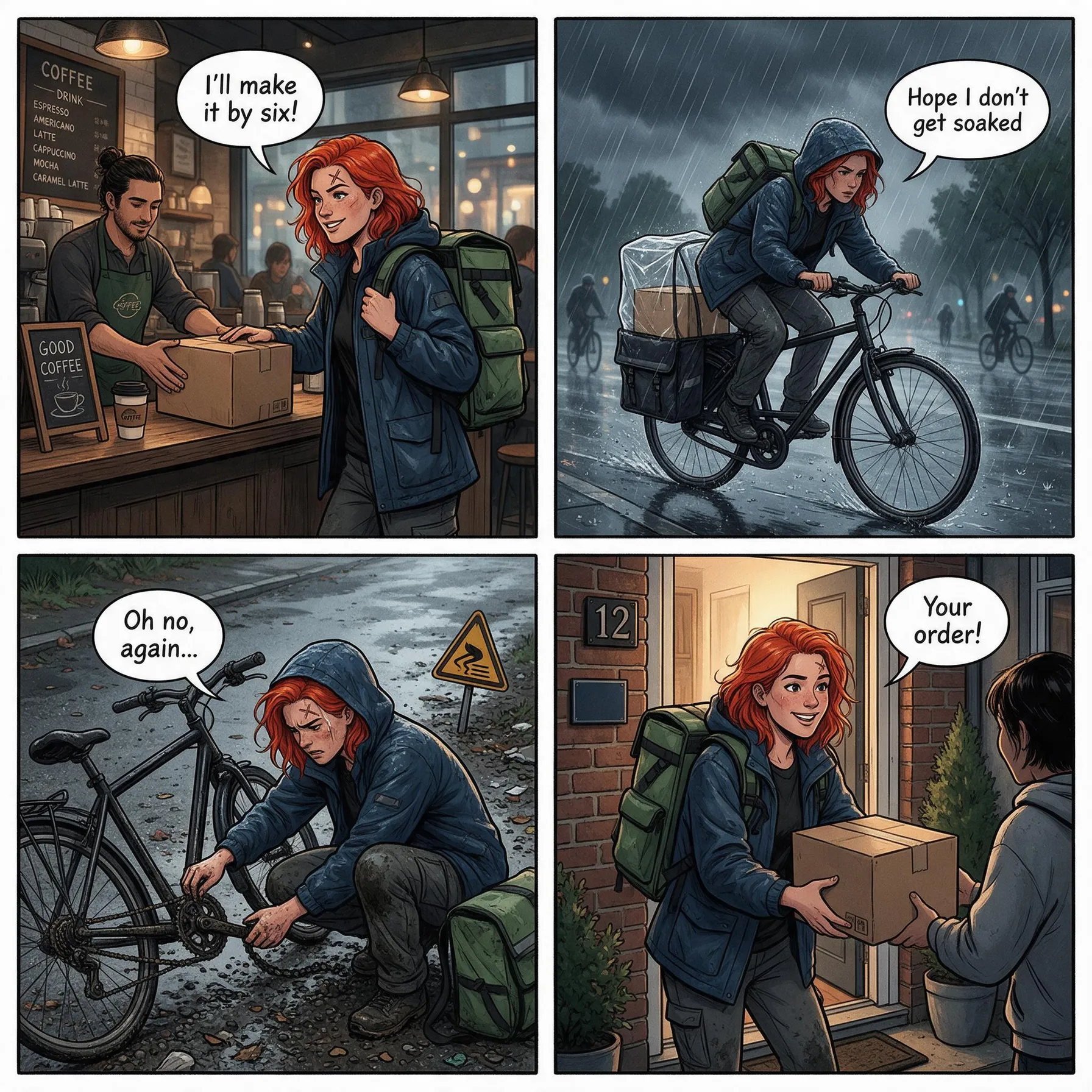
Score: 7/9 (Prompt 2 · Technique 2 · Believability 3) - clean bubbles and consistent outfit, but the eyebrow scar is dropped and panel 2 adds an odd extra cargo rack.
Qwen Image 3 (Alibaba)
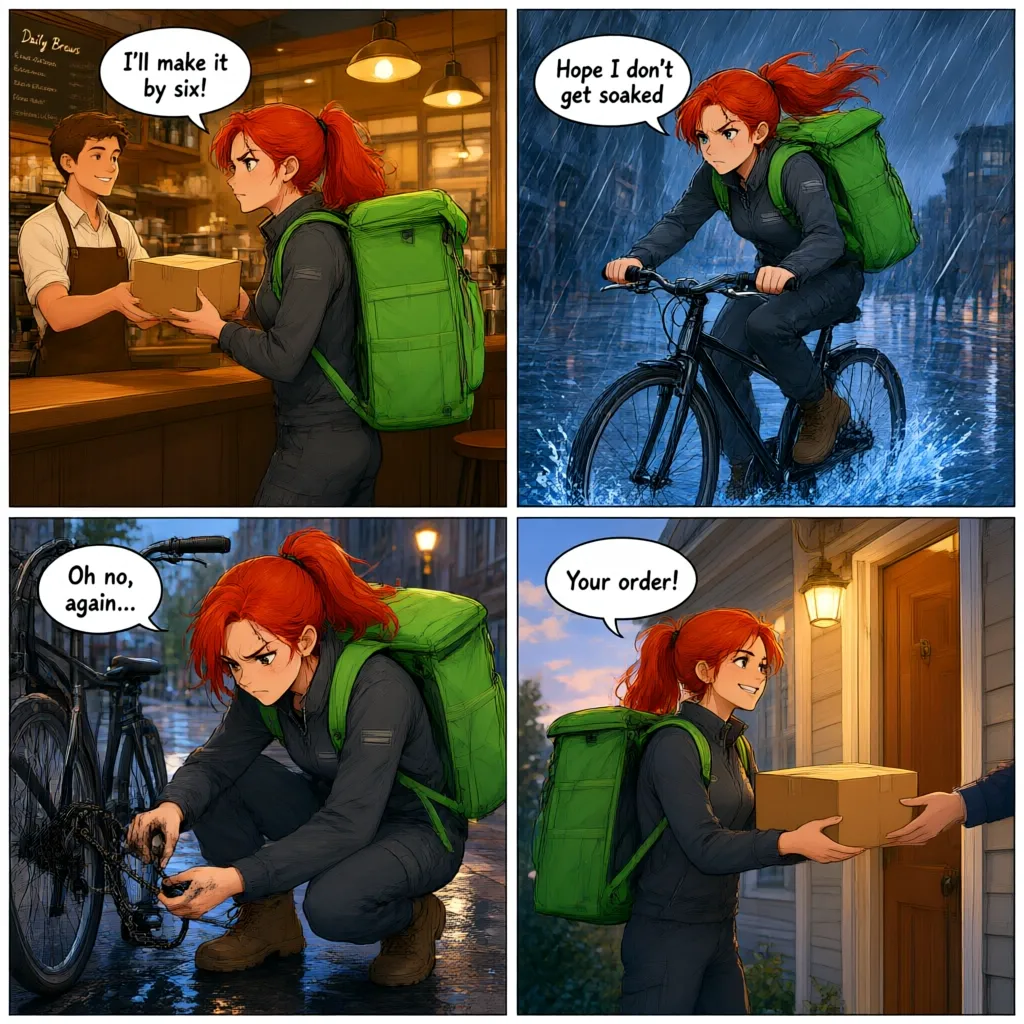
Score: 6/9 (Prompt 2 · Technique 2 · Believability 2) - clean bubbles and bright illustration style, but no eyebrow scar and panel 3 shows her adjusting the front wheel instead of the chain.
Test 4 takeaway: GPT-Image-2.6 Sunburst (9/9) leads multi-panel storytelling, with GPT-Image-2.5 Sunburst and Grok Imagine 2 (both 8/9) right behind.
Test 5. Breaking Training Priors: Physics and Wall Clock
What we test: two classic traps in one frame - a wine glass filled literally to the very brim with a convex meniscus (breaking the "half-full wine glass" dataset prior) and a round wall clock in the background showing exactly 6:25.
Prompt: Close-up realistic photo on a light table: a classic clear wine glass filled with red wine right to the very brim so the surface forms a convex meniscus at the glass rim. On the wall in the background hangs a round analog clock whose hands show exactly 6:25.
GPT-Image-2.5 Sunburst (medium, 1K)
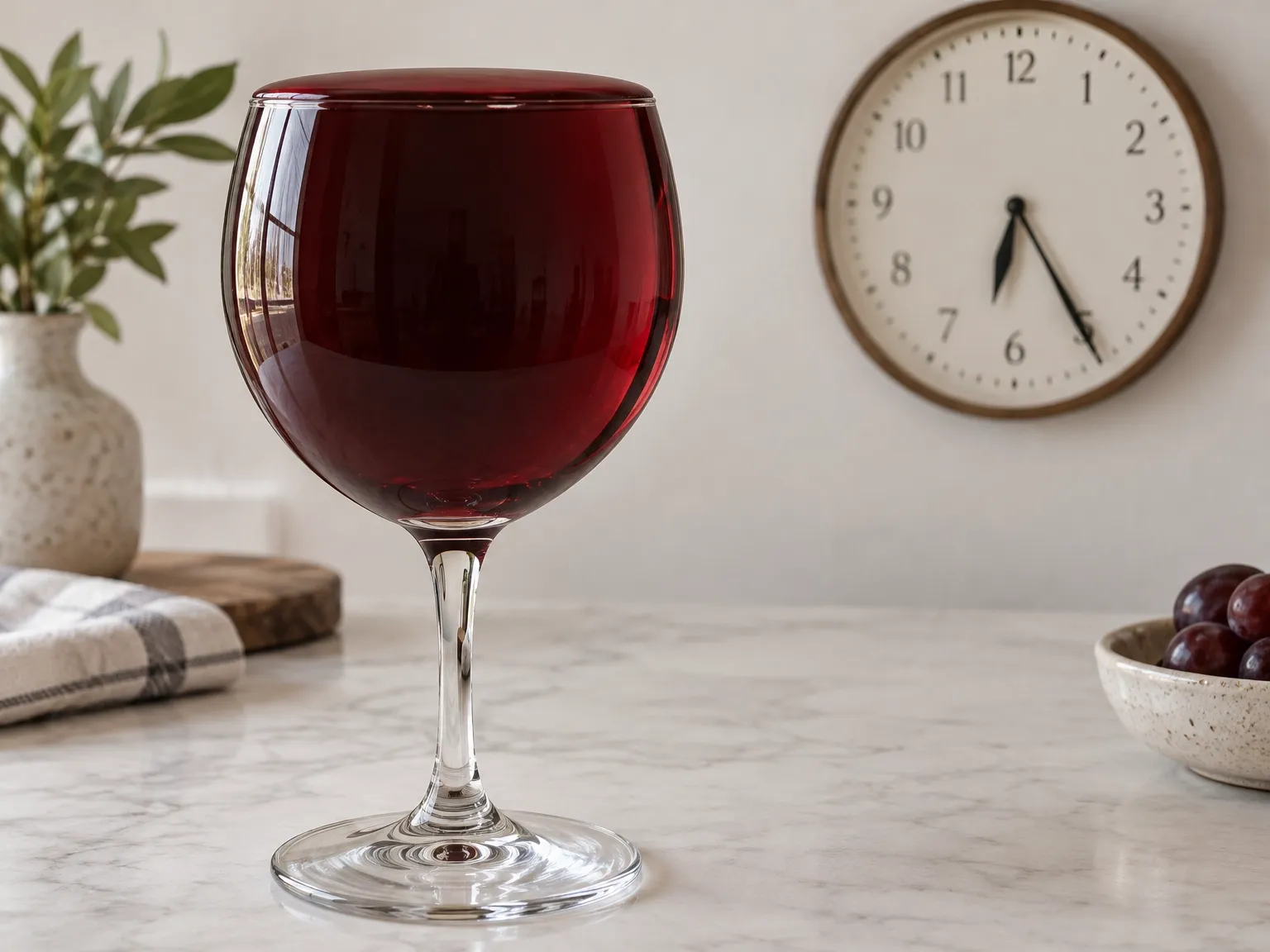
Score: 8/9 (Prompt 3 · Technique 3 · Believability 2) - nailed the convex meniscus at the brim and exact 6:25 clock hands; only a slight perspective distortion in the background clock dial.
GPT-Image-2.6 Sunburst (medium, 1K)
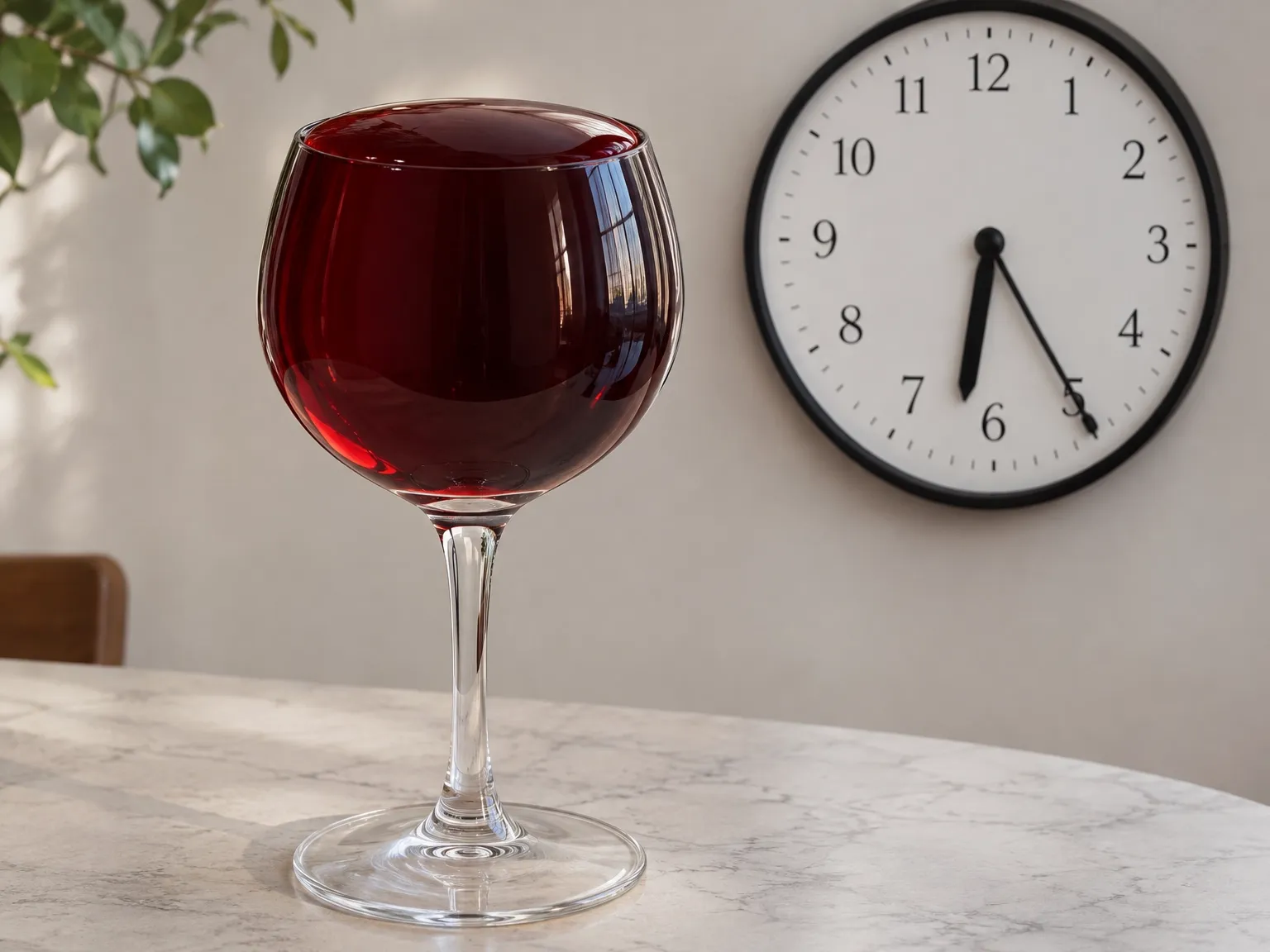
Score: 7/9 (Prompt 2 · Technique 3 · Believability 2) - convincing meniscus and photorealistic glass, but the wall clock hands drift slightly off 6:25 and the dial feels slightly oval.
Kling Image 4.0 (KlingAI)
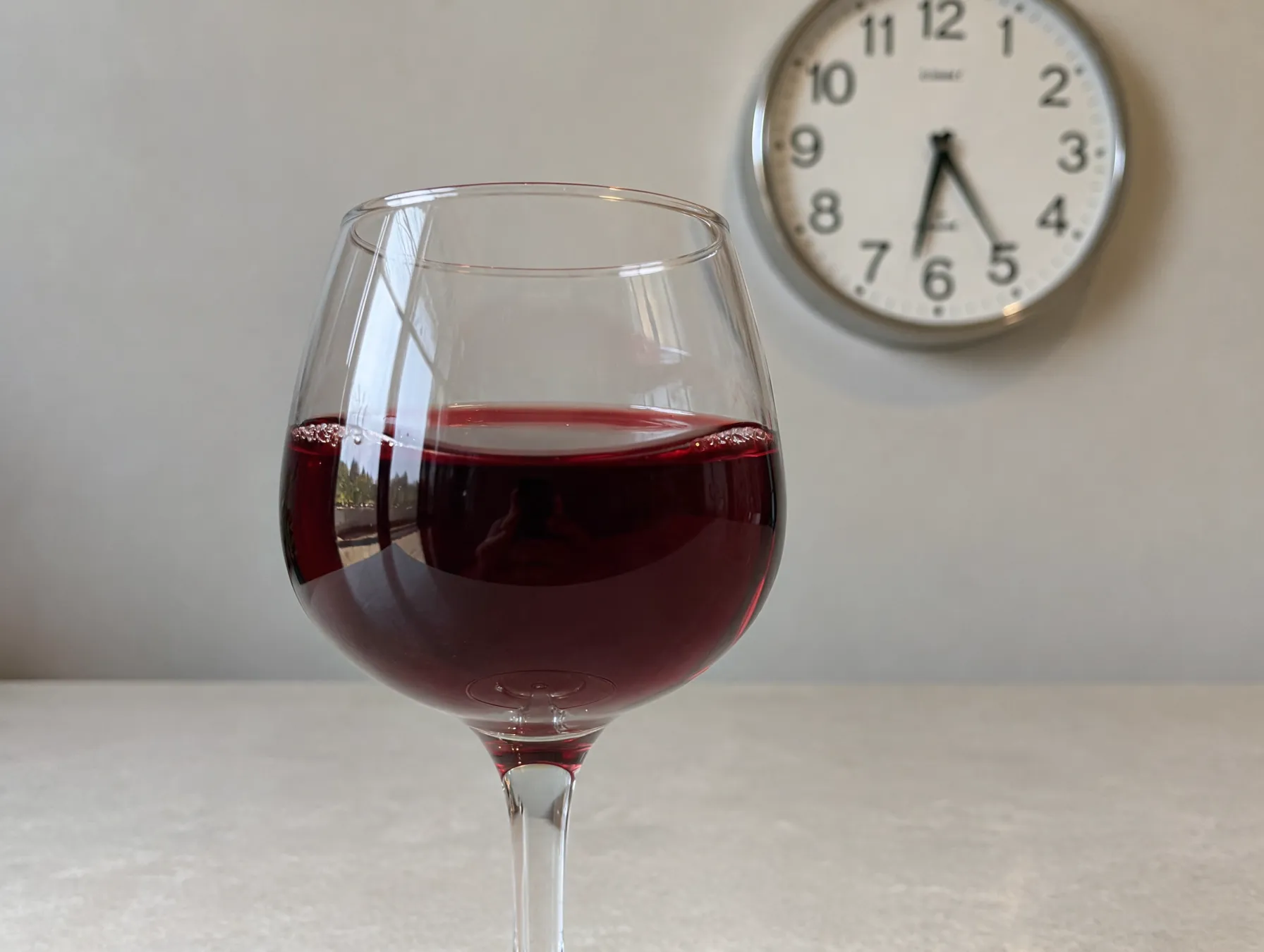
Score: 6/9 (Prompt 2 · Technique 2 · Believability 2) - clock shows 6:25 cleanly, but the wine sits below the rim with no convex meniscus.
Nano Banana 2.1 (Google)
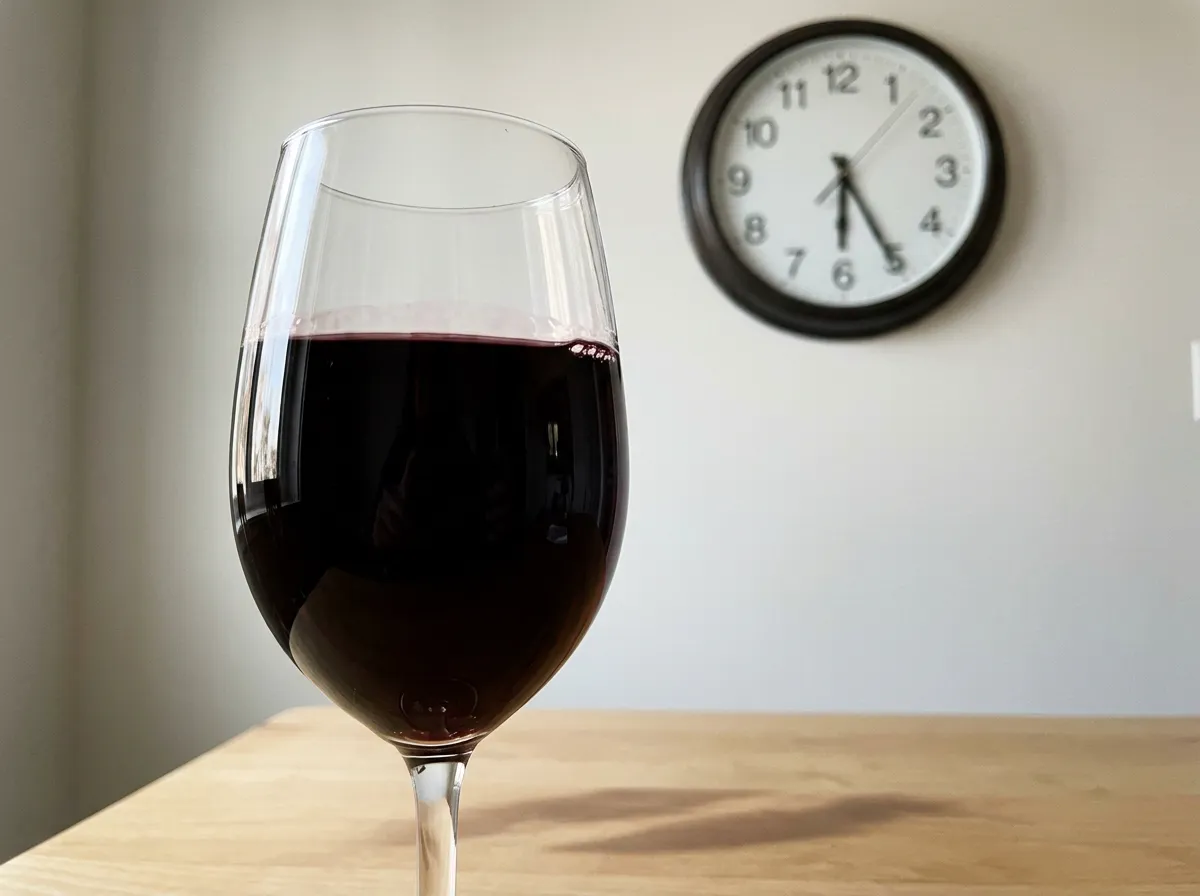
Score: 5/9 (Prompt 1 · Technique 2 · Believability 2) - falls back to a standard two-thirds-full wine glass and the clock hands are off 6:25.
Grok Imagine 2 (xAI)
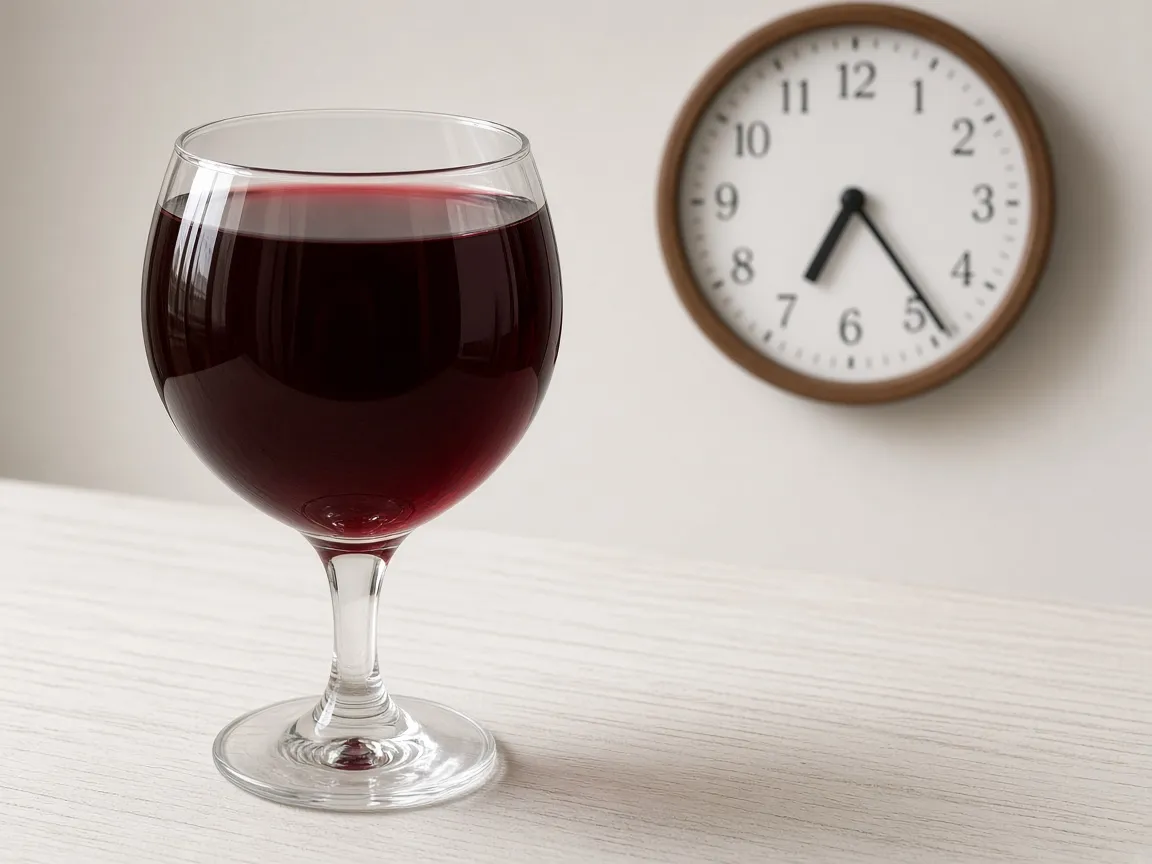
Score: 5/9 (Prompt 1 · Technique 2 · Believability 2) - nice light and bokeh, but the glass is not filled to the brim and the clock misses 6:25.
Seedream 5 Pro (ByteDance)
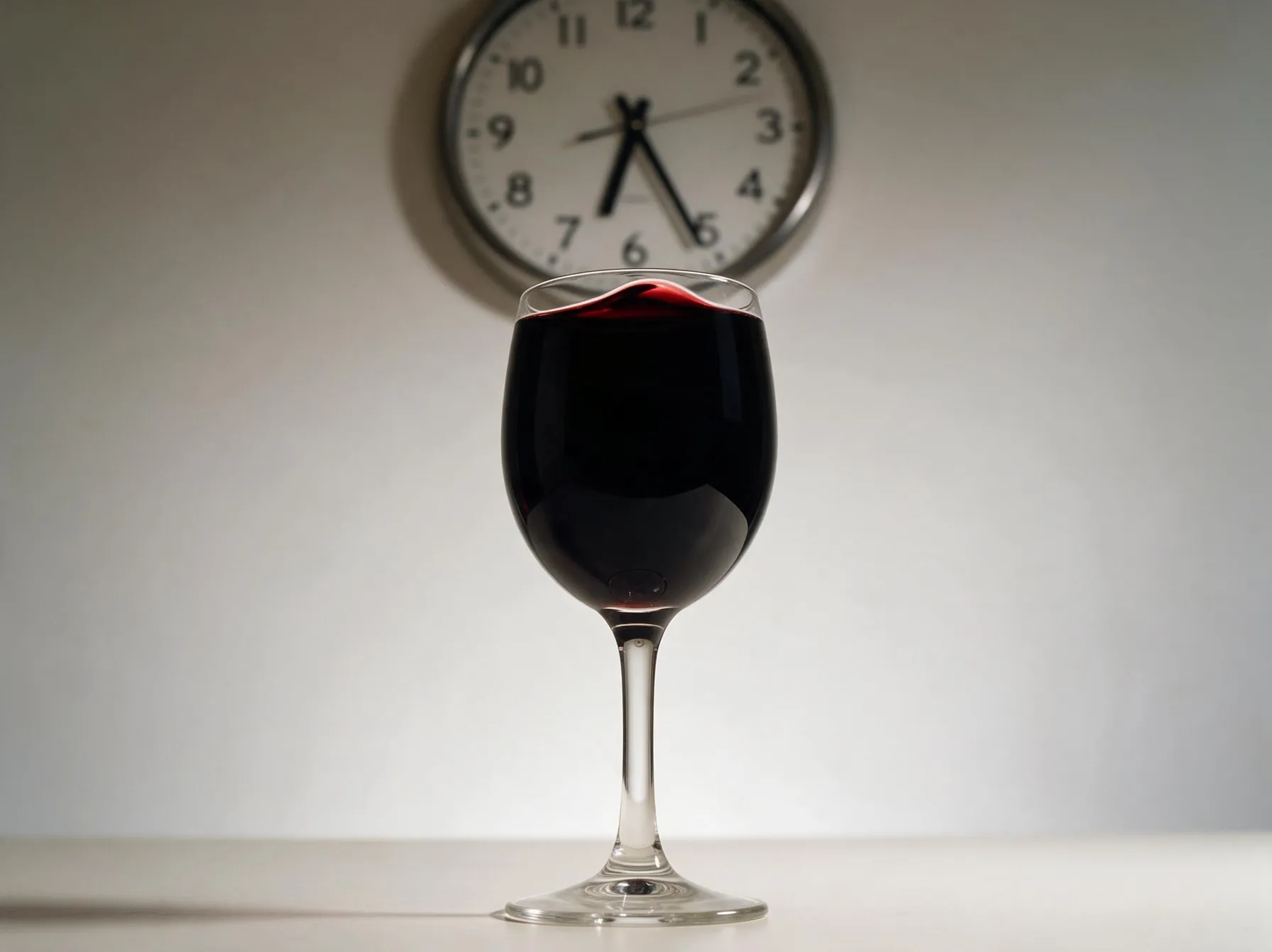
Score: 4/9 (Prompt 1 · Technique 1 · Believability 2) - half-full glass, wrong clock time, and an unnatural wine surface bulge.
Qwen Image 3 (Alibaba)
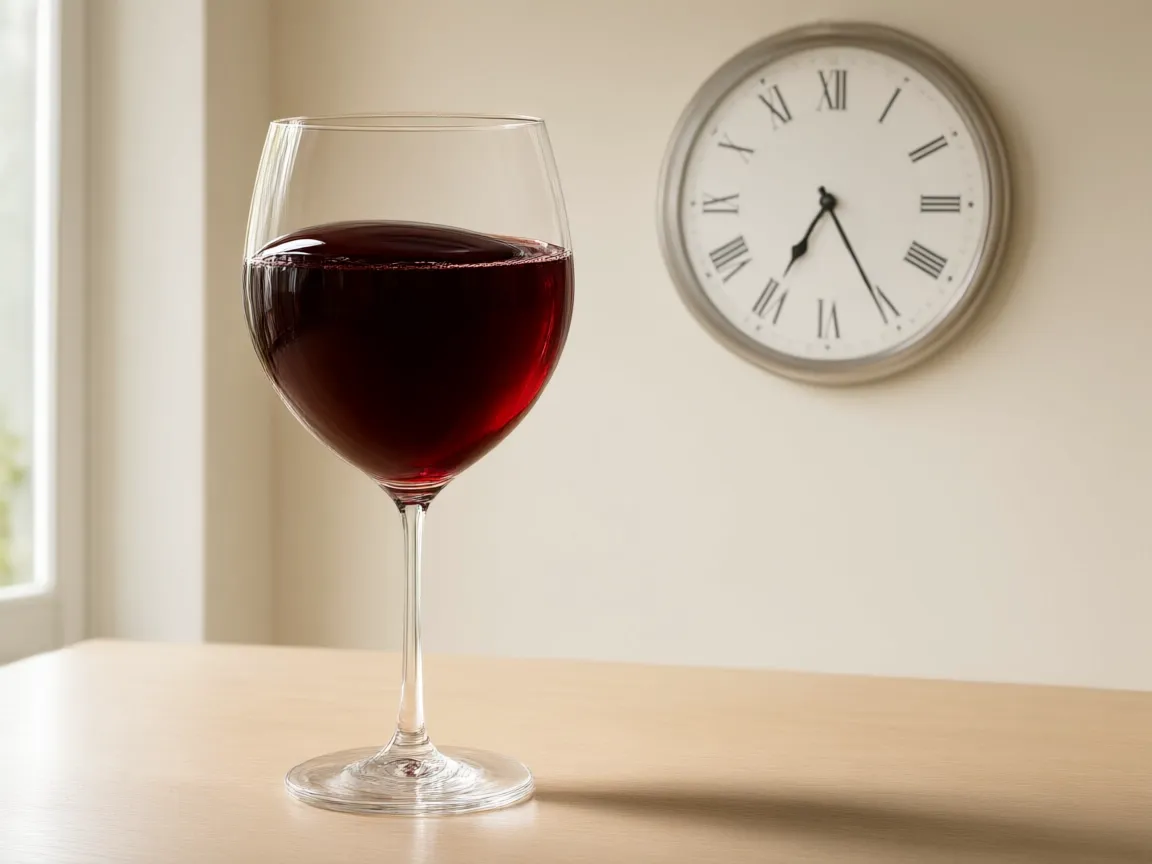
Score: 3/9 (Prompt 1 · Technique 1 · Believability 1) - wrong time on the clock, wine far below the rim, and glossy synthetic lighting.
Out-of-competition spot check: GPT-Image-2.6 Flare (12.6 s fast model) scored 7/9 here - beating every non-OpenAI model on the meniscus and clock test.
Test 6. Anatomy in Interaction: Four Hands on a Piano
What we test: two pianists playing four-hands from an overhead angle, with all 20 fingers clearly visible and a geometrically valid black-and-white keyboard layout.
Prompt: Two female pianists playing four-hands piano, overhead view, all twenty fingers clearly visible on the keys.
GPT-Image-2.5 Sunburst (medium, 1K)
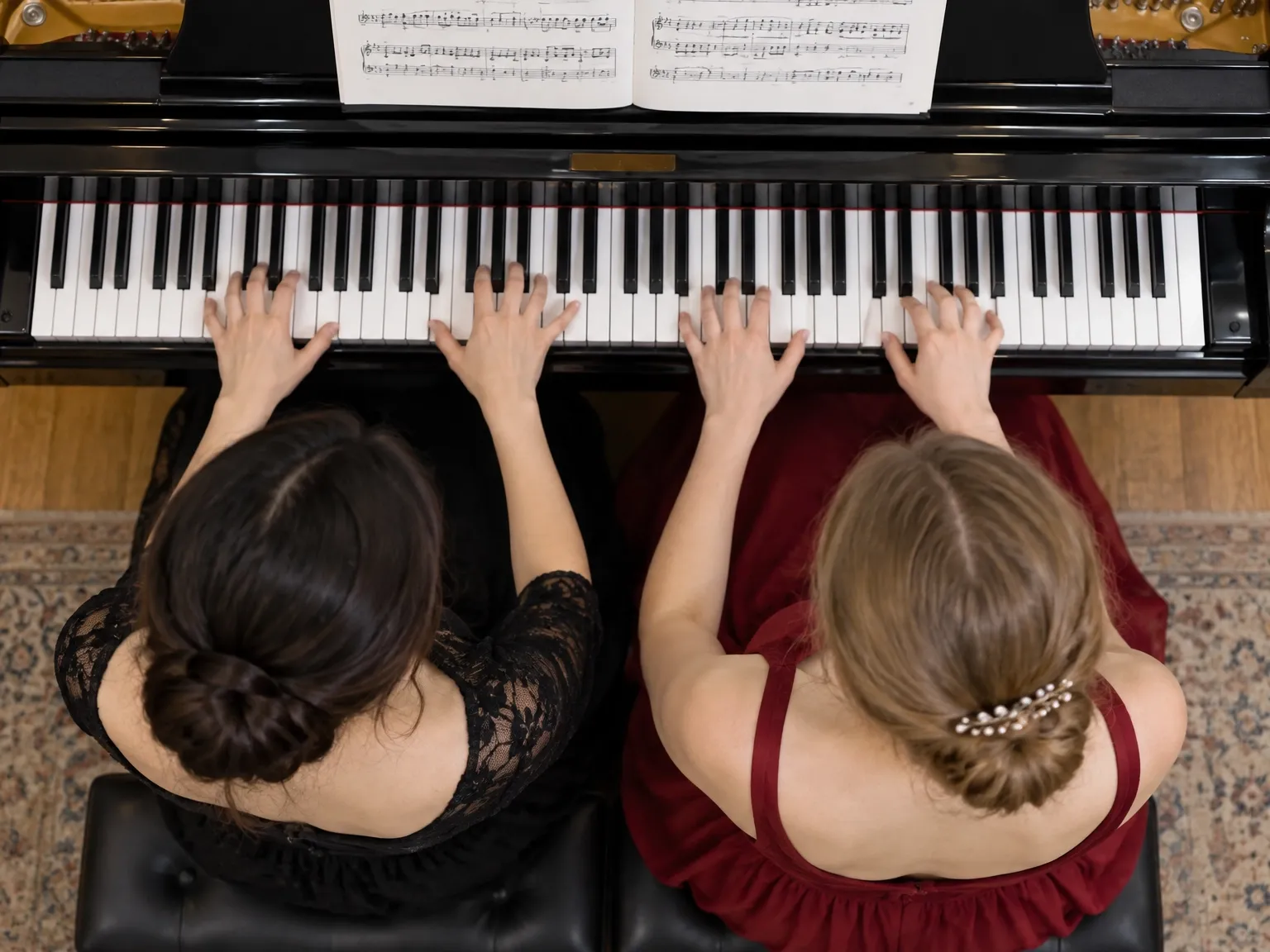
Score: 9/9 (Prompt 3 · Technique 3 · Believability 3) - 20 natural fingers, correct black-key groupings (2-3-2-3), realistic side-by-side seating and sheet music.
GPT-Image-2.6 Sunburst (medium, 1K)
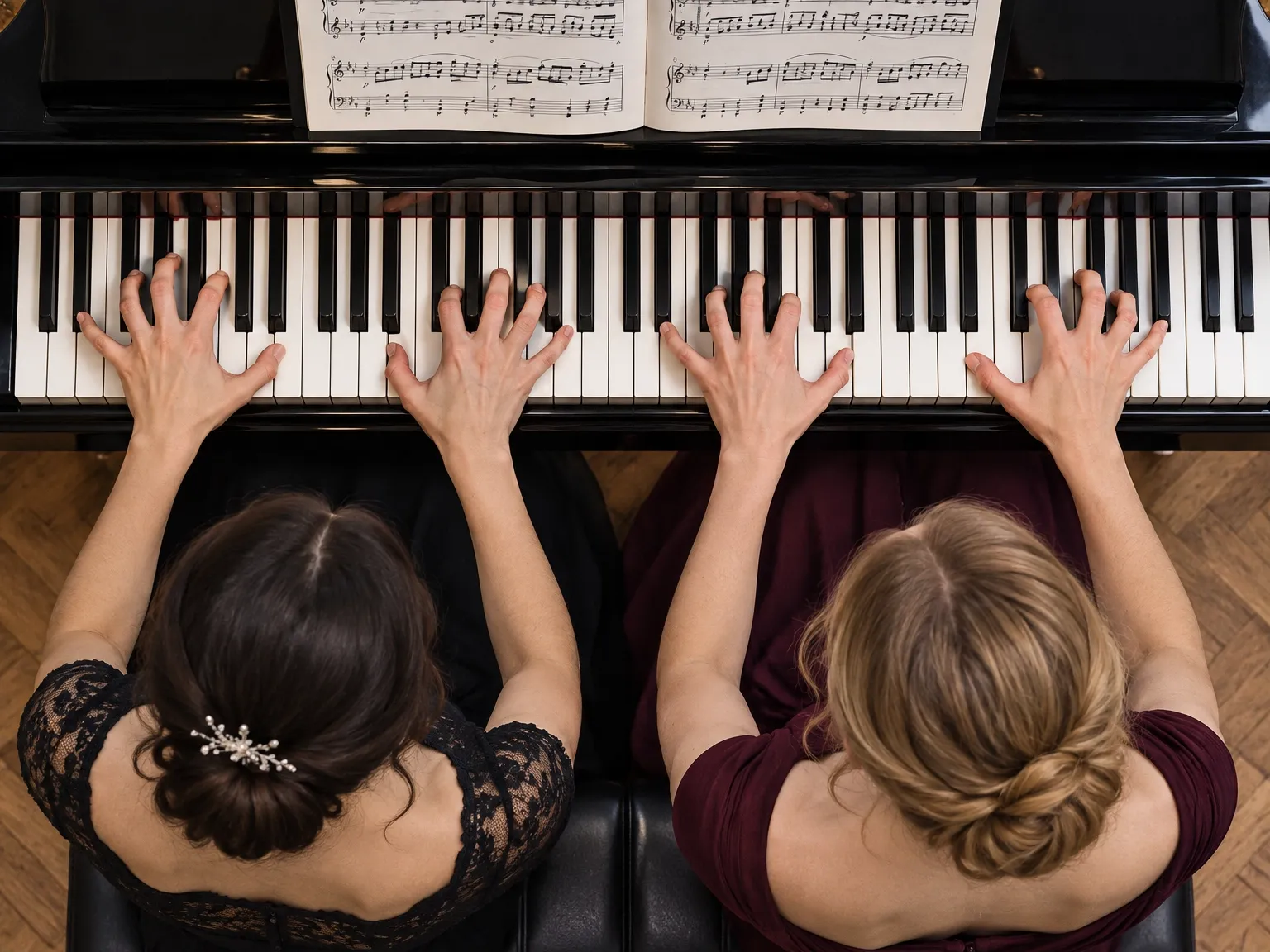
Score: 9/9 (Prompt 3 · Technique 3 · Believability 3) - equally spotless: all 20 fingers accurate, proper keyboard pattern, natural light and hands.
Kling Image 4.0 (KlingAI)
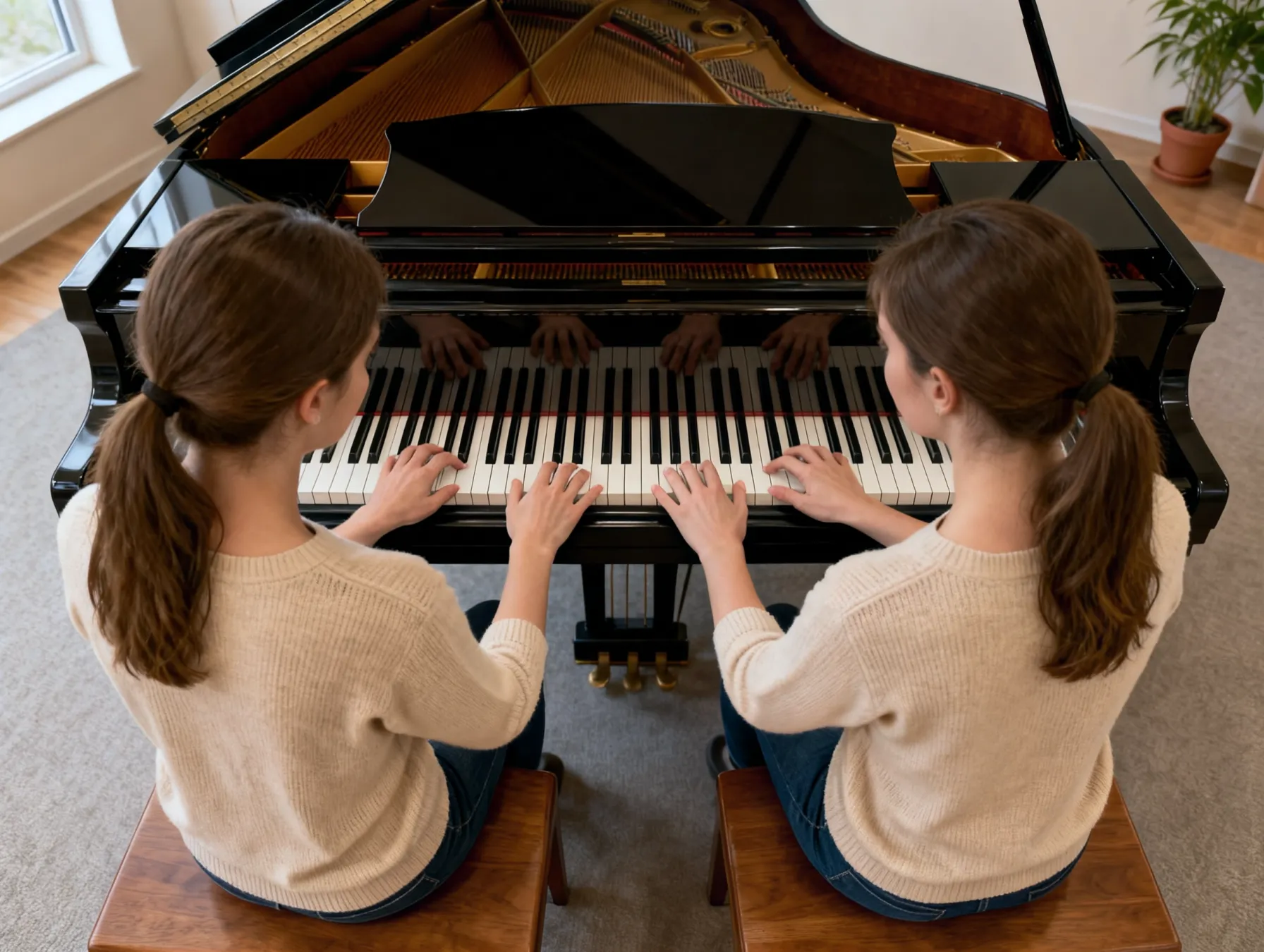
Score: 7/9 (Prompt 2 · Technique 3 · Believability 2) - clean hands and solid keyboard geometry, but both pianists look like near-clones wearing identical outfits.
Nano Banana 2.1 (Google)
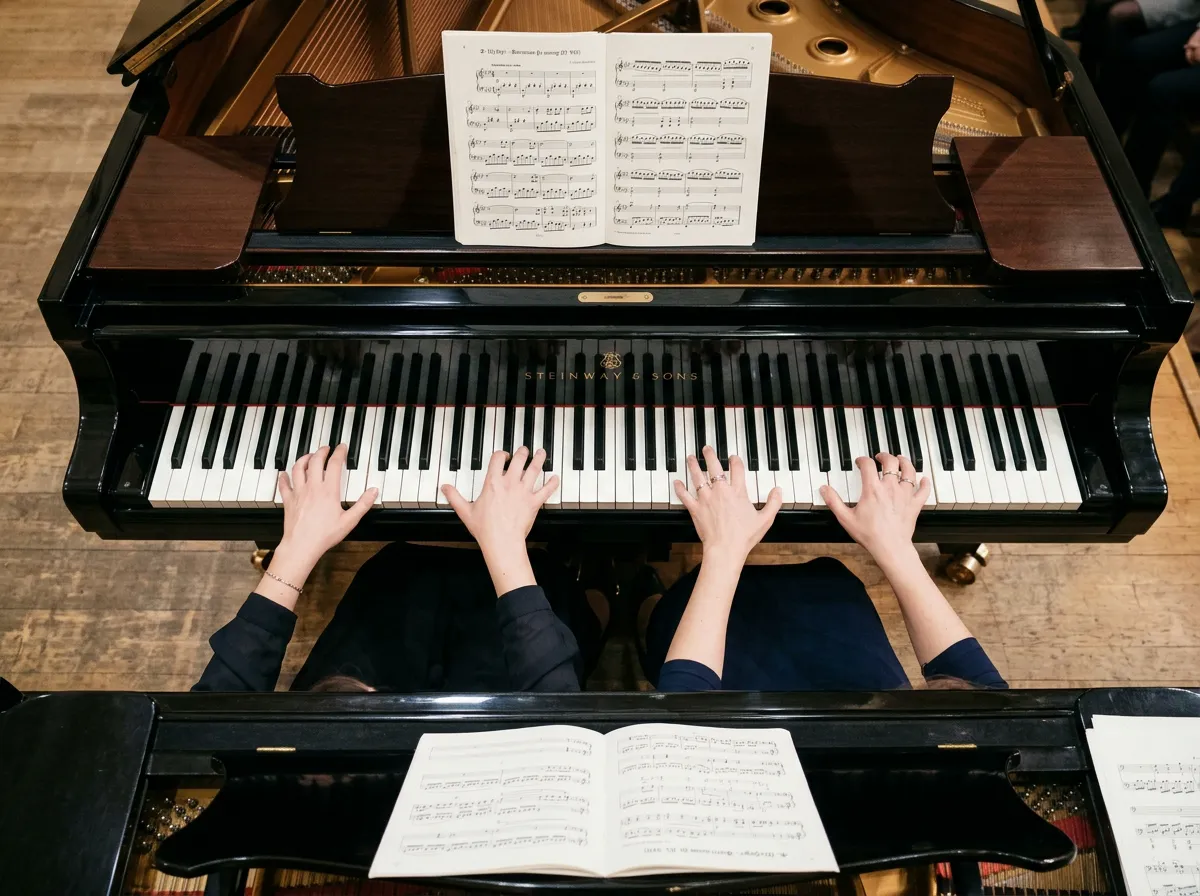
Score: 6/9 (Prompt 2 · Technique 2 · Believability 2) - fingers are mostly intact, but the model hallucinated a second phantom piano behind the players.
Grok Imagine 2 (xAI)
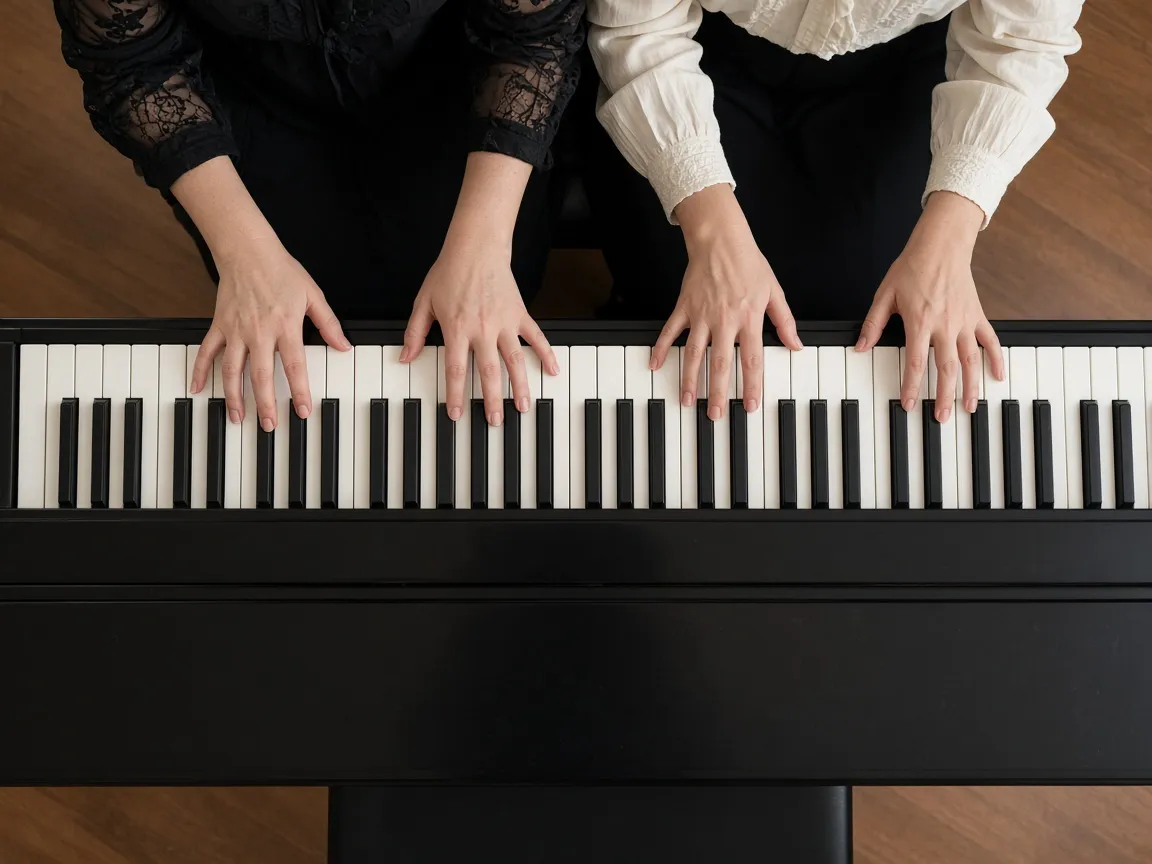
Score: 4/9 (Prompt 2 · Technique 1 · Believability 1) - 20 fingers are present, but the pianists are playing the keyboard backward from the black-key side with broken key intervals.
Seedream 5 Pro (ByteDance)
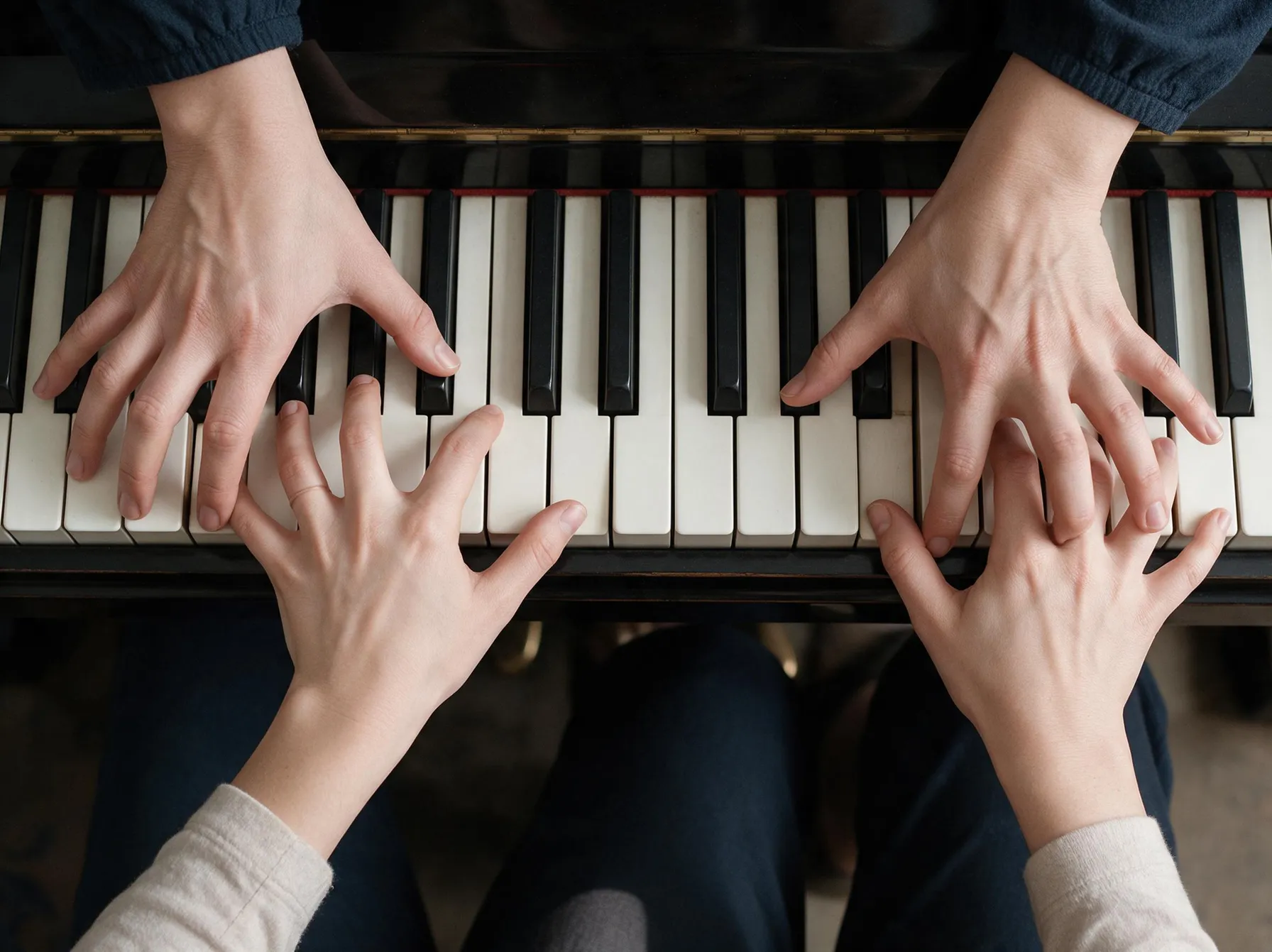
Score: 3/9 (Prompt 1 · Technique 1 · Believability 1) - seated the two pianists facing each other across one grand piano, so the upper hands emerge straight out of the wooden lid.
Qwen Image 3 (Alibaba)
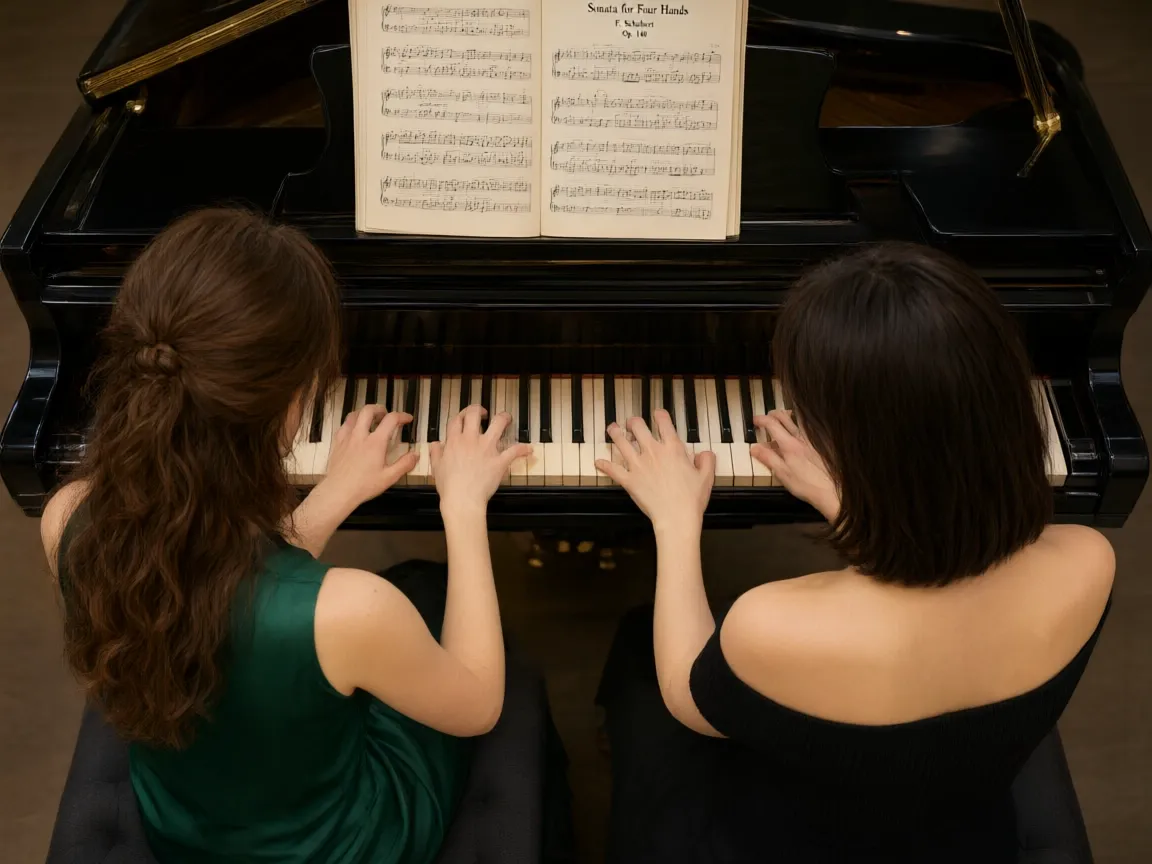
Score: 6/9 (Prompt 2 · Technique 2 · Believability 2) - correct seating and believable sheet music, but the keyboard is too short with irregular black-key groups and partially hidden fingers on the far right hand.
Test 7. Knowledge and Logic: Exact Chess Position
What we test: understanding chess rules and algebraic notation (1.e4 e5 2.Nf3 Nc6), an 8×8 board, correct player sides, the black player's hand still touching the knight on c6, plus a chess clock and two scoresheets.
Prompt: Two chess players at a chessboard in a tournament hall, high-angle shot from 60 degrees above, entire board in frame and sharp focus showing where pieces stand. On the left an elderly man in a grey jacket plays White, on the right a young woman in a green sweater plays Black. Position on the board after 1.e4 e5 2.Nf3 Nc6. The woman has just placed her knight on c6 and her hand is still touching the piece. Beside the board are a chess clock and two scoresheets.
GPT-Image-2.5 Sunburst (medium, 1K)
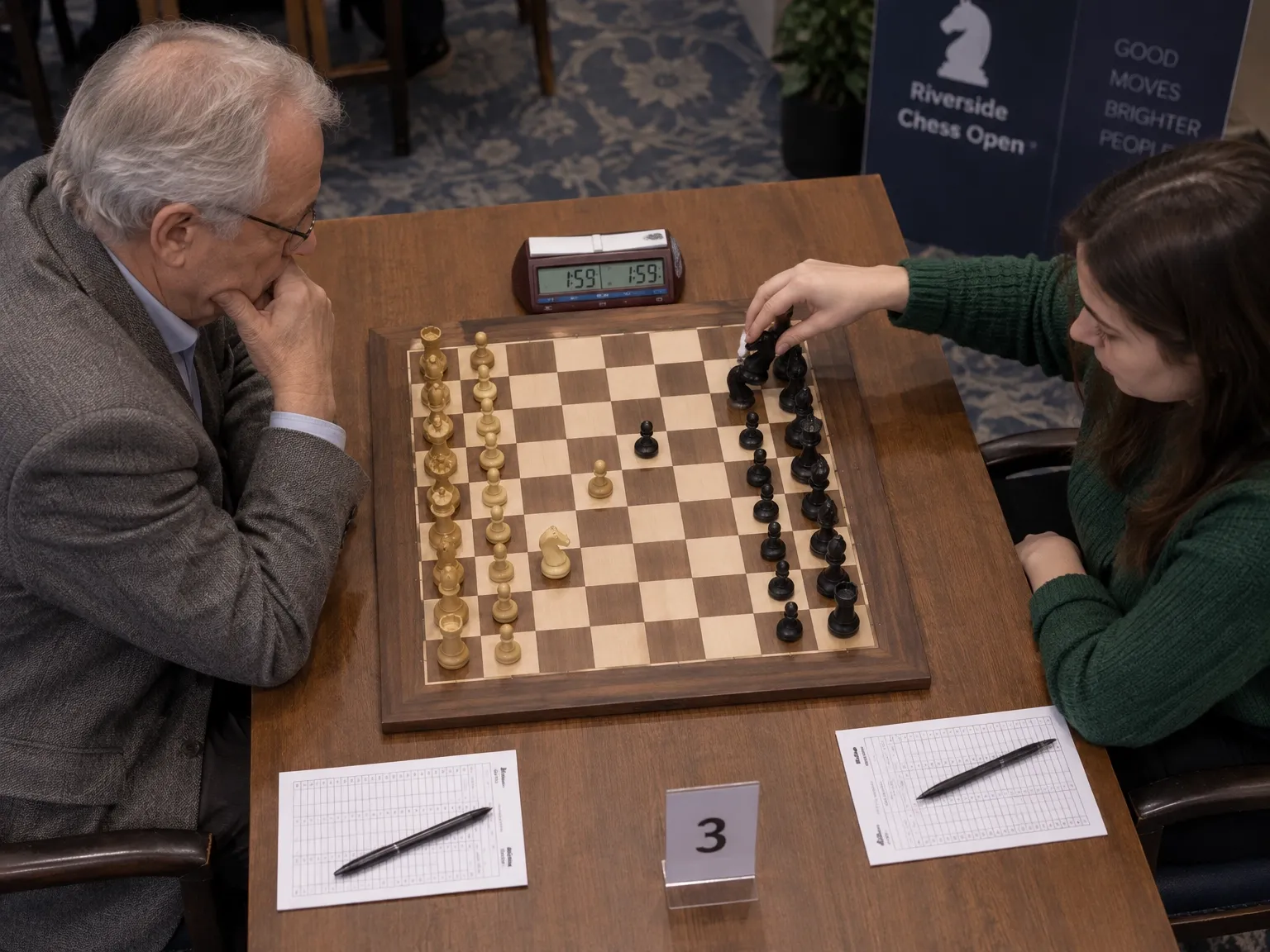
Score: 7/9 (Prompt 2 · Technique 3 · Believability 2) - convincing at first glance, but e4 and e5 pawns ended up on staggered files diagonally and the black knight under her hand is not on c6.
GPT-Image-2.6 Sunburst (medium, 1K)
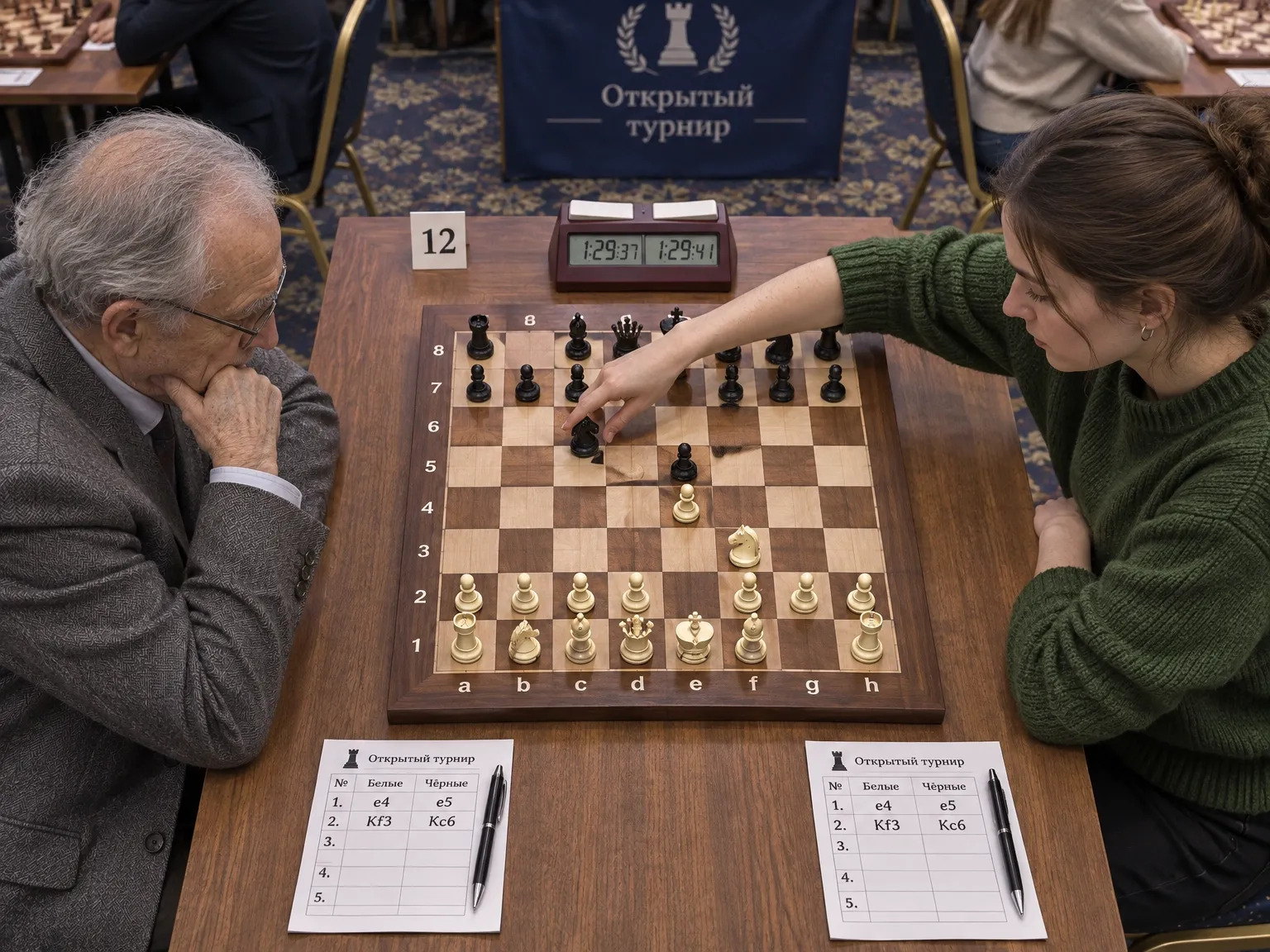
Score: 6/9 (Prompt 2 · Technique 3 · Believability 1) - piece placement is close and moves are written on both scoresheets, but the board is rotated 90 degrees sideways relative to the players.
Kling Image 4.0 (KlingAI)
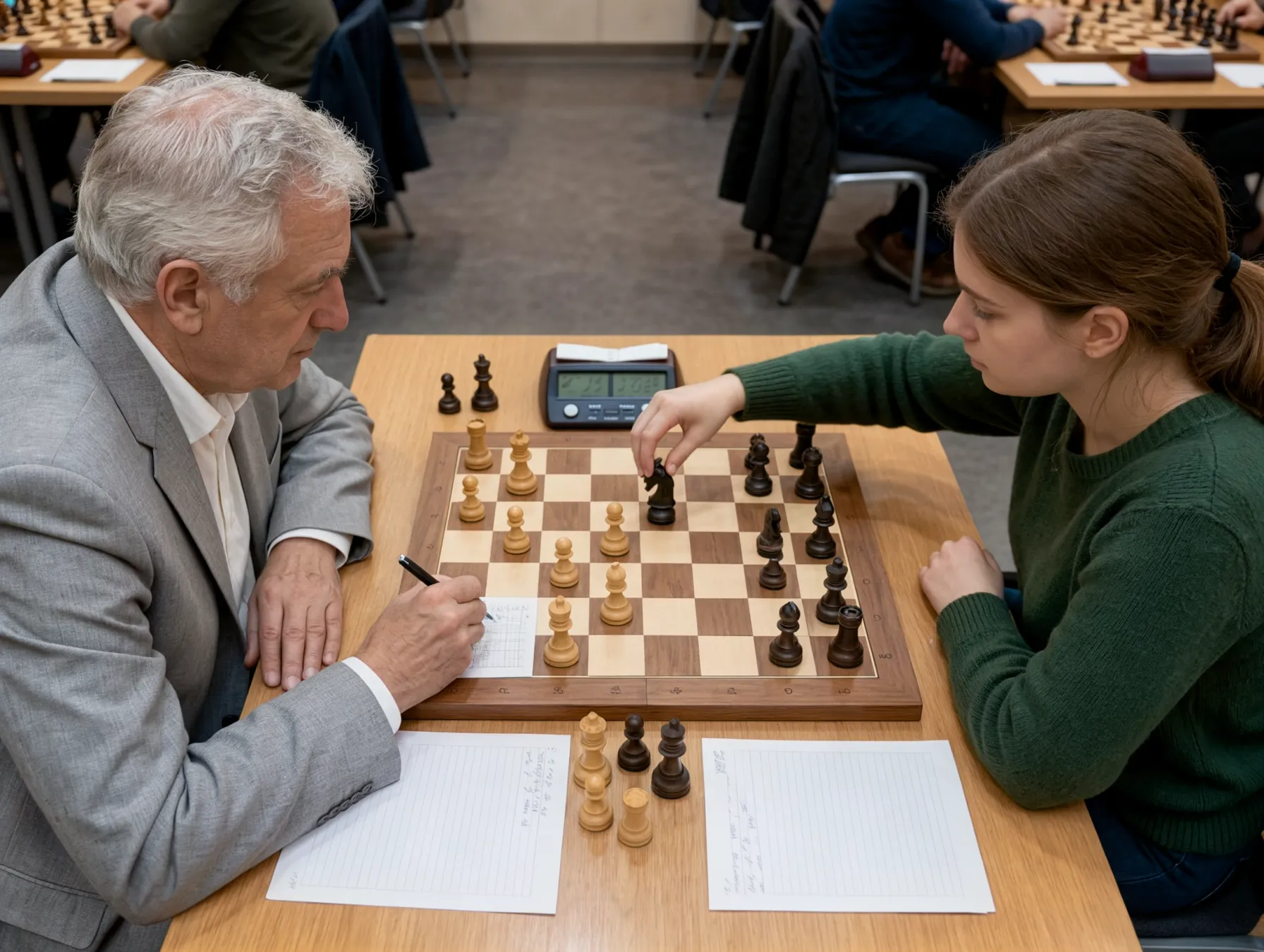
Score: 4/9 (Prompt 1 · Technique 2 · Believability 1) - realistic people and seating, but the board is not 8×8, the position is invented with captured pieces scattered around on move 2, and the man writes on a scrap of paper lying directly on the board.
Nano Banana 2.1 (Google)
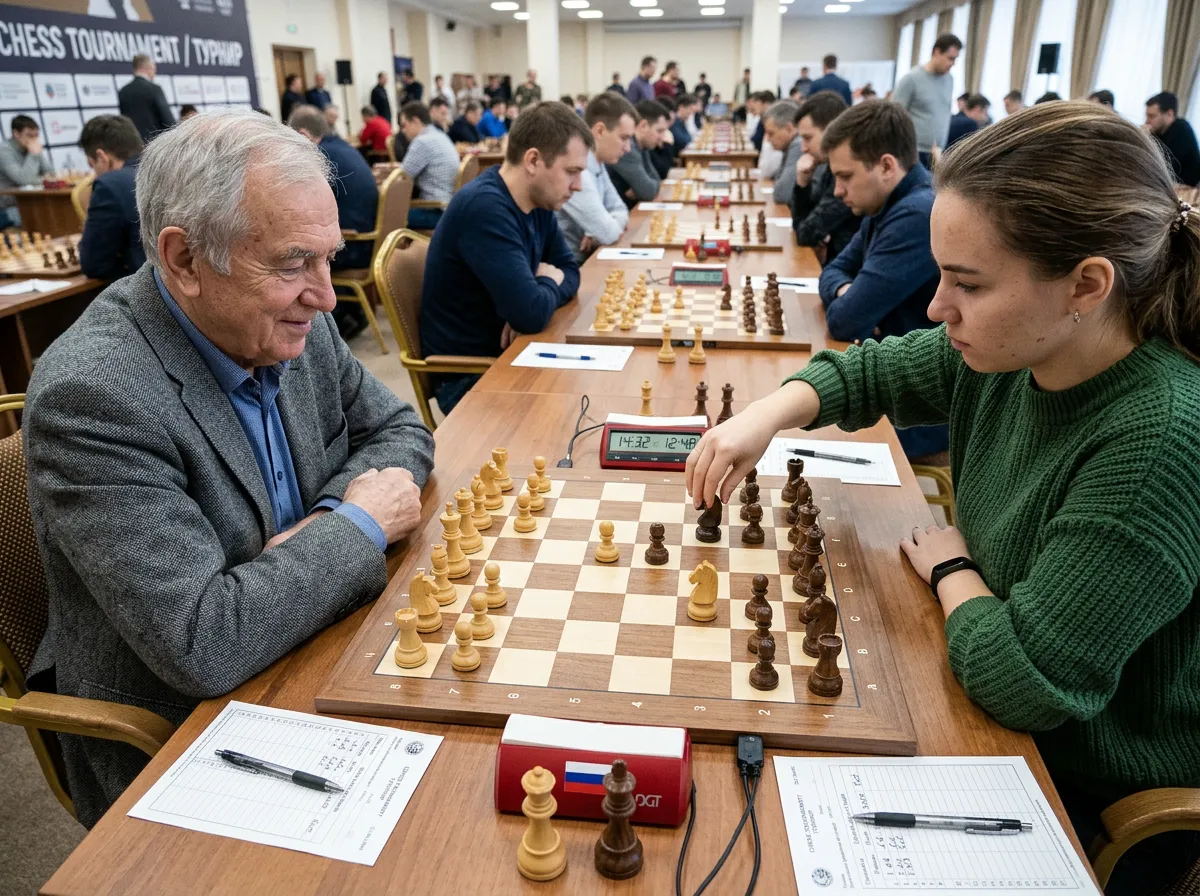
Score: 6/9 (Prompt 2 · Technique 2 · Believability 2) - believable tournament hall, proper 8×8 board and seating, but the white knight jumped to the wrong half and there are two clocks plus captured pieces on move 2.
Grok Imagine 2 (xAI)
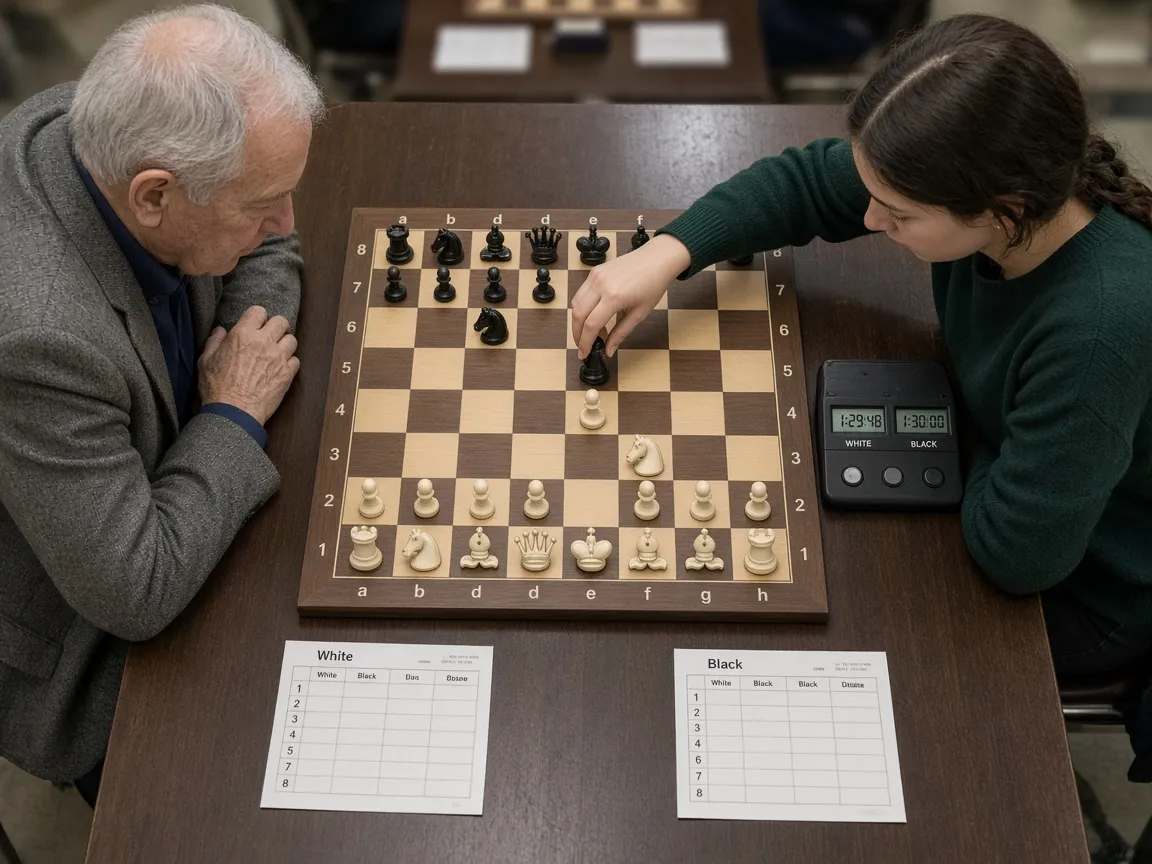
Score: 4/9 (Prompt 1 · Technique 2 · Believability 1) - rotated board, pieces half-standing and half-toppled, hand placing a second knight on e5, three white bishops, and broken rank labels (a b d d e f g h).
Seedream 5 Pro (ByteDance)
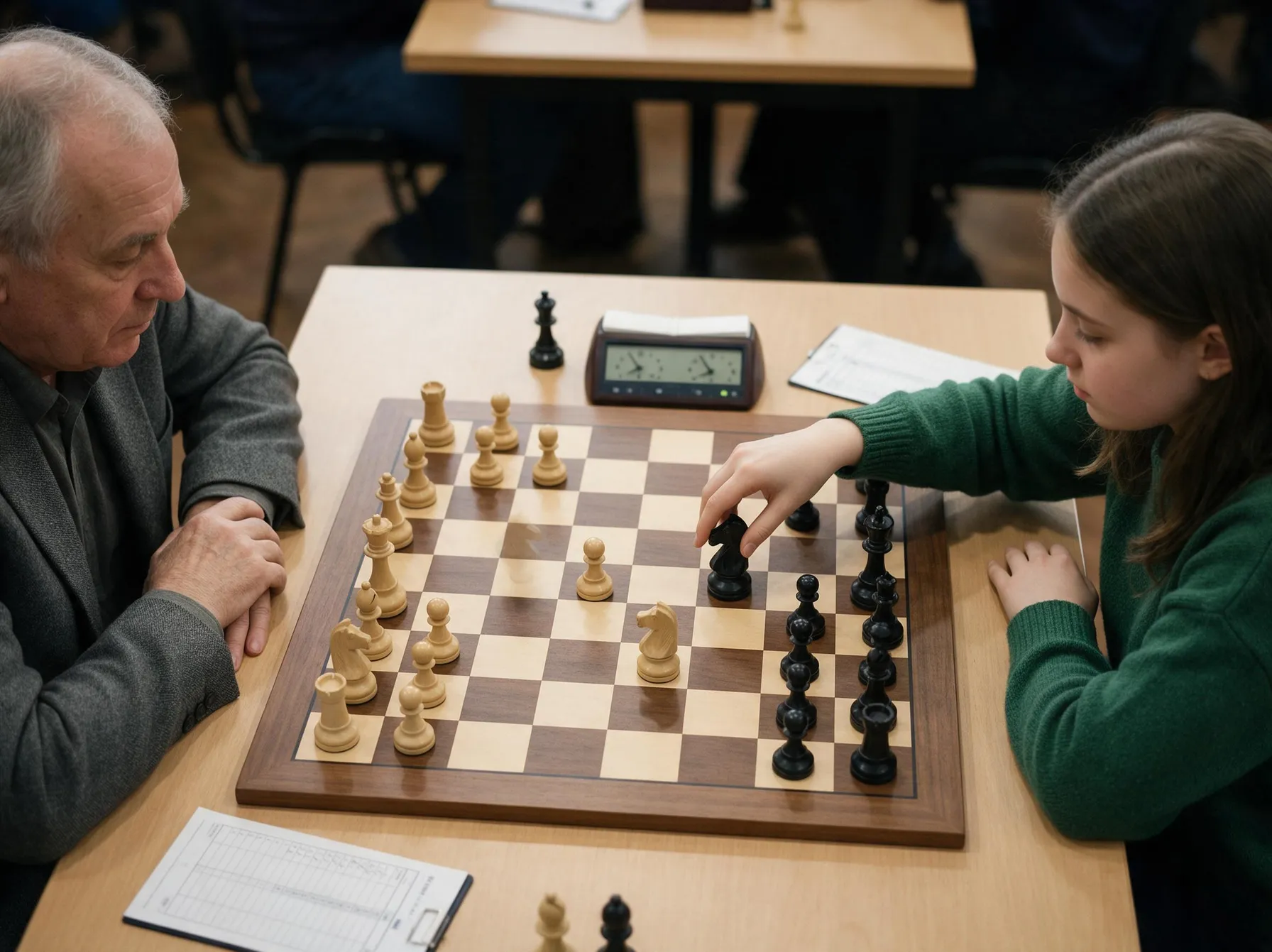
Score: 4/9 (Prompt 1 · Technique 1 · Believability 2) - natural people and lighting, but a 7×8 board, a translucent ghost knight floating in the center, and extra captured pieces off-board.
Qwen Image 3 (Alibaba)
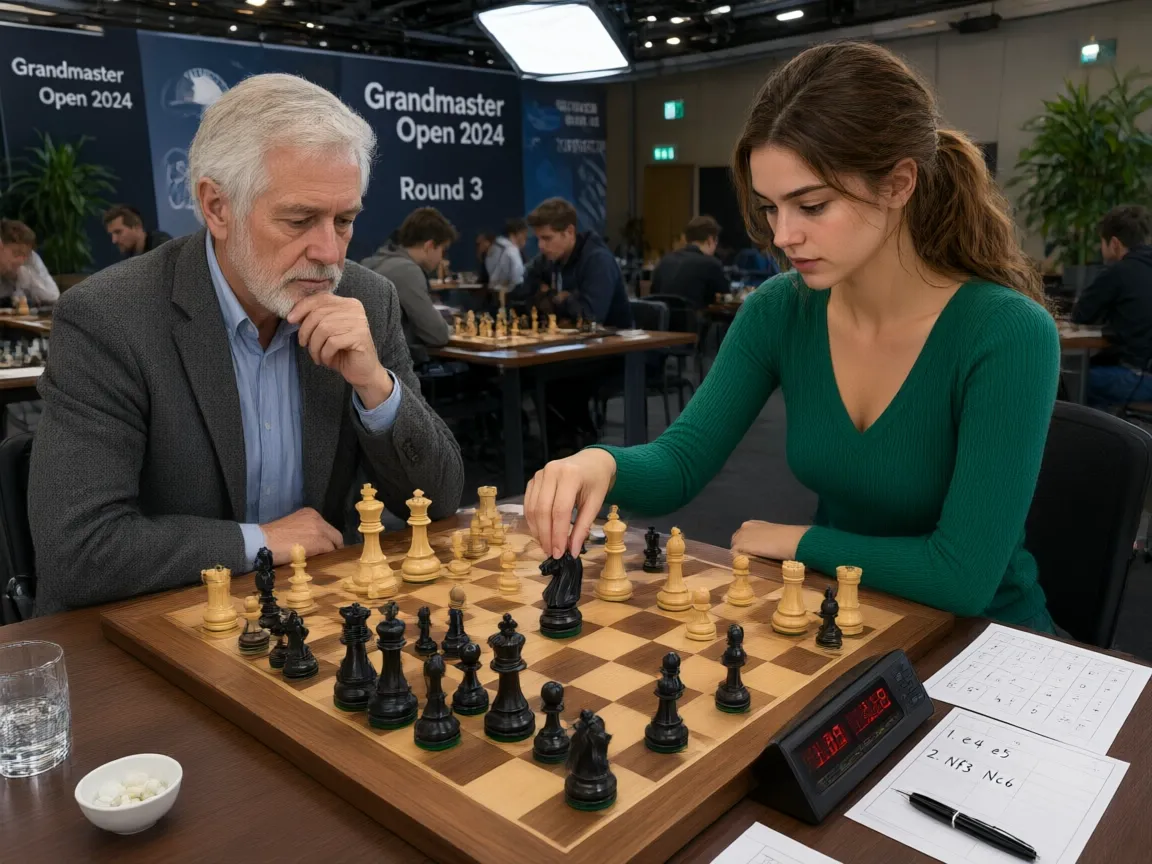
Score: 3/9 (Prompt 1 · Technique 1 · Believability 1) - wrong low side angle, glossy render, and chess chaos with two white kings (even though the scoresheet notation 1. e4 e5 / 2. Nf3 Nc6 is written correctly).
Out-of-competition check: GPT-Image-2.5 Sunburst in max mode (max, 1K)
We ran the exact same chess prompt through our #1 model in maximum quality mode (max) to see if extra compute fixes the medium errors.
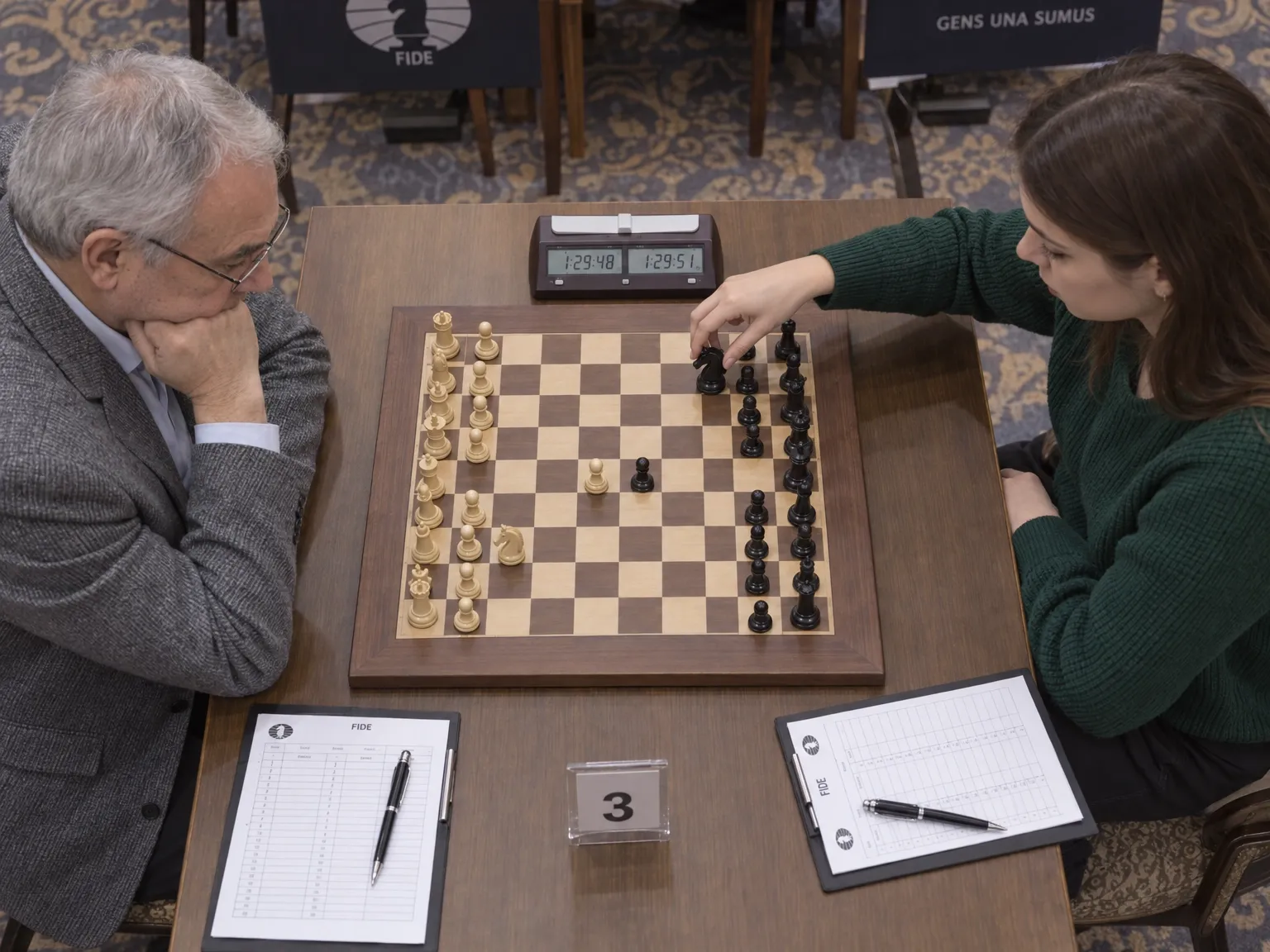
Score: 8/9 (Prompt 2 · Technique 3 · Believability 3) - a dramatic leap over medium: exact 8×8 board with legal FIDE corner orientation (h1 light), 1.e4 e5 pawns directly facing each other on the e file (e2 and e7 properly empty), and true press-photo tournament realism (FIDE scoresheets, Gens Una Sumus banner, realistic 1:29:48 / 1:29:51 classical clock after move 2). Even max, however, shifted both knights by one file - white knight on g3 instead of f3 (with an extra piece left on g1) and black knight on b6 instead of c6.
Editorial Tests Summary Table
Scroll the table right to see scores for each of the seven tests and the average →
| Rank | Model | Total (of 63) | T1 Photo | T2 Poster | T3 Prompt | T4 Comic | T5 Physics | T6 Anatomy | T7 Chess | Avg (of 9) |
|---|---|---|---|---|---|---|---|---|---|---|
| 1 | GPT‑Image‑2.5 Sunburst | 58 | 8 | 9 | 9 | 8 | 8 | 9 | 7 | 8.3 |
| 2 | GPT‑Image‑2.6 Sunburst | 58 | 9 | 9 | 9 | 9 | 7 | 9 | 6 | 8.3 |
| 3 | Kling Image 4.0 | 49 | 8 | 9 | 8 | 7 | 6 | 7 | 4 | 7.0 |
| 4 | Nano Banana 2.1 | 47 | 7 | 8 | 8 | 7 | 5 | 6 | 6 | 6.7 |
| 5 | Grok Imagine 2 | 46 | 8 | 9 | 8 | 8 | 5 | 4 | 4 | 6.6 |
| 6 | Seedream 5 Pro | 43 | 8 | 8 | 9 | 7 | 4 | 3 | 4 | 6.1 |
| 7 | Qwen Image 3 | 39 | 6 | 8 | 7 | 6 | 3 | 6 | 3 | 5.6 |
Out-of-competition spot checks: GPT-Image-2.5 Sunburst (max) - 8/9 in Test 7 (chess); GPT-Image-2.6 Flare - 7/9 in Test 5 (physics and meniscus).
Main takeaway from the hands-on tests: our practical run mirrored the blind Elo ranking from first place to last. Both OpenAI Sunburst models tied at 58/63 in English (9-12 points ahead of the rest of the field). Kling Image 4.0 (49/63) took 3rd place on clean typography and realism despite slow generation times, followed closely by Nano Banana 2.1 (47) and Grok Imagine 2 (46), with Seedream 5 Pro (43) and Qwen Image 3 (39) trailing on physics, anatomy, and chess logic.
Most common failure modes and model instability
Outside the top two OpenAI models, quality is highly unstable across prompt types. A mid-tier model can match the leaders on one task (Seedream 5 Pro scored 9/9 on the still life, Grok Imagine 2 hit 9/9 on the jazz poster) and collapse to 3-4 points on the very next prompt. Four failure modes appeared repeatedly:
- Breaking dataset priors and physics: outside the
GPT-Imagelineup, no model managed to fill a wine glass to the very brim with a convex meniscus, and analog wall clock hands regularly drifted off target. - Complex multi-subject geometry: on four-hands piano, models inverted the keyboard (
Grok Imagine 2), seated players across the lid (Seedream 5 Pro), or hallucinated a second piano (Nano Banana 2.1). Strict 8×8 chess notation remained the ceiling for everyone. - Subtle character details in series: while English speech bubbles are now largely solved, small continuity anchors like an eyebrow scar or matching outerwear still vanish between comic panels.
- Exact counting and subtle clones: "five gold coins" easily drifts to four or six, and multi-person scenes frequently clone faces or outfits (
Kling Image 4.0in Test 6).
The practical lesson is straightforward: when you need guaranteed quality and clean composition without manual retouching, do not skimp on model tier - generate directly in the top models. Trying to save money on a weaker generator for complex briefs usually ends up costing more in retries and editing time.
Pareto Frontier: Which AI Models Are Actually Worth Paying For
Overall scores tell you who draws best, not where paying more stops making sense. To answer that, we plotted the Pareto frontier (quality vs. relative price index): a staircase of models where no single step can be replaced by another model that is simultaneously both cheaper and higher-scoring.
The four Pareto-optimal steps
Out of 20 models, only four sit on the Pareto frontier:
| Step | Model | Overall | Price Index | Quality Gain | Market Role |
|---|---|---|---|---|---|
| 1 | Muse Image | 44.1 | 1.0× | - | Lowest-cost entry for high-volume drafts |
| 2 | MAI-Image-2.7-Flash | 53.5 | 1.02× | +9.4 pts (+2% cost) | Biggest price-performance breakthrough |
| 3 | MAI-Image-2.7 | 59.9 | 3.5× | +6.4 pts (3.4× cost) | Sweet spot close to flagship quality |
| 4 | GPT-Image-2.5 Sunburst | 65.5 | 21× (max) | +5.6 pts (6.1× cost) | Quality ceiling (5× in standard medium mode) |
Across the Top-20, doubling price yields roughly +3.1 quality points on average. The four Pareto models beat that market curve.
Where overpayment is steepest (the other 16 models)
| Model | Overall | Price Index | Cheaper & Better Alternative | Overpayment |
|---|---|---|---|---|
| Seedream 5.0 Pro | 43.3 | 9.0× | Muse Image (1.0× / 44.1) | 9.0× |
| Gemini 3.1 Flash Image (Nano Banana 2) | 43.1 | 6.7× | Muse Image (1.0× / 44.1) | 6.7× |
| Kling Image 4.0 | 52.9 | 6.5× | MAI-Image-2.7-Flash (1.02× / 53.5) | 6.3× |
| GPT-Image-2 (max) | 55.4 | 21× | MAI-Image-2.7 (3.5× / 59.9) | 6.1× |
| GPT-Image-2.6 Flare (max) | 59.2 | 21× | MAI-Image-2.7 (3.5× / 59.9) | 6.1× |
| Grok Imagine Image 2.0 | 48.9 | 6.0× | MAI-Image-2.7-Flash (1.02× / 53.5) | 5.9× |
| MAI-Image-2.5 | 41.8 | 4.8× | Muse Image (1.0× / 44.1) | 4.8× |
| FLUX 3 Image | 41.7 | 4.8× | Muse Image (1.0× / 44.1) | 4.8× |
| Reve 2.0 | 41.9 | 4.0× | Muse Image (1.0× / 44.1) | 4.0× |
| MAI-Image-2.6 | 50.9 | 3.9× | MAI-Image-2.7-Flash (1.02× / 53.5) | 3.8× |
| Gemini Nano Banana 2.1 | 50.4 | 3.4× | MAI-Image-2.7-Flash (1.02× / 53.5) | 3.3× |
| Seedream 5.5 | 47.1 | 2.4× | MAI-Image-2.7-Flash (1.02× / 53.5) | 2.4× |
| Reve 2.1 | 46.8 | 2.0× | MAI-Image-2.7-Flash (1.02× / 53.5) | 2.0× |
| MAI-Image-2.6-Flash | 46.7 | 2.0× | MAI-Image-2.7-Flash (1.02× / 53.5) | 1.9× |
| GPT-Image-2.5 Flare (max) | 60.1 | 21× | GPT-Image-2.5 Sunburst (21× / 65.5) | same price (-5.4 pts) |
| GPT-Image-2.6 Sunburst (max) | 64.4 | 21× | GPT-Image-2.5 Sunburst (21× / 65.5) | same price (-1.1 pts) |
Quick Cheat Sheet: Which Model to Pick for Your Task
- Maximum quality for ads, covers, comics, and tricky physics:
GPT-Image-2.5 Sunburst(all-around leader, 58/63) orGPT-Image-2.6 Sunburst(58/63, best 4-panel comics andmax-mode text-to-image). Standardmediummode covers most production briefs, whilemaxis worth enabling on the hardest scenes (like our chess test, where it lifted2.5 Sunburstfrom 7/9 to 8/9). - Atmospheric concept art, fantasy, and moodboards without strict constraints: you do not need to pay flagship rates here -
Grok Imagine 2,Seedream 5 Pro, andKling Image 4.0deliver comparable cinematic visuals (as seen in our celestial palace comparison), whileMidjourneyremains a strong artistic option outside API workflows. - Daily design and marketing work without overpaying:
MAI-Image-2.7(3.5×). If it is unavailable in your workflow, strong tested alternatives areKling Image 4.0(49/63, crisp typography, slower),Gemini Nano Banana 2.1(47/63, steady quality and 22.5 s speed), andGrok Imagine 2(46/63, sharp posters and comics). - Fast drafts, storyboards, and high-volume API pipelines:
MAI-Image-2.7-Flash(1.02×, 11.3 s),GPT-Image-2.6 Flare(12.6 s, scored 7/9 on our physics spot check),Nano Banana 2 Lite(6.1 s), orMuse Image(1×). - Photo retouching, object swaps, and multi-image editing:
GPT-Image-2.5 Sunburst,MAI-Image-2.7,Seedream 5.5, or dedicated specialistKrea 3 Ultra. - Self-hosting and custom LoRA pipelines:
MiniMax H3-Image,Qwen-Image-2.1, orFLUX 3 Image Klein.
Sources
All benchmark rankings, render speeds, and API price indices were captured on November 24, 2026:
- Artificial Analysis - Text to Image Leaderboard - blind text-to-image Elo scores and official API cost ratios.
- Artificial Analysis - Image Editing Leaderboard - blind image editing Elo scores.
- Arena AI - Text-to-Image Leaderboard - crowdsourced pairwise text-to-image Elo ranking.
- Arena AI - Image Edit Leaderboard - single-image and multi-image editing leaderboards.
- Design Arena - visual design aesthetics ranking and average render latency.