
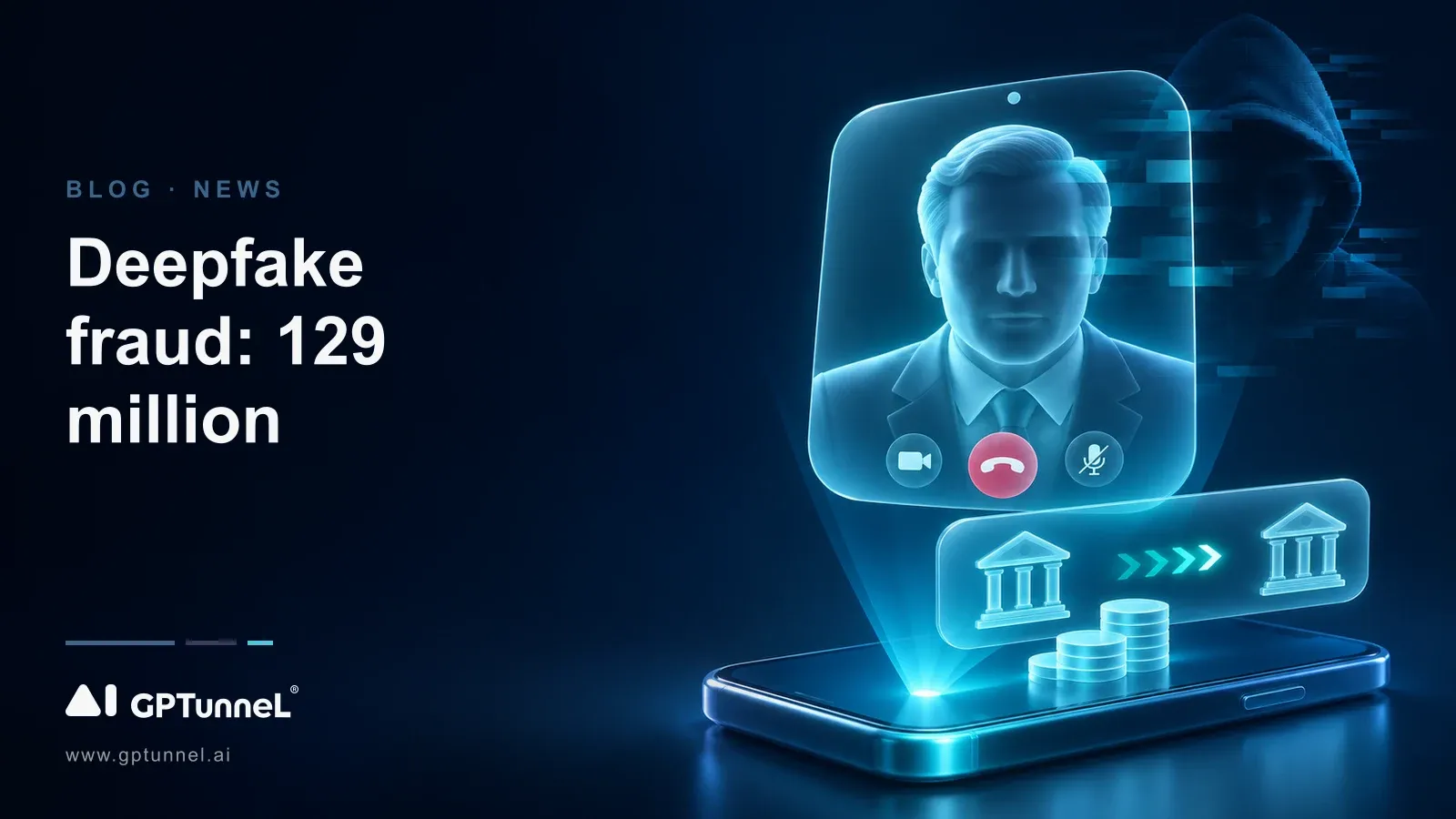
Prosecutors say fraudsters used AI-generated voices and images of executives and lawyers to convince employees to transfer money to accounts controlled by the group. Companies around the world lost more than $129 million, the US Department of Justice said on November 5, 2026.
Three people have been charged and arrested in Spain and the UK. Extradition requests are pending. The allegations have not been proven in court, and the defendants are presumed innocent.
How the alleged scheme worked
According to prosecutors, between 2024 and 2026 the group contacted employees while pretending to be their chief executives. The supposed boss requested help with a confidential financial transaction. During calls, the group allegedly used AI to imitate an executive's voice or image.
The employee was then directed to purported lawyers at major international law firms. The group allegedly impersonated those lawyers too, making the transaction seem legitimate before providing bank details for a large transfer. Prosecutors say the accounts belonged to members of the scheme.
Identified losses include about $4.8 million from a Missouri hospital system, $2.7 million from a Rhode Island bank and $11.6 million from a UK fintech company. The indictment alleges that money was sent to accounts in multiple countries and converted into cryptocurrency to obscure its origin.
One defendant allegedly used a written script for calls as a lawyer, including language intended to discourage employees from discussing the conversation with colleagues. The secrecy helped support the story of a confidential transaction.
Why a familiar voice is not proof
The technology strengthens a familiar fraud pattern: someone poses as a trusted person and requests an unusual payment. A convincing voice or image can make the request harder to question.
In our guide to recognizing deepfakes, we discussed a University of Florida study in which participants distinguished generated faces from real ones at approximately chance level. For video, their average accuracy was 63%. These are results from specific experiments, not a measurement of detection in the calls described in this case. They illustrate why appearance alone is not a reliable identity check.
Detection tools and provenance labels also have limits: a missing label does not prove a recording is real, and a detector can be wrong. Confirm unexpected requests through a known phone number or another independent channel, and verify payment details through the normal approval process even when the caller insists on urgency or secrecy.
Companies can agree in advance who approves large transfers and how changes to bank details are verified. If a request appears suspicious, stop the payment and contact the team responsible for financial security. The Justice Department also provides an FBI tip form.
Sources: US Department of Justice, ABC News.