

Artificial intelligence is gradually becoming part of the most varied processes and devices. Often we don't even notice its presence: it works in the background, making everyday tasks simpler and more efficient. From the morning alarm to an evening movie, AI algorithms help us navigate, communicate, and entertain ourselves.
The goal of this article is to look at ten concrete and practical applications of artificial intelligence in our daily routine. We'll break down exactly how AI is already changing our lives today, what technologies power it, and what to expect in the near future. Understanding these aspects matters for anyone who wants to use these tools as effectively as possible.
Voice Assistants and Smart Devices
The core job of voice assistants is to recognize human speech and carry out user commands. Behind this apparent simplicity are natural language processing (NLP) and machine learning algorithms that let AI understand requests and context.
These systems constantly analyze what we say to improve recognition accuracy and answer quality. The AI learns from examples of real dialogues, adapting to accents, intonations, and the speech patterns of different people. It's this ability to self-learn that makes voice assistants such convenient and functional tools in everyday life.
- Controlling third-party apps by voice
AI models such as ChatGPT 4o and Claude 3.5 Sonnet can not only execute commands but also carry on a more meaningful dialogue, understand complex requests, and even show elements of empathy in their responses. This makes interacting with AI more natural and intuitive for the user.
They can perform a range of tasks:
- Generate posts, visuals, and other marketing materials
- Read out news, work reports, meeting notes
- Report the weather forecast
- Set reminders for deadlines
- Add events to the calendar
- Make calls
- Send messages
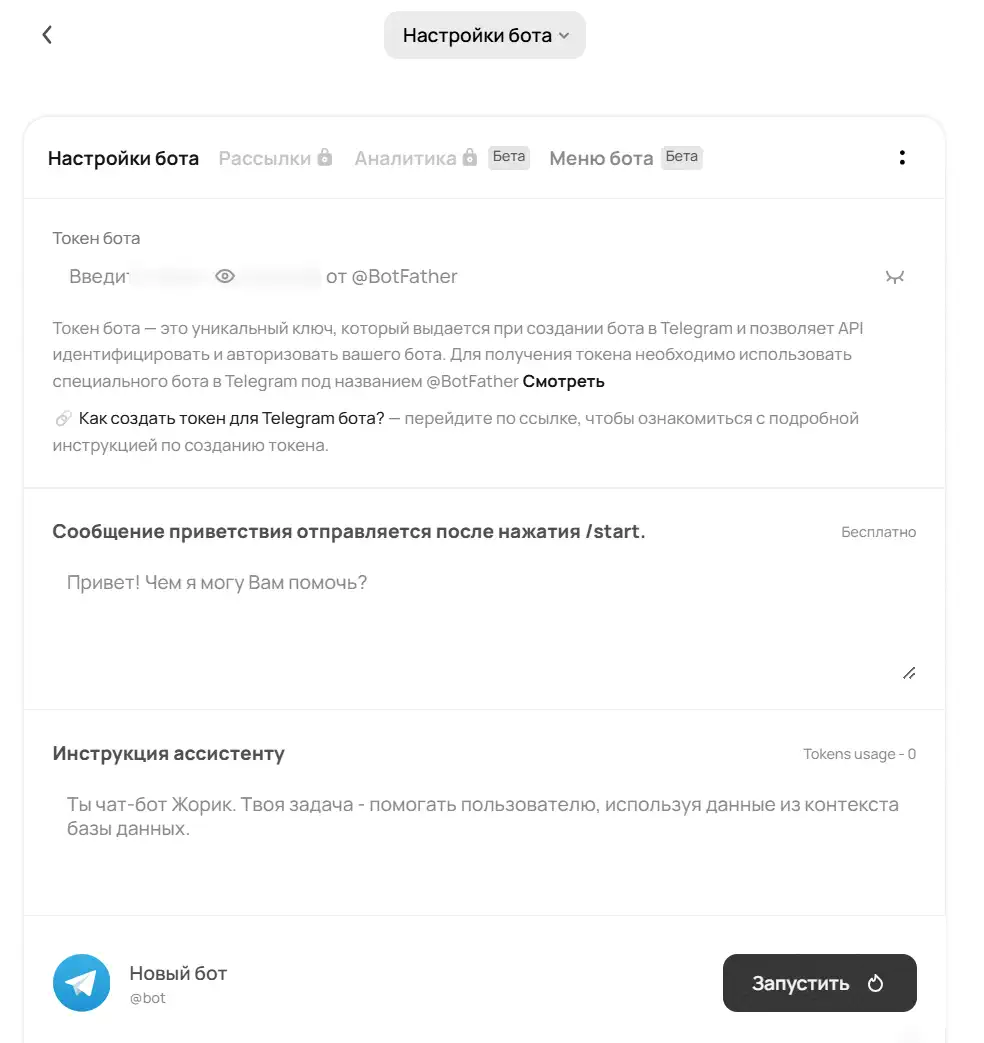
You can build such assistants very quickly. For example, you can use our functionality to design Telegram bots. Enter your prompts, choose an AI model, set generation limits, and configure additional parameters — image generation, voice responses, or even recognition of your own voice commands.
That said, despite all the benefits, the growth of artificial intelligence also raises questions — for example, around data privacy and security. Companies developing voice assistants pay close attention to protecting your information, but users shouldn't forget about mindful use and fine-tuning their own privacy settings.
By the way, if you want to bring an AI solution into your business but data security is a concern — we offer a unique service for obfuscating (masking) personal information for AI. This lets you use artificial intelligence without worrying about leaks. Learn more about our offer on the business page.
- Smart home and device control
One of the most common uses of AI through voice assistants is managing "smart home" systems. They help users perform a range of actions with voice commands:
- Turn on the lights
- Adjust the temperature
- Start home appliances
- Control multimedia devices
This adds extra comfort and lets you automate routine actions, freeing up time for more important tasks.
Navigation, Transportation, and Online Shopping
Navigation apps like Google Maps or Apple Maps are a great example of AI solving everyday problems. AI algorithms analyze huge volumes of real-time traffic data, factor in historical congestion patterns, and suggest optimal routes for drivers and pedestrians.
3. Predicting traffic conditions
Predicting traffic conditions is a complex task, but AI shows strong results here too. Machine learning systems analyze information from various sources:
- Users' GPS trackers
- Traffic cameras
- Road sensors
- Reports from drivers themselves
Based on this analysis, AI builds traffic flow models and predicts congestion, helping to choose the fastest route.
4. Optimizing taxi services, public transit, and car sharing
Ride-hailing and car-sharing services also make heavy use of artificial intelligence. AI algorithms help with pricing (factoring in supply and demand), distribute cars across city districts, assign drivers to specific orders, and calculate estimated arrival times.
Here are a few more key areas where AI is used in transportation systems:
- Route optimization accounting for traffic jams and road events
- Predicting public transit arrival times
- Advanced driver-assistance systems (ADAS) in cars
- Autopilot and autonomous vehicles
5. Recommendation systems in online stores
In online shopping, artificial intelligence plays an equally important role. This is, in fact, one of the classic applications of AI. Here's how online retailers use AI to suggest the most relevant products:
- Analyzing a user's browsing and purchase history
- Their preferences
- The behavior of other similar shoppers
Such recommendation systems significantly improve the user experience by helping people find products they need or find interesting among a huge assortment. They also help retailers boost sales. Behind this are sophisticated machine learning algorithms that analyze massive datasets of user behavior. Using AI here benefits both sides.
6. Personalizing offers with assistants
Personalizing offers is another important use of AI in e-commerce. Artificial intelligence lets businesses adapt not just product recommendations, as is commonly assumed, but also the content displayed on a site, ad banners, and email campaigns to fit your needs.
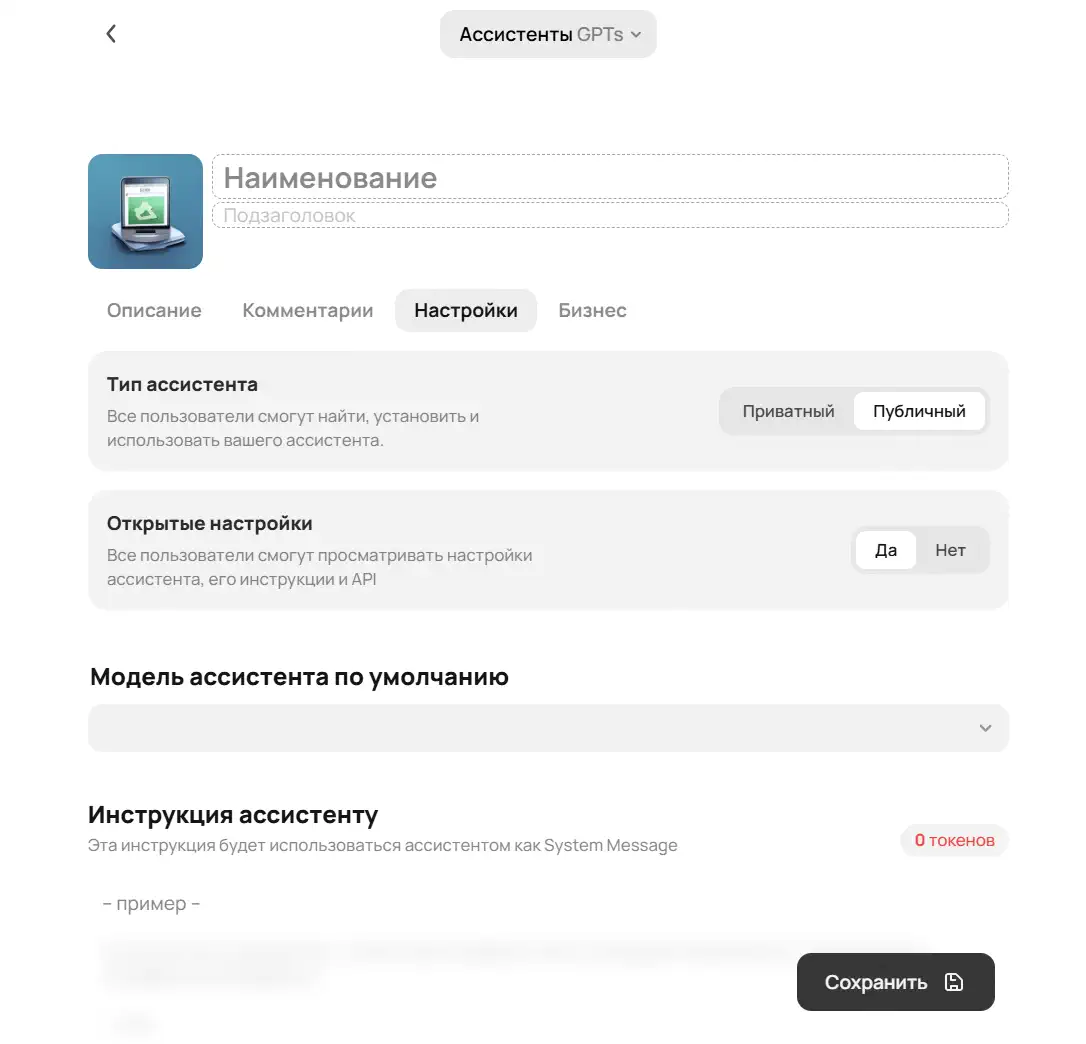
For example, GPTunneL's AI assistants built on ChatGPT, Gemini, or Claude are often used to generate personalized content from your prompts.
- Choose a model and configure settings in a few clicks
- Connect it to your marketplace's vector database (if needed)
- Hook up APIs for the services you need, such as your user-analytics platform (if needed)
- Send your requests in a chat with the assistant
You can set up an assistant for marketing, copywriting, design, product card creation, and much more. Try creating your own AI assistant on our site.
7. Detecting fraudulent transactions
AI is also used to detect fraudulent transactions in online payments. Real-time transaction analysis systems can spot suspicious behavior patterns linked to stolen card data or other types of fraud, protecting both buyers and sellers. This is a critically important application of the technology.
8. Chatbots for customer support
AI-powered chatbots, such as Telegram bots integrated with customer-communication platforms like Jivo, are increasingly used in online store customer support. Such solutions can answer standard questions from customers about products, shipping, payment, or returns around the clock, taking the load off human agents and speeding up support.
Health and Fitness Apps
Health is one area where AI delivers tangible benefits. Mobile apps that use it help not only track physical activity but also analyze the body's state, give personalized advice, and even support people in managing chronic conditions.
9. AI for activity and health analysis
Fitness trackers and smartwatches use artificial intelligence to analyze health and activity metrics. Built-in sensors collect data on:
- Steps taken and distance covered
- Calories burned
- Sleep quality
- Heart rate
AI algorithms process this information, providing users with clear statistics and personalized reports. Based on this data, AI can offer recommendations for improving lifestyle habits — for example, suggesting an earlier bedtime, recommending more daily activity to hit fitness goals, or flagging anomalies in heart rate. Such technology helps people keep track of their wellbeing and is becoming increasingly accessible.
10. Spotting patterns
Artificial intelligence helps find non-obvious patterns in health data. By analyzing long-term trends in activity, sleep, and heart rate, AI can help users better understand how their body responds to different loads, stress, or changes in daily routine. This encourages a more mindful approach to one's own health.
11. Personalizing workouts
Many fitness apps offer training programs that AI builds individually. The algorithms take into account the user's current fitness level, their goals (weight loss, muscle gain, improved endurance), available time, and equipment. AI also tracks progress and adjusts the workload when needed.
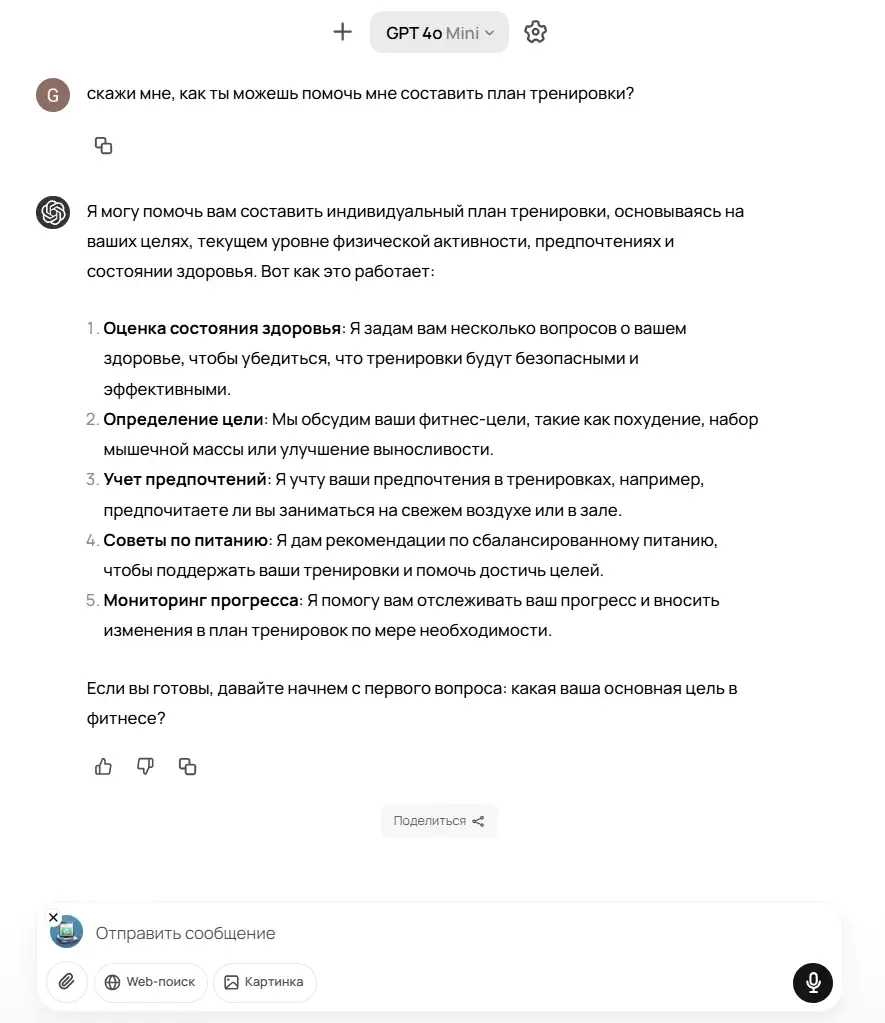
You can also build your own AI assistant in GPTunneL and configure it to act as a personal fitness coach that offers advice and workout plans on request. For example, our users have set up a fitness coach built on GPT-4o Mini, which you can try right now!
12. AI for preliminary symptom assessment
Artificial intelligence is also used in health-monitoring apps not directly tied to fitness. There are mobile apps that use AI for a preliminary assessment of symptoms based on data entered by the user. While such apps don't replace a doctor's consultation, they can help users get their bearings and understand when it's time to seek medical care.
13. AI for mental health support
AI-powered chatbots are also used to support mental wellbeing. They can offer relaxation techniques, exercises for reducing anxiety, or simply a safe space to talk things through. Such tools can complement traditional therapy, especially for people with limited access to specialists.
14. AI for managing chronic conditions
Artificial intelligence also helps manage chronic conditions — diabetes, for example. Apps analyze data from glucose meters, factor in diet and physical activity, to forecast blood sugar levels and give recommendations on lifestyle or insulin dosage adjustments. This is a clear example of how AI improves quality of life.
Here are a few more examples of AI use in health and fitness apps:
- Automatic calorie counting from food photos
- Analyzing exercise form via a smartphone camera
- Personalized nutrition recommendations based on health data
- Sleep quality monitoring and analysis with improvement tips
- Medication reminders and schedule tracking
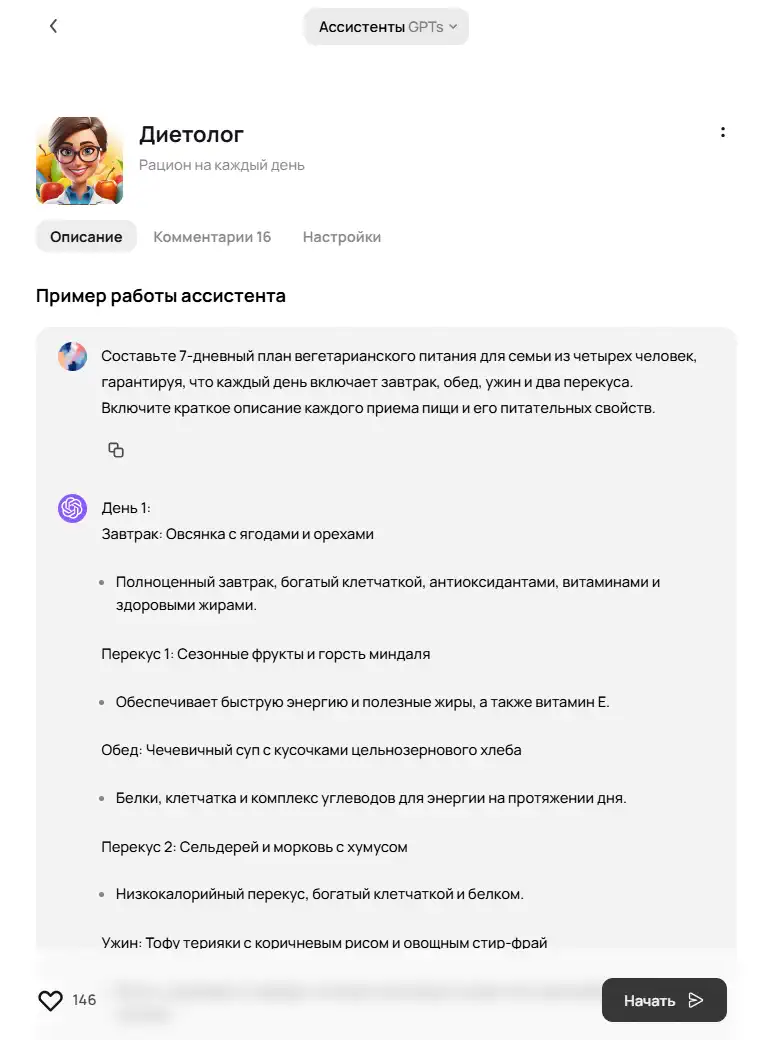
For tasks like these, your personal AI nutritionist in GPTunneL is a great fit. It will help you put together a thoughtful daily meal plan, designed specifically for you and accounting for your individual needs.
It's important to remember that neural networks are a supporting tool. Diagnosis and treatment of illnesses should be handled by qualified medical professionals. That said, assistants like the Nutritionist do an excellent job as advisors and helpers.
Creativity and Entertainment
Artificial intelligence is also reshaping entertainment. It doesn't just pick out movies and music for us — it also takes part in creating content, from images to entire game worlds. These algorithms make our leisure time more personalized, interactive, and technologically advanced.
15. Personalized movie and music recommendations
One of the most visible uses of AI in entertainment is streaming services like Netflix, YouTube, or Spotify. Artificial intelligence analyzes a user's viewing or listening history, their ratings, likes and dislikes, as well as the preferences of people with similar tastes. Personalized recommendation feeds are built from this data.
These systems keep learning from new data and get better and better at predicting which movie, show, video, or track a particular person will enjoy. AI's goal is to hold the user's attention by offering interesting, relevant content, which directly affects a platform's success.
16. Content optimization
Artificial intelligence also helps optimize content delivery based on the technical specifics of your device. Netflix, for instance, uses AI to adapt video streaming quality depending on a user's internet speed and device characteristics.
This ensures smooth playback without buffering — a technical application of AI that's invisible to the user but essential for a comfortable viewing experience.
17. AI for content creation
In recent years, generative neural networks — AI capable of creating original content — have been gaining popularity. Here are just a few examples of creative and entertainment tasks where AI is already used:
- Creating unique avatars and images for social media
- Generating background music for videos or presentations
- Automatically creating subtitles and translating them into different languages
- Helping write text, poetry, or scripts
Image-generation tools such as Recraft, FLUX, Stable Diffusion, and Veo-2 open up plenty of room for experimentation: you can bring visual ideas to life from text prompts or even try creating video in a particular style.
All these capabilities, and many more, are waiting for you in Creative Lab — GPTunneL's creative laboratory.
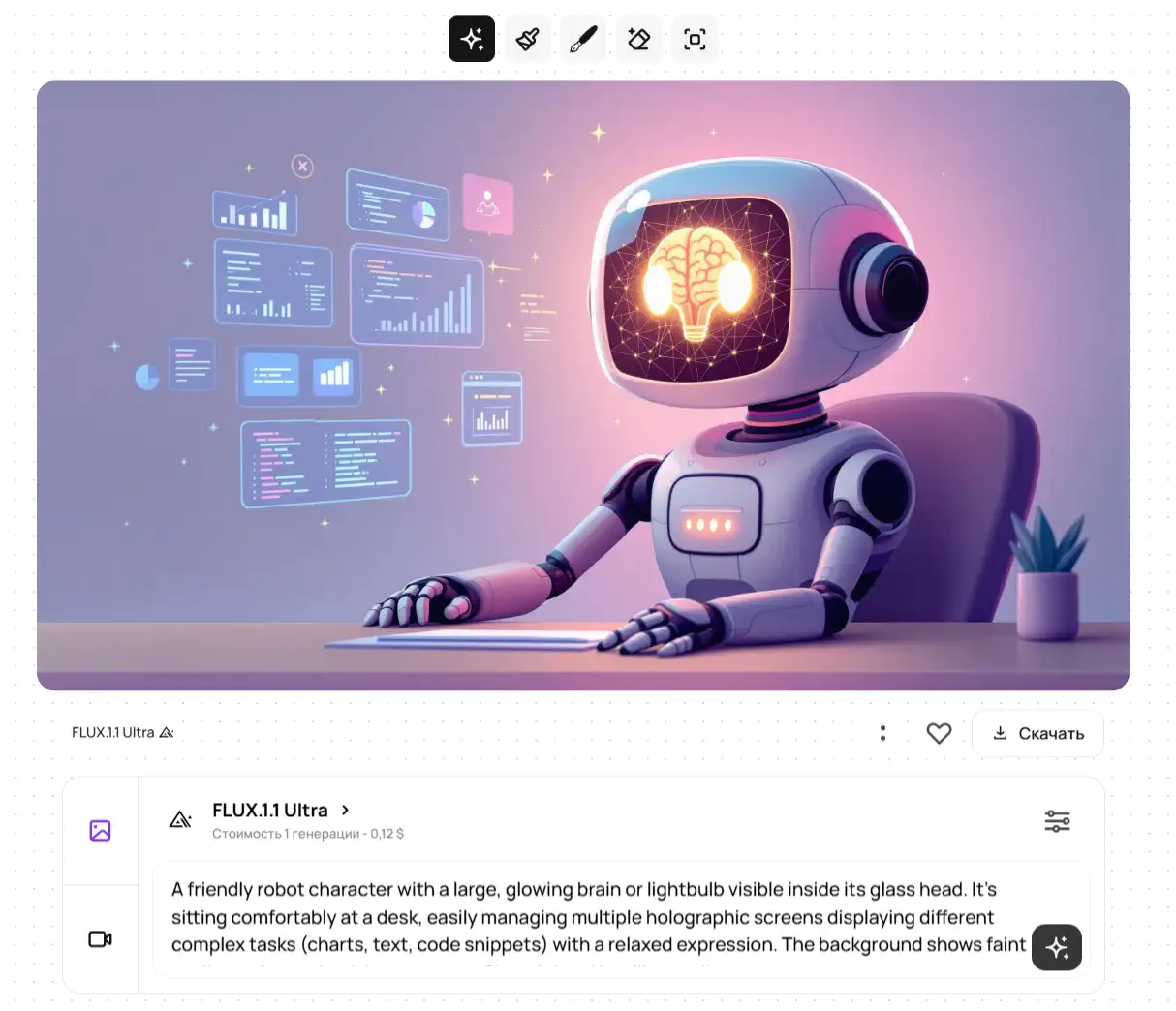
These technologies are used not only by professional designers or musicians but also by everyday users for fun or for creating social media posts. Being able to quickly visualize an idea or get a draft of text makes the creative process easier.
18. The gaming industry
The gaming industry also makes active use of artificial intelligence. AI drives the behavior of non-player characters (NPCs), making them more realistic and adaptive to player actions. AI is used for procedurally generating game worlds, creating unique quests, and adjusting difficulty level to match a player's skill. This makes the gaming experience more personalized and engaging.
19. Improving graphics
AI technology is also used to improve graphics in games. For example, image upscaling systems (such as NVIDIA's DLSS or AMD's FSR) increase image resolution with minimal performance loss. This makes games look more detailed and run smoothly even on less powerful hardware.
20. AI for content moderation
Artificial intelligence also helps with content moderation on entertainment platforms and in online games. Algorithms automatically detect and remove inappropriate content (such as hate speech or spam) and identify players who cheat. This helps create a safer, more comfortable environment for everyone.
So, what does this mean for AI's future?
Artificial intelligence has already become an inseparable part of our daily lives, even if we don't always notice it. It helps us navigate cities, choose movies and music, keep track of our health, and even run our homes. AI technology makes routine tasks simpler, freeing up time and resources for more important things.
In the future, AI's influence will only keep growing. We'll see even smarter voice assistants capable of holding meaningful conversations and anticipating our needs. Personalization will reach a new level: AI will tailor not just content to us, but services, and even physical spaces. Creative tools will become more powerful, letting anyone bring their ideas to life without specialized skills.
We can expect AI to take on more complex analytical and organizational tasks, both at home and at work. This won't just boost our efficiency — it will also open up new possibilities for personal growth and for tackling global problems. The key is to approach these technologies mindfully, understanding both their strengths and their limitations.