
The ChatGPT model family
ChatGPT is a family of language models built by OpenAI. It includes several models with different characteristics and strengths. All of them use the transformer architecture, which lets them process large volumes of data efficiently and produce high-quality answers to a wide range of requests.
OpenAI o1
The OpenAI o1-preview and o1-mini models are a new series of artificial intelligence models designed for in-depth analysis, complex problem solving and STEM fields (science, technology, engineering, mathematics). These models show outstanding ability in mathematics, programming and demanding scientific domains, and they give powerful tools to anyone working with code and data.
Where they are used
The model's developers compared o1-preview and GPT-4o on complex, open-ended tasks across various fields. In the tests, trainers rated anonymous answers from both models to the same request and voted for the one they preferred.
The o1-preview model turned out to be significantly preferred over GPT-4o on tasks that require complex reasoning, such as data analysis, programming and mathematics. It was less successful on some natural language processing tasks, however, which shows that its use is still limited in a number of cases.
Data analysis and parallelism: The model is a perfect fit for tasks involving the analysis of large volumes of data, multithreading and deep machine learning. It is used to build complex algorithms and prediction models.
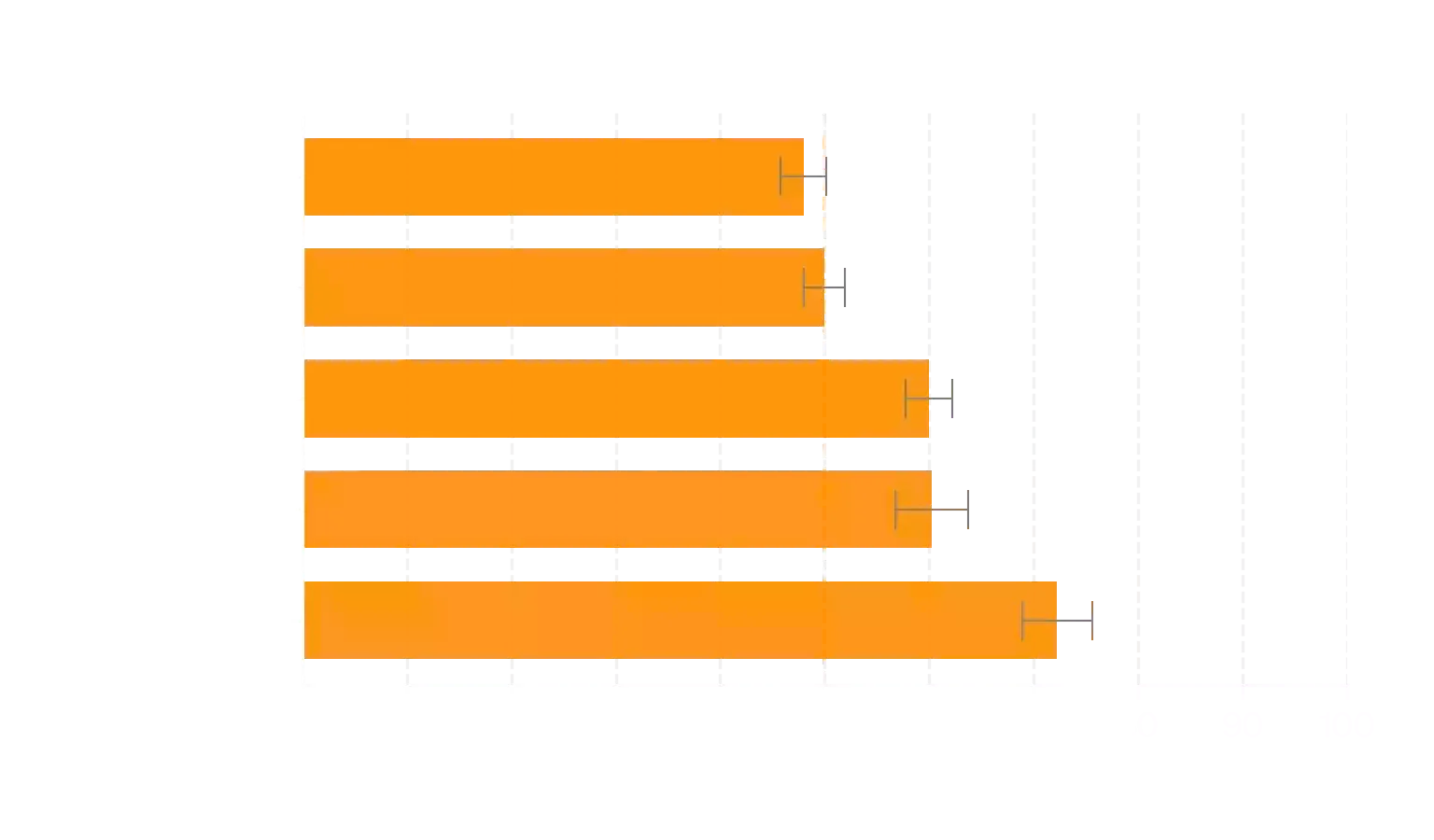
Mathematics and science: The model performs excellently on hard mathematical problems, such as those from the International Mathematical Olympiad (IMO). It can solve problems in quantum physics, biology and chemistry at a doctoral level.

Technical documentation and code generation: The model can generate complex code for software development and security tasks. For instance, o1-preview helps build multi-stage algorithms and create multi-purpose software modules.
OpenAI ran a simulation of the programming contests hosted by the Codeforces platform to demonstrate this model's coding skill. The evaluation followed contest rules, including 10 possible submissions.
The GPT-4o model reached an Elo rating of 808, which corresponds to the 11th percentile among human participants. o1-preview beat it by a wide margin, reaching an Elo of 1258. Worth noting: that is not the ceiling for OpenAI's reasoning models. The full version of o1, not yet available anywhere, has a rating of 1673, and its improved version, o1-ioi, sits at 1807 — higher than 93% of participants.
These results confirm that using these models for programming tasks can be very useful, especially when generating code and optimizing it inside complex requests.

Strengths
-
Deep, multi-angle thinking: The model can solve complex problems that require chains of reasoning. This is especially useful in mathematics and science, where the model successfully handles hard tasks such as proving theorems and analyzing data.
-
Accuracy and completeness of answers: Thanks to reasoning tokens, the model spends more time thinking, which lets it offer more accurate and logically grounded answers.
-
Powerful on big data: o1-preview is excellent at processing large datasets, which makes it indispensable for tasks such as fraud detection or real-time modeling.
Limitations
-
No multitasking or multimodality: For now the model supports text requests only. It cannot work with images or files, which limits its use in multimodal tasks.
-
Not optimal for simple tasks: The model can be overkill for simple requests. Its appetite for resources leads to longer response times and higher token spend. On top of that, the answers can be too complex and too long.
Example prompts for OpenAI o1
Multi-angle tasks with several stages
This prompt targets business research and calls for deep analysis of the market, competitors and growth strategy, along with cultural and legal specifics. It is a better fit for demonstrating the model's research ability in business, since it covers every aspect of a company entering a new market, including marketing, localization and risk assessment.
Example:
Develop a strategy for a company entering the US market in the SaaS sector for business process automation. Specify the key planning stages, competitor research, market analysis, target audience definition, pricing policy and recommendations for localizing the product for the American market. Include suggestions on possible barriers to entry and an action plan for overcoming them.
Using chains of reasoning
A prompt like this requires the model to analyze a range of interconnected factors in depth. Including several development stages helps assess the situation more comprehensively, macroeconomic consequences included.
Example:
Analyze the possible scenarios for the development and adoption of artificial intelligence in the global economy over the next 20 years. Include in the analysis the impact on various industries, labor markets, the level of automation, education and social consequences. For each stage, present both the positive and the negative aspects, propose hypotheses for how things develop and possible corrective measures.
Mathematics and programming at the highest difficulty
This prompt requires complex code and a deep understanding of machine learning theory. Adding the mathematical justification deepens the analysis, which showcases the model's ability to generate both code and theoretical calculations.
Example:
Create a multi-level algorithm for a neural network capable of training on a large dataset and solving image classification tasks with convolutional neural networks. Describe every development step, starting with model setup, architecture choice, training parameters and optimization approaches. Include the mathematical justification for each decision, such as activation functions, regularization and error minimization methods.